
FinksDaily
Sponsored by Chaikin Analytics
💸 Inflation bites
Good morning. Halloween is almost here, and children are preparing to collect chocolate from adults who now consider eggs a luxury. Candy and gum prices jumped nearly 8% (opens in a new tab) year over year in September, thanks to bad weather in West Africa that sent cocoa prices soaring, with July tariffs adding to the pain. Manufacturers locked in cocoa prices months ago, so the sticker shock is only hitting shoppers now. Yet Americans plan to spend $4.1B on candy despite consumer sentiment hovering near record lows. Then again, overpriced chocolate beats having the neighborhood kids redecorate the house with eggs and toilet paper.
Top Idea

Inflation Is Heating Up Again. Wall Street Is Finding Shelter in Dividend Payers
Wall Street's hopes for lower interest rates just ran headfirst into another inflation problem. September's hotter-than-expected report sent Treasury yields climbing and revived the prospect of another Federal Reserve rate hike. With borrowing costs threatening to stay higher for longer, investors are turning to dividend-paying stocks.
Hotter than hoped: Inflation picked up again in September, pushing the annual rate to 3.7% as consumer prices rose faster than they did in August. Gasoline accounted for more than half the monthly increase, although the price pressures weren't limited to the pump. Even core inflation, which excludes food and energy, came in above Wall Street's expectations. That gave investors another reason to worry that interest rates could stay elevated for longer.
- The odds of an October Fed rate hike jumped to nearly 40% from 22% a day earlier, with traders also betting on a possible December increase.
- The 10-year Treasury yield shot above 5.3% within minutes of the inflation report, having stood at 5.19% just before its release.
Consumer Staples Lead the Climb
Higher rates squeeze consumers and make it costlier for tech companies to fund massive AI buildouts, leaving retail, software, and semiconductor stocks lagging. Investors instead turned to defensive sectors like consumer staples, where demand for food and toiletries holds up even as prices rise. Dividends made these safer bets more attractive (opens in a new tab), with the Consumer Staples Select Sector SPDR ETF yielding 2.6% and telecom giant AT&T offering 4.9%.
- Walmart, Coca-Cola, and Procter & Gamble led consumer staples higher as investors favored everyday essentials.
- UnitedHealth, Amgen, and Merck ranked among the Dow's top performers, while other healthcare names also gained.
Hot print, slow hike: Economists agree inflation isn't cooling fast enough, but they're split on when the Fed might act. RSM US chief economist Joseph Brusuelas expects policymakers to wait until December, while Capital Economics' Stephen Brown sees an October hike back on the table. With that uncertainty hanging over the market, Matrix Asset Advisors' David Katz favors overlooked consumer names like Home Depot and McDonald's. When even the Fed's next move is anyone's guess, a boring dividend check starts looking pretty exciting.
 (opens in a new tab)
Sponsored by Chaikin Analytics
The “Billionaire Whisperer” Just Rated 3 Big AI Stocks
Marc Chaikin just issued a shocking new prediction about AI.
His 20-factor Power Gauge (opens in a new tab) system flashed bullish on Micron before it soared 970% in one year… and on Nvidia before it skyrocketed more than 50,000%.
Now he’s calling this the biggest prediction of his career: Trump just changed who wins the AI race.
Executive Order 14363 ordered the Department of Energy to build an integrated AI system for scientific research — a mission Marc calls “American Atlas.”
- The DOE isn’t building it alone: It’s partnered with a short list of publicly traded companies for computing power, raw materials and access to their most advanced AI models.
- Not every name wins: A few are set up to be historic winners. But others could wreck a portfolio in the months ahead.
Marc ran 3 of the biggest names (opens in a new tab) through his Power Gauge. See which came back BULLISH and which came back BEARISH, free, in his brand-new report (opens in a new tab).
(By clicking the link below, you are signing up to start receiving PowerFeed from Chaikin Analytics. You also agree to our Terms of Use (opens in a new tab) and Privacy Policy (opens in a new tab) and to receive promotional emails from us and our affiliates. You can unsubscribe anytime.)
Large-Cap Recap
Big Pharma Wins Investor Favor as Growth Stories Diverge
Big Pharma caught investors' attention as stocks fell following September's hotter-than-expected inflation report. But not every drugmaker has the same growth story. Eli Lilly is pulling ahead with a 48% jump in quarterly sales, while AbbVie is making up for lost Humira revenue with Skyrizi and Rinvo. Meanwhile, Merck faces slower growth and a looming patent cliff for its blockbuster cancer drug Keytruda in 2028. With more than $500B in drug sales facing generic competition through 2032, Big Pharma’s next blockbuster might be its own survival. [Read (opens in a new tab)]
Amazon Sees an Opening in the Shipping Wars
Shipping packages is getting more expensive, and fuel prices aren't entirely to blame. FedEx and UPS have been piling on peak-season and demand surcharges, with the former and DHL Express also planning rate hikes for 2027. Much of the increase comes from changes to how carriers calculate their fees rather than fuel costs alone. Rising costs could give Amazon an opening as it builds out its own delivery network and plans to cut US Postal Service volume by at least two-thirds. The delivery giants keep raising the bill, but the competition isn't standing still. [Read (opens in a new tab)]
Nuclear Stocks Face a Financing Squeeze
Nuclear stocks are losing their shine as the 10-year Treasury yield climbs to 5.26%, making it harder for developers still years from profitability to fund their ambitions. Higher borrowing costs could mean project delays or more share sales, with Energy Fuels already seeking to expand its stock-sale program by up to $500M. Uranium Energy faces pressure after reporting a $137.3M annual loss, but Constellation Energy has an advantage with operating reactors and power deals with Alphabet. Investors are starting to favor companies producing power over those promising it. [Read (opens in a new tab)]
Market Pulse
Greenland Energy Company Common Stock
The oil exploration company’s shares surged amid heavy trading interest in its East Greenland drilling prospects, extending a volatile rally in the stock.
Hut 8 Corp.
The Bitcoin miner’s shares sank as rising Treasury yields and concerns about AI infrastructure financing weighed on companies pursuing expensive data center expansions.
Chewy, Inc.
The online pet retailer’s shares surged as strong trading momentum and renewed investor interest extended the stock’s recent rebound.
Markets & Economy
Fuel costs reshape used vehicle values: Gas-sipping cars are holding value while large trucks and SUVs slide. Since January, non-electric vehicles rated 40-plus mpg gained 9.9% in wholesale value, while those under 15 mpg lost 15%. [Read (opens in a new tab)]
Driverless rides now open to all in three cities: Waymo closed a $5B term loan, its first debt deal, and lenders now underwrite it like a transport network. Alphabet's Other Bets unit, which includes Waymo, still posted a $1.8B operating loss last quarter. [Read (opens in a new tab)]
Analyst turns bearish on Netflix engagement: Netflix is losing members faster, with US churn up 16.6% in the third quarter. Reports on viewer engagement will now come once a year, not twice. [Read (opens in a new tab)]
Business & Tech
Berkshire backs a software turnaround specialist again: Berkshire Hathaway is adding $330M to Bending Spoons, an Italian firm that revives struggling digital businesses. It's a rare software bet for a conglomerate that usually favors insurance and railroads. [Read (opens in a new tab)]
Bank of America faces lasting oversight after anti-money laundering fine: Bank of America must hire an outside firm to review past transactions under its consent order. Sales and trading revenue also fell 5% to $5.1B, weakening the quarter even before the fine. [Read (opens in a new tab)]
Equity trading surge carries Morgan Stanley's quarter: Morgan Stanley beat the $2.94 consensus with $3.03 per share as equity revenue jumped 41%. Total client assets climbed to $10.5T, though fixed income and investment management both slipped. [Read (opens in a new tab)]
Chart
Digit of the Day
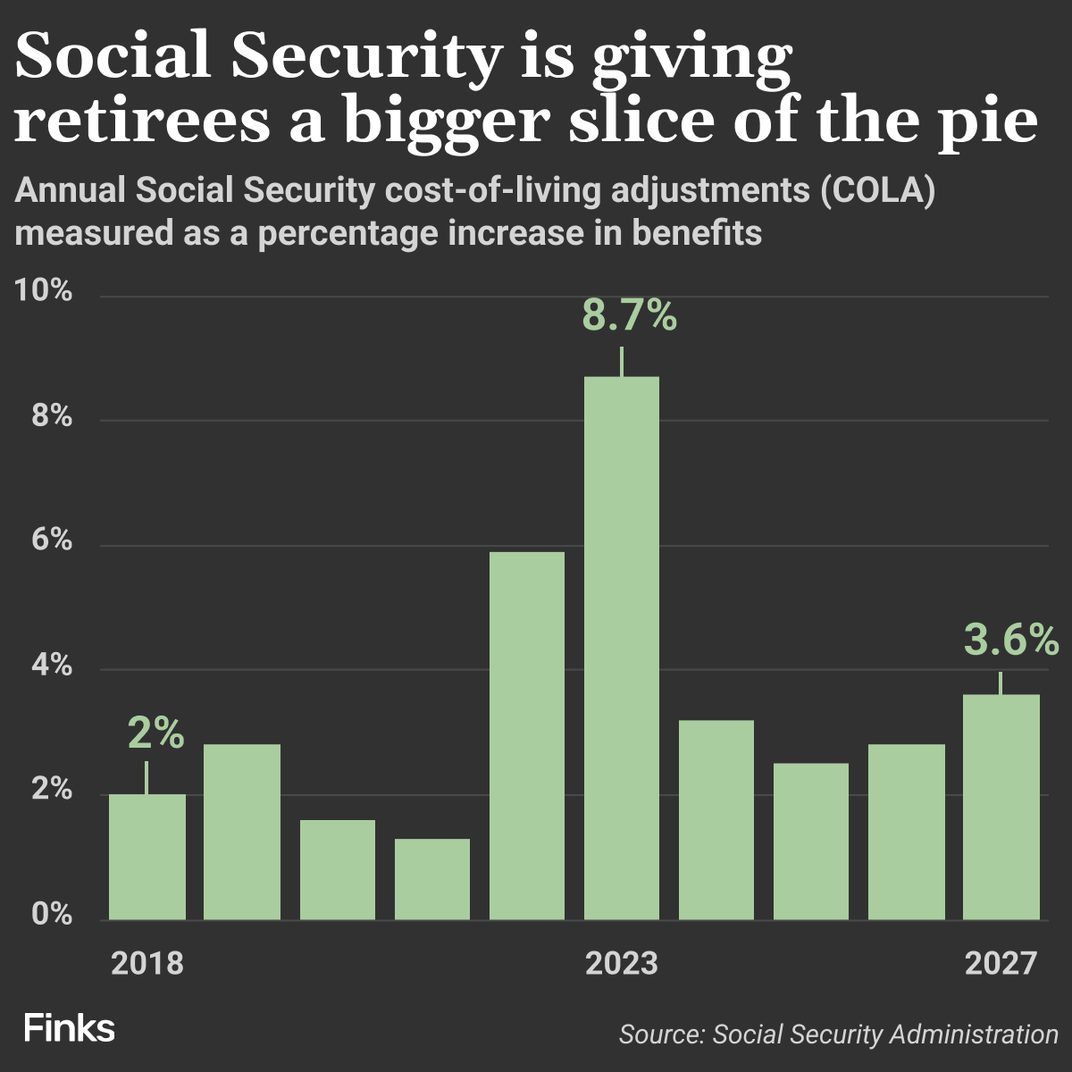
Social Security Checks Rise 3.6% as Medicare Takes a Smaller Bite
Retirees are about to get a bigger check from Washington, though Medicare is also reaching for a slice. Social Security benefits rise 3.6% next year (opens in a new tab), giving retirees their biggest raise in 4 years at a time when household budgets remain under pressure. The increase is tied to September's inflation report, which showed prices picking up again as gasoline costs surged.
- The Social Security Administration says 76M Americans will receive higher Social Security benefits and Supplemental Security Income payments next year.
- Per the Senior Citizens League, the average retired worker will get roughly $75 more per month, bringing the typical benefit to about $2.16K before Medicare deductions.
Wrong yardstick: The raise is calculated using the CPI-W, an index based on urban wage earners rather than retirees, whose spending looks very different. Medical costs alone eat up nearly 30% of the average benefit, yet the formula gives them relatively little weight. That's why advocates want to switch to the CPI-E, which puts more emphasis on healthcare and housing costs. After all, a raise can only keep up with living costs if it's measuring the right ones.
Strategize
How to Spot AI Stocks That Can Handle Higher Borrowing Costs
The AI boom is driving massive investments in data centers, chips, and computing capacity, but financing those plans could get more expensive as interest rates climb. Companies are racing to meet demand, yet their ability to keep expanding depends partly on how much debt they're carrying and how much cash their businesses generate.
Why it matters: Businesses with healthy cash flow and manageable debt may have more room to invest, while those relying heavily on borrowing could face tougher choices if financing costs remain elevated.
Post Credits