
Rise &Grind
Sponsored by BluSky AI
🎰 One tab over
Good morning and happy Sunday. Gen Z is investing exactly the way their parents begged them to, then torching that same money on parlays. Betterment found that more than half of young investors diverted market money (opens in a new tab) into sports betting over the past year. Robinhood sees the same split from its side of the app, calling the ETF habit the sturdy base everything riskier gets built on. Funny, since Robinhood’s own football prediction markets sit one tab over from that base.
Today's edition brings to you a mixed lineup of reads:
- Wealth tax faces legal hurdles: Patching tax loopholes offers a better path forward
- Senate backs homebuyer down payments: Federal match arrives as housing inventory rises seasonally
- FAFSA opens early again: Families risk losing aid if they delay submitting paperwork
We've risen. Now, let's grind.
Fiscal Policy

A Wealth Tax On Billionaires Probably Won’t Work — Here’s What Would
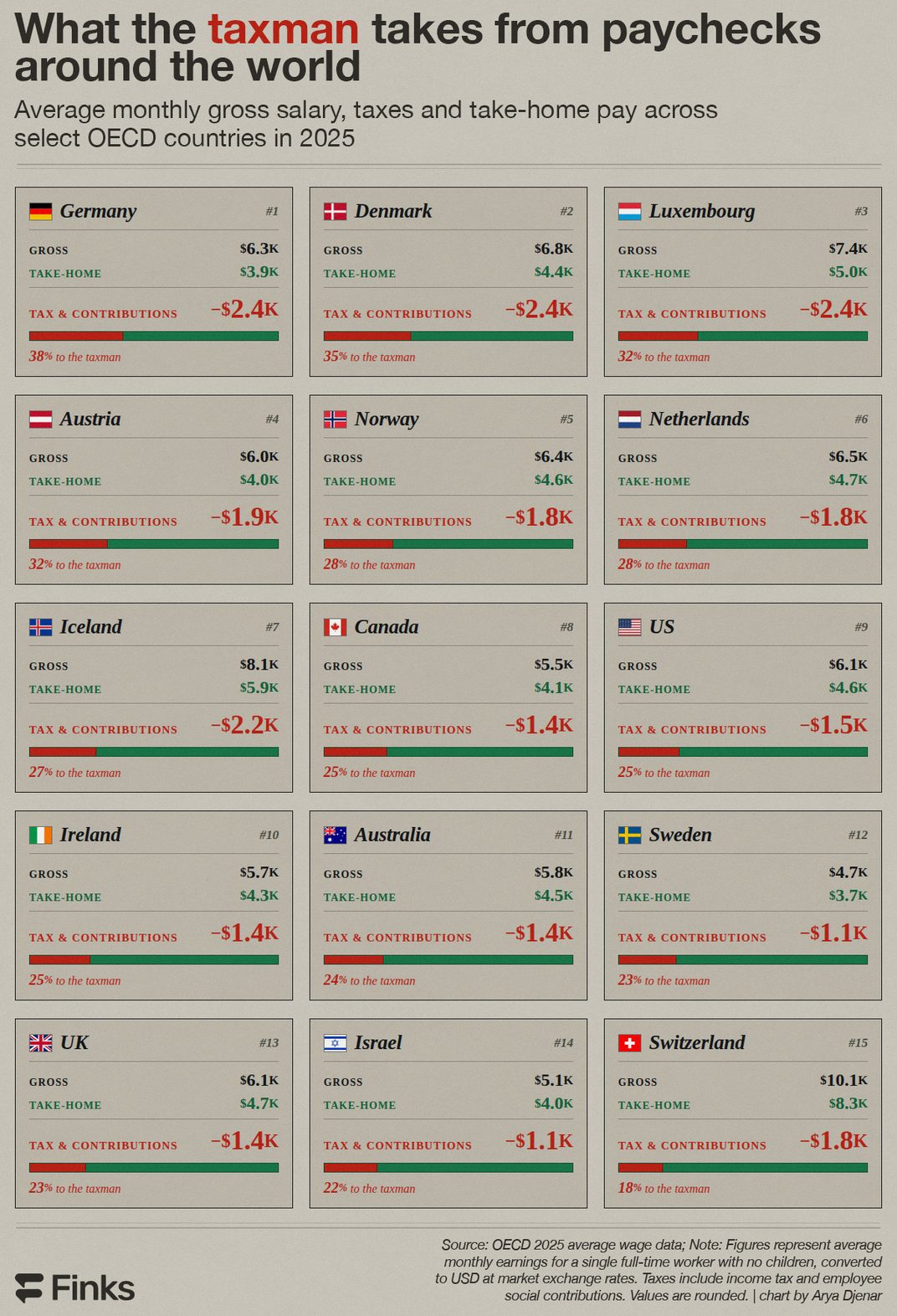
Of the many issues facing America, the "tax system" probably wouldn't rank high on most people’s list — but maybe it should. The US now boasts a $2T deficit, and its debt is the second-largest expense in the government budget.
There’s a simple explanation: America spends more than it takes in. It seems simple to say, "Let’s just cut spending then,’ but that's not really an option either party is willing to deal with the fallout of. That leaves two choices: raise more revenue, or keep kicking the can.
One popular proposal floated by folks with more progressive fiscal ideas is to impose a wealth tax, which will affect very few, but very wealthy Americans. And while it might help level the playing field, it either wouldn’t work, or it would be a disaster.
Why a "wealth tax" even matters: A wealth tax is gaining popularity because the US tax system is unfair (opens in a new tab). Workers bear the costs (opens in a new tab), while special interests get loopholes and tricks to offset or reduce their income. Because of strategies like "buy, borrow, die", many exceptionally wealthy people pay little or no tax at all — they just borrow against appreciable assets. This is where the idea of taxing a percentage of a wealthy person's total wealth comes from.
- Such a tax could generate trillions in revenue from a very small base of filers: The “Ultra-Millionaire Tax Act of 2026” would apply to households with more than $50M in net worth; an independent estimate touts average revenue at $617B/yr.
- However, it’s likely to suffer legal, administrative, and enforcement pushback: There's a lot of debate over whether a wealth tax is even legal (and this Supreme Court isn't friendly to progressive policy), how wealth would be measured, and how enforcement would work.
An Alternative: Patching "Buy, Borrow, Die"
Barring a remaking of the US government, a wealth tax is unlikely to stand up against legal or administrative muster. However, there's a middle-ground option that could appeal to policymakers. The jury is still out on how it would look:
- Yale’s Budget Lab has proposed patching "buy, borrow, die" (opens in a new tab), which would eliminate a massive source of tax deferral for the wealthiest Americans.
- Budget Lab laid out three proposals: "deemed realization" when borrowing, a withholding tax on borrowing, or an annual excise tax on loan balances.
Why this would probably work: Nobody likes the idea of "more taxes," but patching existing inequities in the tax system is arguably the most effective way for the US to simplify its tax code and close its monster deficit. These changes could also generate hundreds of billions in new revenue without falling on American workers, while adding a real deterrent in the absence of sweeping reform.
 (opens in a new tab)
Sponsored by BluSky AI
The Word Heard Around Wall Street: ‘Buy’
Market experts have identified a small, early-stage AI compute center company aiming to solve an alarmingly big AI shortage. Their solution was so impressive, it earned them a “Buy” rating from a 3rd party analyst and an estimated fair value of $15.81, 3X the current offering. But you can invest in BluSky AI today at $5.50/share. (opens in a new tab)
Their SkyMod prefabricated AI compute centers are scheduled to deploy 3x faster, fit onto smaller footprints, use less power, and near-zero water versus traditional data centers.
Between traditional infrastructure that can’t keep up with demand, construction timelines stretching years into the future, and negative public sentiment, the AI data center market could depend on BluSky’s tech as the solution to these critical bottlenecks. Become an early-stage BluSky AI shareholder today. (opens in a new tab)
Legislative Outlook
Senate Bill Proposes $50K First-Time Homebuyer Match
A new Senate bill proposes matching first-time buyer savings with up to $50K in federal funds. That legislative push coincides with seasonal data showing autumn brings higher housing inventory and reduced competition. Meanwhile, analysts warn that additional purchasing power could drive up home prices if construction fails to keep pace. High mortgage rates also continue to challenge affordability across major housing markets. [Read (opens in a new tab)]
College Funding
FAFSA Opens Early and Puts Fresh Pressure on College Budgets
The Free Application for Federal Student Aid has opened earlier than ever for the second consecutive year, giving families a faster way to secure funding. That rollout arrives alongside new federal caps on college borrowing and Pell Grant rules. Because state grants and institutional aid often run out quickly, waiting to submit the paperwork risks leaving financial help on the table. Families must also navigate tighter limits that make budgeting harder. [Read (opens in a new tab)]
Chart
Sunday Reads
⛈️ Severe storms are throwing East Coast flights into chaos (opens in a new tab)
🍽️ Sit-down chains are winning the restaurant race (opens in a new tab)
👴 A new bill would let Americans claim Social Security (opens in a new tab) at 60
🤖 Wall Street is finding a trade in AI’s biggest risks (opens in a new tab)
💰 The IRS is targeting a tax strategy (opens in a new tab) favored by wealthy families
👕 Fashion brands are turning cultural relevance into stronger sales (opens in a new tab)
💳 Chase is giving the Freedom Unlimited a fresh new design (opens in a new tab)
⚡ The AI buildout is sending investment into power and pipelines (opens in a new tab)
🛒 Costco is coming to DoorDash with 20% off orders (opens in a new tab)
🏍️ Trade retaliation is pushing up American motorcycle prices (opens in a new tab)
Extra Grind

Sponsor
Your Mortgage Rate Might Be Negotiable. Here's What to Ask
The credit score you see on your banking app isn't necessarily the one your mortgage lender uses. Different scoring models can produce different results, and asking about alternatives could help you qualify for a better rate. Even a small reduction could save thousands over 30 years.
Before accepting an offer, a few things are worth knowing:
- Ask about alternative credit scores: Some lenders may consider different scoring models, potentially helping borrowers qualify for better terms.
- Check the break-even point on mortgage points: Divide the upfront cost by your monthly savings to see how long it takes to recover what you paid.
- Compare Loan Estimates: Request the same loan amount and term from multiple lenders, then compare APRs, closing costs, and lender fees.
A few questions today could save you years of extra interest.
Ask Finks what to look for before signing → (opens in a new tab)
Disclosures
This is a paid advertisement for BluSky AI Regulation A offering. Please read the offering circular at invest.bluskyaidatacenters.com (opens in a new tab)
*BluSky AI, Inc. has paid FRC a fee for research coverage and distribution of reports.