Rise &Grind
Sponsored by Apple Card
✈️ Book now
Good morning and happy Sunday. Flying home for Thanksgiving is turning into a bidding war (opens in a new tab). Airfares have climbed more than 23% in the past year, while a New York-to-LA round trip over Thanksgiving week can hit $1.2K. That comes as Middle Eastern escalations have pushed jet fuel prices higher, forcing several airlines to trim flight schedules rather than absorb the hit. Travel agents say Tuesdays bring a small discount, but the trend keeps climbing. Book the flight now, or plan on video-calling grandma instead.
Today's edition brings a varied slate of reads:
- Estate tax effectively disappeared: Only the wealthiest estates pay it despite massive national debt
- Social Security fears backfiring: Early claims lock in steeper cuts than the actual shortfall
- 401(k)s getting riskier: AI concentration and private markets changing retirement exposure
We've risen. Now, let's grind.
Top Idea
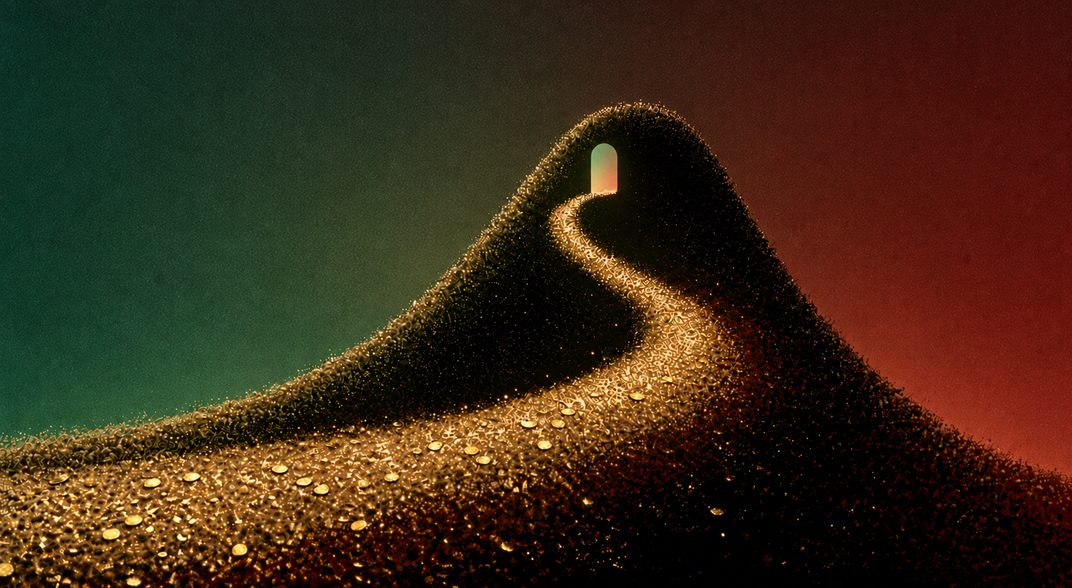
America Has An Estate Tax, But It’s Practically Invisible — Here’s How Less Are Paying (And What Could Happen Next)
America has had a federal estate tax on the books for more than 110 years, but you might not even know it exists — and in many ways, it has become practically invisible. It’s not just because you’re unlikely to pay it (and unlikely to know anyone who will), either.
Due to favored treatment for wealthy people in the US tax code, the estate tax has become a shell of its former self — and with the US debt now above $40T, it might be time to turn back the clock on this modest source of income.
An “estate tax” in name only: Since the US created the federal estate tax in 1916, the US population has more than tripled, but the number of estates paying tax is among the lowest we’ve ever seen. The Tax Policy Center estimates just 3.9K estates (opens in a new tab) will owe tax in 2026, compared with ~3M annual deaths. And while that might be a testament to how much wealth just a handful of Americans have, it really shows how high the bar has gotten for an estate to be subject to this tax, limiting it to only the most well-off American families.
- The US has raised the exemption for the estate tax at a rate far outstripping inflation — it was just $675K in 2001; it’s now $15M per person.
- At the same time, the top estate-tax rate is nearly half what it was at its peak in 1972, falling from 77% then to 40% today, so the few who are paying are paying less, too.
Something has to change
Taken together, these two changes have hollowed out the estate tax base and given wealthy folks a massive tax break in the process. And in a time that every percentage point counts (opens in a new tab), reforming the estate tax should be the first stop — otherwise, the cost will fall on everyday Americans.
-
During the Great Depression, estate and gift taxes represented a record 9.7% of federal receipts — the post-war high in 1972 funded about 2.6% of federal revenues.
-
These days, estate and gift tax represents just 0.55% of receipts or $29B, despite a higher exemption and a lower top tax rate — a testament to their potential as a tax base.
Requiem for revenue: The US has long afforded preferential treatment to capital over wage workers, who the tax code is increasingly dependent on to fund government spending (opens in a new tab). As we’ve covered in recent weeks, this is not sustainable. And even more dire now that US Treasury yields are at their highest levels since 2007 (opens in a new tab) and interest on the country's ~$40T debt is the government's second-largest line item. Returning to the 2009 threshold (about $5.17M (opens in a new tab)) would generate billions in additional, necessary revenue to bridge the deficit and reduce borrowing.
_600x330_US_DemandGenSingleImageAds_US_DitchPlastic_StaticFormat_NA-600x330.jpg) (opens in a new tab)
(opens in a new tab)Sponsored by Apple Card
Give Your Wallet The Power of Titanium
Unlike other credit cards, Apple Card doesn’t put sensitive information on display. The Apple-designed titanium card is built to be private and secure with no visible numbers on it — just your name and some serious attitude.
And when you buy your favorite Apple products at Apple, you get 3% Daily Cash back (opens in a new tab).
- Need new AirPods? 3%.
- Fresh MacBook for your teen? 3%.
- That iPhone you’re glued to? You guessed it. 3%.
Plus, there’s no fees (opens in a new tab), period. No late fees, foreign transaction fees, annual fees… Just a credit card with the privacy and security you expect from Apple.
Upgrade your credit card, apply today (opens in a new tab). Terms apply.
Income Strategy
Fears of Social Security Cuts Push Retirees Into Early Claims
Social Security fears are pushing some Americans into a costly decision. The retirement trust fund could run dry in late 2032 if Congress fails to act, raising the prospect of lower payments. Filing at 62, however, locks in a 30% reduction for someone whose full retirement age is 67. Retirees rushing to protect their money could end up shrinking their checks more than the projected shortfall would. [Read (opens in a new tab)]
Portfolio Discipline
The Risks Inside Your 401(k) Are Changing
Your 401(k) may look healthier after the market rally, but some of that progress comes with a catch. AI heavyweights now command a larger share of major index funds, leaving retirement accounts more exposed to the same trade. Washington could soon widen the menu further with private equity, crypto, and other alternative assets. Record balances are worth celebrating, but they are also a good reason to check what has been doing the lifting. [Read (opens in a new tab)]
Chart
Sponsored by Apple Card
The Game Changer Your Wallet Needed
Apple Card gets you 3% Daily Cash back on Apple purchases at Apple and 2% when you use Apple Pay.
So not only are you earning real cash (opens in a new tab), but there aren’t any fees (opens in a new tab), either — no hidden fees, no annual fees, no late fees… Not even foreign transaction fees. Apple Card has no fees, period. Terms apply.
Sunday Reads
🍟 Uber Eats is offering 40% off orders (opens in a new tab) near select colleges
🏛️ Higher tax-free yields are putting municipal bonds back on investors’ radar (opens in a new tab)
💼 How ordinary business owners are becoming America’s millionaires (opens in a new tab)
⛽ Geopolitical turmoil has cost Americans $107B more at the pump (opens in a new tab)
🤖 AI safety warnings still aren’t scaring investors away (opens in a new tab)
💳 Chase cardholders can get 50% off (opens in a new tab) their next two Lyft rides
🪙 Tokenized stocks are getting their first real shot in the US (opens in a new tab)
✈️ Delta is adding more flights as its LAX expansion accelerates (opens in a new tab)
Extra Grind
Sponsor
Your Portfolio Has Blind Spots, Finks Will Find Them
Finks is the financial assistant (opens in a new tab) that never sleeps, never ghosts you, and watches your money like its compute depends on it. It’s like having your own analyst team on speed dial, minus the six-figure payroll.
- Analyze investments faster and better: Ask Finks to analyze any company (opens in a new tab), compare stocks, or help you reason through a financial decision.
- Agents that watch your money: Connect your holdings and watchlists, and let Finks keep an eye out for risks and opportunities around the clock.
The market never really logs off. Good thing Finks doesn’t either.