FinksDaily
🤖 Magnificent bills
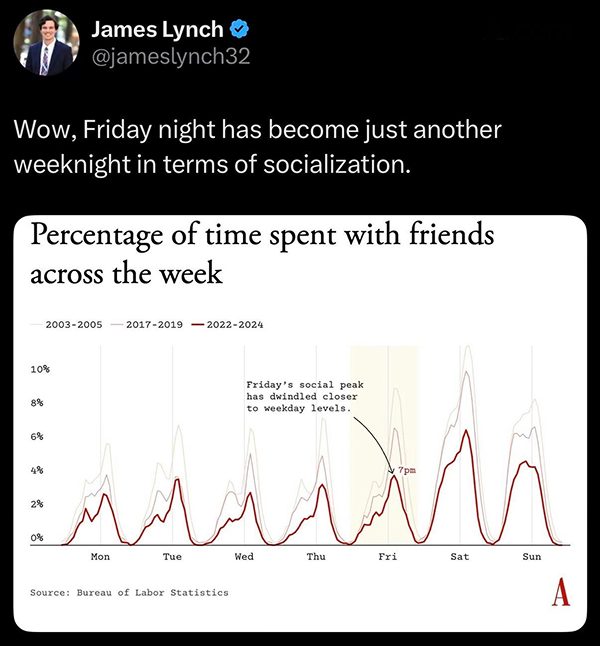
Good morning. The American dinner party has officially entered its flop era. Only 67% of Americans (opens in a new tab) hosted guests at home in the past year, down from 88% in 1995. Between rising grocery bills, packed schedules, and the pressure to impress, entertaining at home is becoming more trouble than it's worth. Streaming isn't helping either, with Americans increasingly opting for a quiet night on the couch over the effort of getting everyone together. Apparently, “we should have you over sometime” has become a figure of speech.
Top Idea

Meta and Tesla Kick Off Mag 7 Earnings. Will the Spending Pay Off?
The Magnificent Seven have some very expensive ambitions to explain. With earnings season underway, Wall Street wants to know whether the billions pouring into AI chips and data centers are delivering enough to justify the price tag. Beating estimates is one thing, but convincing investors that the spending makes financial sense is another.
Early results: Meta Platforms and Tesla have already given investors plenty to unpack, particularly when it comes to cash flow. Meta's revenue climbed 26% to $64.6B, but rising costs and infrastructure investments left free cash flow in negative territory. Tesla went the other way, delivering a $1.53B cash surplus after spending considerably less than analysts expected. The contrast shows why strong earnings alone don't tell the full story.
- Meta's operating margin fell to 20% from 40% a year earlier, while quarterly capital expenditures reached $34.91B.
- Tesla spent $4.73B on capital investments against the $7.96B analysts expected, helping it beat cash flow forecasts.
The Other Five Have Some Explaining to Do
Microsoft and Alphabet report on October 28, and both face questions about how much further their AI budgets can climb. Microsoft has so far managed to keep free cash flow positive, while Alphabet has slipped into negative territory. Their upcoming results should offer a clearer picture of whether growing cloud demand can support the next phase of investment.
- Microsoft will need to show that Azure's growth can keep pace with its expanding infrastructure commitments.
- Alphabet faces a similar challenge with Google Cloud, particularly after raising its annual capital spending outlook.
What comes next: Amazon, Apple, and Nvidia round out the earnings calendar, but each has something different to prove. Amazon's cloud results will show whether demand for AI computing is translating into more business, while Nvidia's outlook will offer clues about how long the chip-buying spree can last. Apple's job is to show that iPhone demand can hold up without relying on the AI hype. The earnings calendar may be shared, but the reasons to own each stock are getting harder to lump together.
Ask Finks
Your Dating Standards Are High. What About Your Investing Standards?
You'll spend 20 minutes scrolling through a Hinge match's Instagram, checking tagged photos and looking for red flags. But when it comes to stocks, one TikTok video is apparently all the research you need.
Give your investments the same background check with Finks (opens in a new tab). Before putting your money into a company, take a closer look at its finances, valuation, and competition.
- Spot the red flags early: Check for mounting debt, shaky growth forecasts, and other reasons to think twice.
- See what else is out there***:*** Compare the company with its rivals to find out whether it's genuinely a catch or just good at getting attention.
Your dating life might have enough questionable decisions already. No need to bring them into your portfolio.
Ask Finks:Which of my holdings are worth keeping, and which should I reconsider? (opens in a new tab)
Large-Cap Recap
Wall Street Banks Are Cashing In on the AI Trade
Wall Street's stock trading boom is paying off, but three banks are walking away with most of the winnings. Goldman Sachs, JPMorgan Chase, and Morgan Stanley captured nearly 80% of the $67B in equities revenue generated through September. The AI stock rally and growing demand from hedge funds have helped drive those gains. Meanwhile, smaller rivals are finding it harder to compete with the enormous balance sheets needed to serve major hedge funds, leaving the biggest banks with an even greater advantage. [Read (opens in a new tab)]
Premium Carriers Navigate Fuel Cost Pressures
United Airlines and Delta Air Lines are finding ways to cushion rising fuel costs, and wealthier travelers are a big part of the strategy. Both carriers are leaning into premium seating and corporate travel, with Delta bringing in $6.8B in premium revenue last quarter. Conversely, budget airlines like JetBlue are getting squeezed by higher operating costs and weaker passenger traffic. The gap is widening between airlines that can charge more for comfort and those competing mainly on price. [Read (opens in a new tab)]
America's Online Grocery Wars Heat Up
The grocery business is changing, and traditional supermarkets are losing ground to retailers that can deliver straight to shoppers' doors. Online orders now account for more than 20% of US grocery sales, with Amazon and Walmart taking a bigger slice of the market. Kroger is fighting back with plans to invest $5B in lower prices through 2029 after slowing sales growth. But competing on price comes at a cost, leaving traditional grocers with tighter margins while investors increasingly favor retailers that already have established delivery networks. [Read (opens in a new tab)]
Market Pulse
Super Micro Computer, Inc.
The AI server maker’s shares surged after raising its quarterly revenue and margin outlook as stronger-than-expected demand for AI infrastructure boosted results.
DexCom, Inc.
The glucose-monitor maker’s shares sank as investors trimmed exposure ahead of upcoming earnings, with a recent insider stock sale adding to the pressure.
International Business Machines Corporation
The technology giant’s shares rose ahead of earnings, then climbed further after results beat expectations and management raised its software revenue outlook.
Sponsored by TradeSmith
Don't Buy Nvidia, SpaceX, or Microsoft — Buy These 5 Stocks Instead
TradeSmith CEO Keith Kaplan believes 5 overlooked stocks (opens in a new tab) could make you more money than the tech names everyone else is chasing, but only if you buy before October 31.
Get access to the Top 5 Stocks list (opens in a new tab)
*TradeSmith *Privacy Policy (opens in a new tab)
Markets & Economy
Trump administration launches $8B farm fuel relief program: The USDA is sending one-time direct payments to growers facing record diesel prices during the harvest season. Fuel and oil expenses are projected to surge 28.8% this year to reach $21.6B. [Read (opens in a new tab)]
Abbott Laboratories spins off nutrition division: Abbott Laboratories is separating its $8.5B nutrition division into a standalone public company by late 2027. The tax-free spin-off comes after a 2022 recall and legal overhangs weighed on the unit's growth. [Read (opens in a new tab)]
Red Lobster names new c-suite execs amid shrimp push: The restaurant chain appointed a new chief marketing officer and chief information officer as it rolls out aggressive discount promotions. The moves follow a bankruptcy filing and ongoing store closures tied to heavy discounting. [Read (opens in a new tab)]
Business & Tech
SpaceX revenue surges on AI compute demand: SpaceX reported third-quarter revenue of $14.58B, up 161% year over year. Its Super Intelligence AI unit overtook Starlink as the company's largest business, marking a major shift in its revenue mix. [Read (opens in a new tab)]
AT&T beats Q3 estimates and raises profit forecast: AT&T posted higher-than-expected third-quarter revenue of $32.3B driven by strong demand for its bundled internet and wireless plans. The carrier also lifted its annual adjusted earnings per share outlook to about $2.40. [Read (opens in a new tab)]
Capital One beats Q3 profit estimates: Capital One reported earnings of $5.61 per share, beating Wall Street expectations on $16.3B in revenue. Improving credit conditions helped lift results as card charge-offs and credit loss provisions declined. [Read (opens in a new tab)]
Chart
Digit of the Day
eBay Cuts 9% of Staff as Online Marketplaces Rethink Their Growth Strategies
The clearance aisle has reached corporate headquarters. eBay announced plans to cut 9% of its workforce (opens in a new tab) in October, even as its turnaround gains momentum. Merchandise sales rose 14% last quarter, but management is betting a leaner team can protect margins without slowing growth in luxury goods and collectibles.
- eBay's active buyer count rose just 2% to 136M last quarter, suggesting much of its growth is coming from existing shoppers spending more.
- Its $1.4B acquisition of Depop gives eBay a way to reach younger shoppers, while its advertising business generated $570M in quarterly revenue.
Beyond eBay: The pressure to get more out of existing operations is spreading across online marketplaces. Etsy cut 12% of its workforce even as marketplace sales rose 7.5%, while Amazon is using AI shopping tools to encourage higher spending. The methods differ, but both companies are betting they can get more out of every shopping dollar without spending as much to earn it.
Strategize
Healthcare Stocks Are Getting Expensive. Are They Still Worth Buying?
Healthcare stocks just posted a 5.8% weekly gain, the strongest among S&P 500 sectors. But with valuations climbing, investors need to be more selective about where they put their money.
Why it matters: Healthcare trades at 19.7x forward earnings, making it harder to find stocks worth their premium. Look for companies with earnings growth that can justify their valuations, then compare profit margins and cash flow to see whether that growth is sustainable.
Post Credits