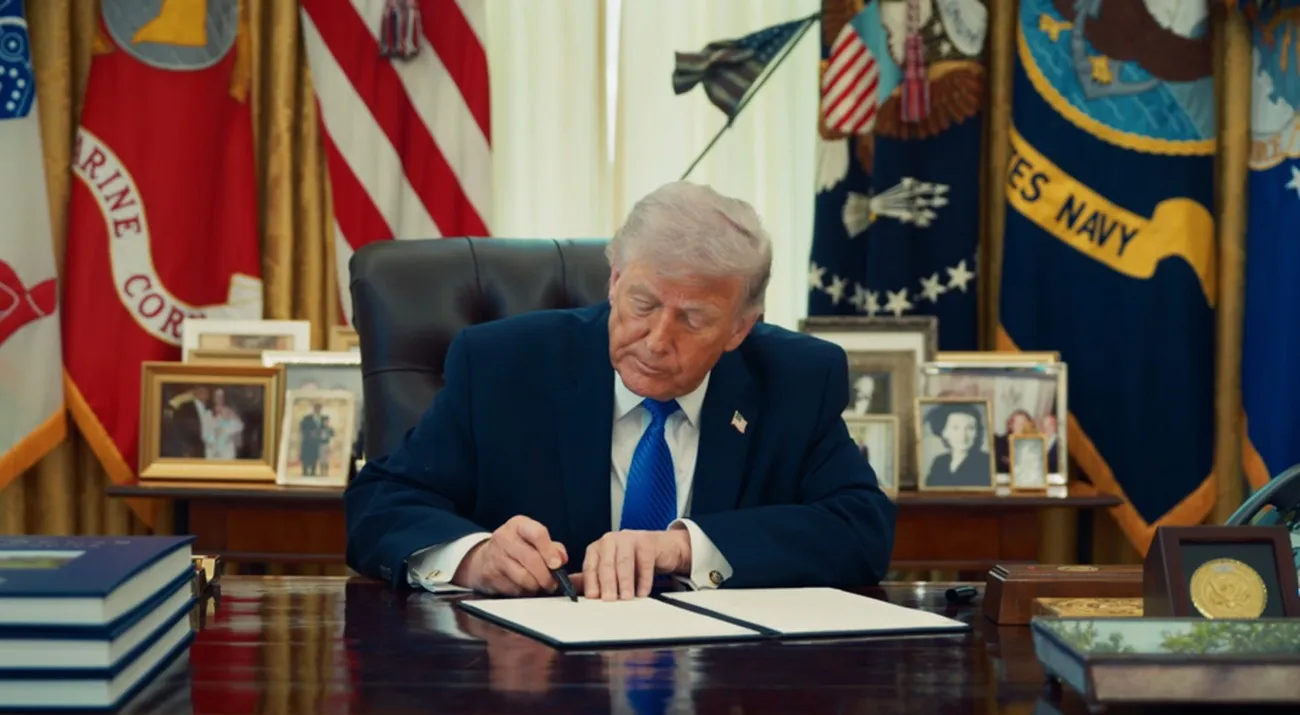
The Trump administration announced an $8B Harvest Fuel Relief program on Oct. 19, sending one-time payments to farmers facing record diesel prices during harvest.
USDA says the money will offset temporary market disruptions and higher input costs tied to the 2026 crop year.
President Trump unveiled the aid at a Kansas rally, where diesel costs have become a core complaint of growers mid-harvest. Diesel hit a record $6.53 a gallon on Sept. 22 and averages $6.32 now, against $3.62 a year ago, per AAA.
How the payments will work
The program copies the Farmer Bridge Assistance formula, using Farm Service Agency planted acres, Economic Research Service cost estimates, and WASDE yields and prices.
Payment rates for Title I commodity crops arrive in November 2026, with specialty crop growers and fishermen asked to email their own fuel cost data to USDA. Crop insurance isn't required, though farmers need a Login.gov account linked to USDA to collect.
Farmer Bridge Assistance paid $12B to more than 560K farmers earlier this year, and Agriculture Risk Coverage and Price Loss Coverage paid nearly $14B gross about two weeks ago.
Costs are rising faster than income
Fuel and oil expenses are forecast at $21.6B in 2026, up 28.8%, while fertilizer, lime, and soil conditioners reach $39.6B, up 15.3%. Total production expenses climb 4.5% to $492.8B, and net farm income slips 2.6% to $158.4B from $162.7B.
Change in US Farm Costs and Income, 2026 Forecast (% change vs 2025)
Bar chart. Change vs 2025 (%). Fuel and Oil: Change vs 2025 (%) 28.80%. Fertilizer, Lime & Soil: Change vs 2025 (%) 15.30%. Total Production Expenses: Change vs 2025 (%) 4.50%. Net Farm Income: Change vs 2025 (%) -2.60%.
Direct government payments are running near $47.4B this year, up nearly 70% from $27.9B in 2025.
Timing is tight because more than 64% of soybeans and almost half the corn crop had been harvested as of Oct. 18. Bloomberg ties the diesel spike to the US-Iran conflict limiting exports through the Strait of Hormuz.
An executive order earlier in October eased limits on tax-free red-dyed diesel, the off-road fuel farmers use in field equipment.
Not everyone sees cash as the fix. Center on Budget and Policy Priorities researcher Gbenga Ajilore argued ending the Iran war and the tariffs would do more for farm margins than payments.
Tariffs have already squeezed farm businesses, and farmers remain a key voting bloc heading into the midterms.

