
FinksDaily
💵 The debasement trade
Good morning. America’s home builders have a problem growing behind the walls, and now it’s spilling into courtrooms. Tighter energy-efficiency standards can trap more moisture in newer homes, contributing to a rise in mold-related lawsuits (opens in a new tab). D.R. Horton’s legal reserves have jumped 57% since 2022, while Lennar’s self-insurance reserve has reached ~$337M. The homes may be built to last, but so are the lawsuits.
Sector Spotlight
Wall Street Revives the Debasement Trade as Pressure Builds on the Dollar
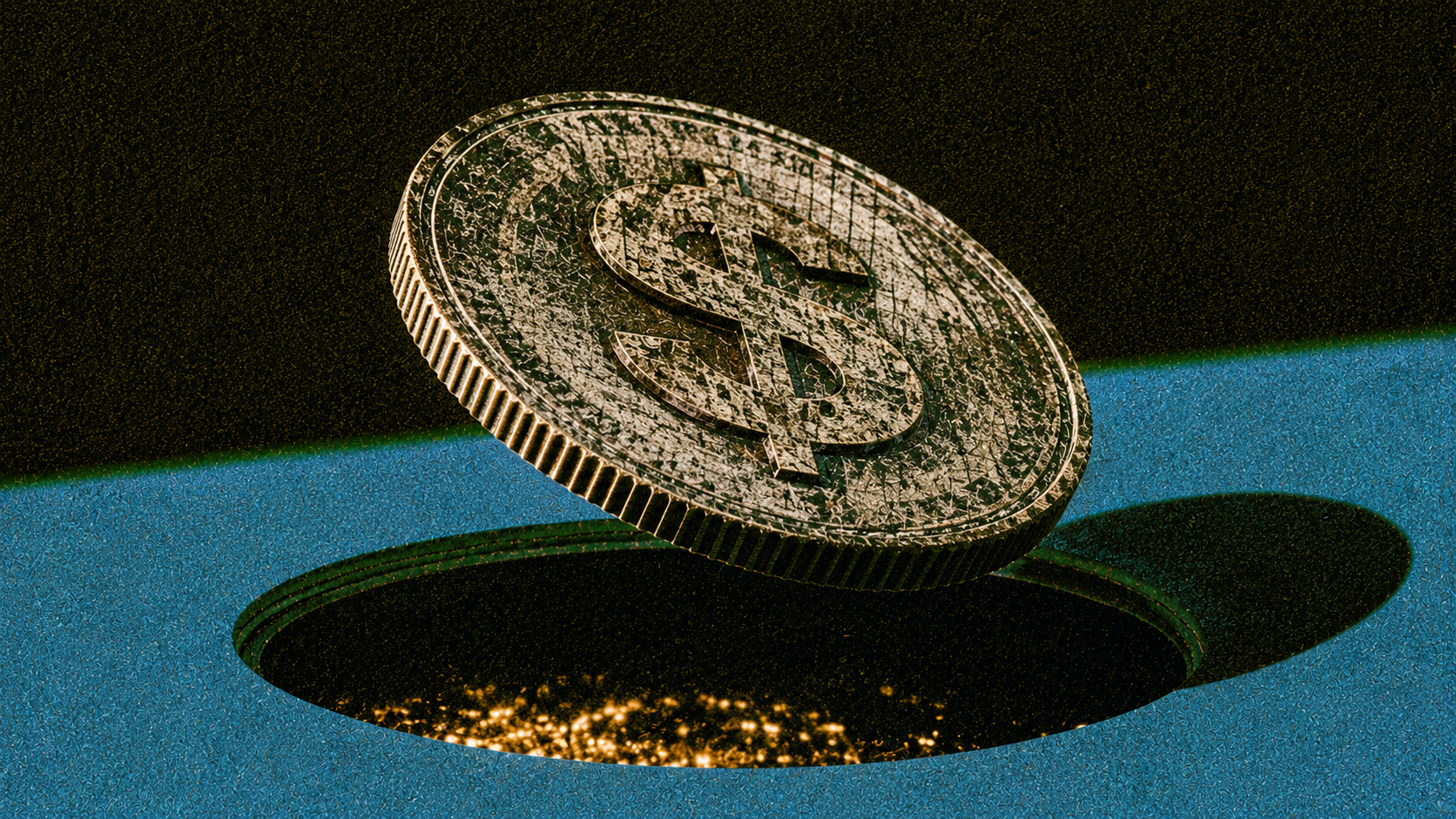
King Henry VIII debased his coins to paper over fiscal problems — and now Wall Street thinks Washington is running the same old playbook. The US dollar is under fresh pressure as investors question whether officials are quietly engineering a weaker currency to manage an exploding debt pile. Gold and Bitcoin are the prime beneficiaries, and the trade has a name.
Pressure valve: Bessent made two moves that put currency markets on edge. First, the US intervened (opens in a new tab) to support the yen for the first time in nearly three decades, signaling a willingness to step into FX markets. Then, as 30-year Treasury yields hit their highest level since 2007, Treasury doubled long-term bond buybacks to at least $4B. JPMorgan and Citi saw the move as an effort to push down yields rather than improve liquidity, while Deutsche Bank called it “soft-form financial repression.”
- Bitcoin jumped 22% for its best week in over two years, while gold gained 5.6% and the dollar weakened.
- The 30-year Treasury yield hit its highest since 2007 as US debt topped $40T (opens in a new tab), intensifying concerns over fiscal sustainability.
Why Capped Yields Hurt the Dollar
The debasement trade comes down to where the pressure goes. If the government keeps bond yields below market levels, the adjustment can shift to the dollar. Scotiabank’s Shaun Osborne said the trade-off is either higher yields or a weaker currency, while Societe Generale called Bessent the “Strong Dollar’s Nemesis.” Robin Brooks warned the US is “playing with fire,” pointing to Japan’s prolonged yen decline as a warning.
- Citi analysts believe (opens in a new tab) the Treasury can likely keep yields contained for some time, but “the main price to pay” would be a weaker US dollar.
- Central banks have continued building (opens in a new tab) gold reserves, partly to hedge against currency weaponization after Russia was cut off from much of the dollar-based financial system.
Not everyone is convinced: Skeptics point out that foreign investors still hold US Treasuries and buy US equities, keeping dollar demand intact. Standard Chartered’s Steve Englander argues strong US productivity and earnings also support the greenback. But the debasement trade ultimately hinges on Washington fixing its finances. If it doesn’t, the market’s patience with the dollar has a limit.
 (opens in a new tab)
Sponsored by Fisher Investment
Are avoidable mistakes putting your retirement at risk?
Even careful investors can make costly errors that put their retirement portfolio at risk. Have you considered how fees, inflation or market volatility could affect your savings over time? Learning ways to spot (and avoid) these pitfalls is key to achieving your long-term goals.
A financial adviser who understands your unique needs can help reduce unnecessary risk and keep you on track. Schedule a call with one of our experienced professionals to discuss gaps and opportunities in your strategy. In the meantime, download 13 Retirement Investment Blunders to Avoid (opens in a new tab) to help refresh your investment plan and prepare for your conversation.
Large-Cap Recap
Domestic Steel Producers Rally On New Tariff Shield
Domestic steelmakers surged on Monday after trade talks with Canada collapsed, prompting a 50% tariff announcement on Canadian steel imports starting in Jan. 2027. This move provides an immediate protective barrier for US producers like Nucor, Steel Dynamics, and Cleveland-Cliffs against foreign competition. That has helped reverse recent declines in the sector, as investors bet on higher domestic margins. While automakers face rising production costs, domestic steel production continues to outpace global trends. [Read (opens in a new tab)]
UPS Accelerates Global Logistics Expansion
United Parcel Service is investing over $2B through 2028 to modernize its international, healthcare, and supply chain businesses. The company is building new hubs in the Philippines, Canada, and Hong Kong while enhancing automation to improve delivery speeds. These upgrades support a pivot toward high-margin industries like temperature-sensitive pharmaceuticals and tech-driven logistics. By focusing on these specialized, faster-growing sectors, the company aims to move away from lower-margin volumes and better serve customers diversifying their global supply chains. [Read (opens in a new tab)]
Bitcoin And Crypto Stocks Stage A Breakout
Crypto surged after a surprise Treasury decision to double bond buybacks signaled fresh liquidity and pushed yields lower. The move boosted risk appetite, while President Trump’s push to pass the Clarity Act by Sept. 15 added to regulatory optimism and institutional demand. The rally gained further momentum as shorts were liquidated and spot bitcoin ETFs recorded their biggest weekly inflows since 2025. Bitcoin’s rise also lifted crypto stocks, including Coinbase and MARA Holdings. [Read (opens in a new tab)]
Market Pulse
Etsy, Inc.
Shares rose after the online marketplace reported better than expected quarterly earnings results driven by strong seasonal buyer demand.
Sandisk Corporation
The memory chipmaker’s shares fell on reports Apple could source memory chips from Chinese suppliers, raising fresh competition concerns.
XPeng Inc.
The Chinese EV maker’s shares fell after its third-quarter revenue forecast missed estimates amid intensifying domestic competition.
Markets & Economy
Hormuz oil data remains murky: The White House and ship trackers disagree sharply on crude flows through the strait. Tankers switching off transponders are forcing analysts to rely on incomplete satellite data, widening the gap between estimates. [Read (opens in a new tab)]
Investors rotate out of 2026’s biggest winners: This year’s top-performing stocks are leading the latest pullback on Wall Street, with chips and software under pressure. Financials, staples, and communication services are gaining instead, keeping the broader market relatively resilient. [Read (opens in a new tab)]
Wall Street doubts Treasury buybacks will tame yields: Goldman Sachs and Wells Fargo say larger bond purchases won’t meaningfully lower long-term rates. Inflation, deficits, and resilient growth remain the bigger drivers keeping yields elevated. [Read (opens in a new tab)]
Business & Tech
California halts Paramount settlement talks: Attorney General Rob Bonta canceled meetings with Paramount Skydance, citing leaked negotiations. The delay keeps its $110B Warner Bros. Discovery deal exposed to hefty quarterly fees. [Read (opens in a new tab)]
Tesla prepares Cybercab debut as rollout doubts persist: Tesla will unveil its purpose-built robotaxi on Sept. 3, but prediction markets see just a 17% chance of retail sales this year. Waymo’s lead underscores the challenge of scaling autonomy. [Read (opens in a new tab)]
Nvidia brings Groq chips to market after $20B deal: Nvidia said its Groq 3 LPX racks are now in production and will go online this year. The systems target faster AI inference for latency-sensitive applications like coding agents. [Read (opens in a new tab)]
Chart of the Day
Digit of the Day
ETF Closures Surge to 217 as the Market Gets More Crowded
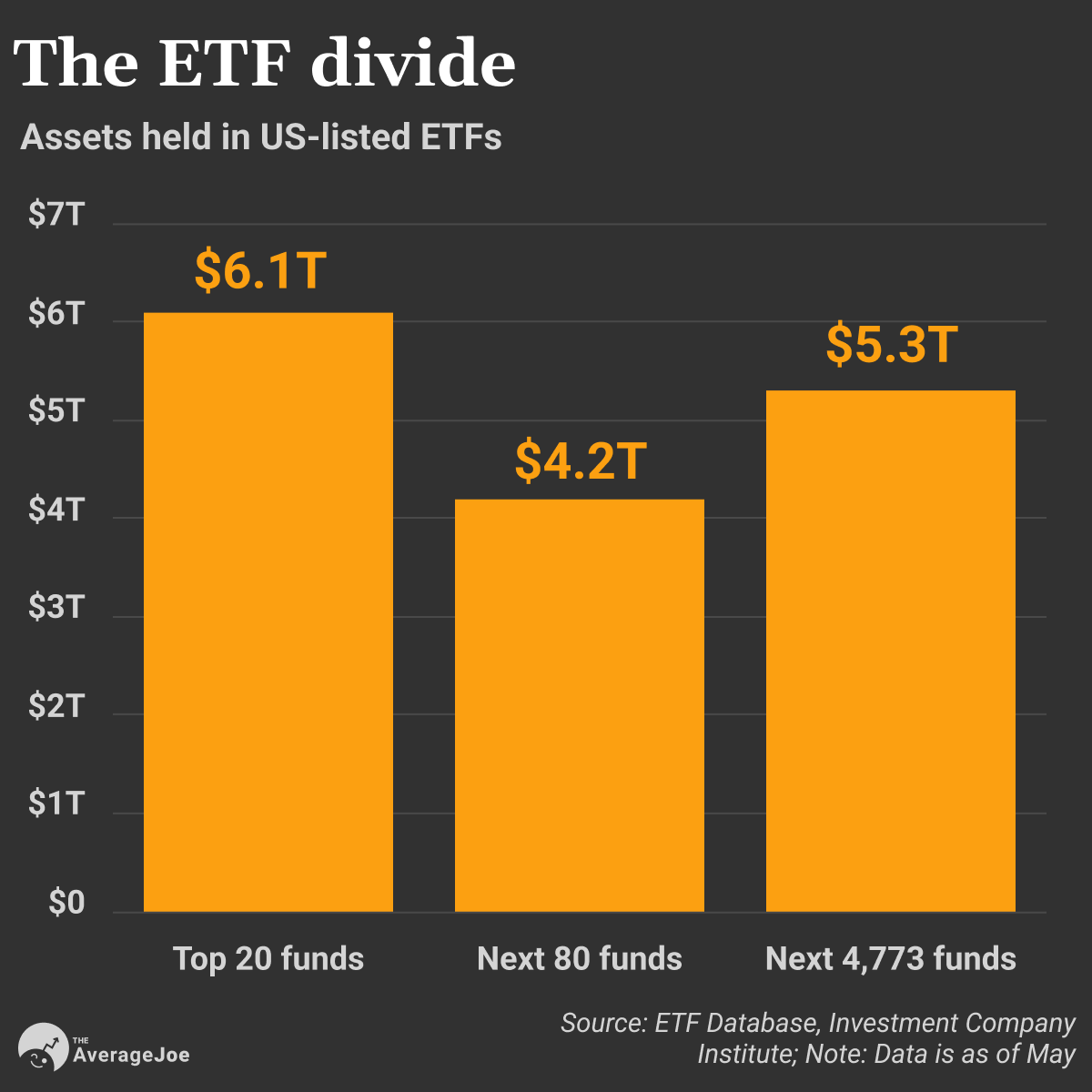
The ETF boom is creating a graveyard of failed funds. Closures have nearly doubled this year, with 217 US-listed funds (opens in a new tab) shutting down so far in 2026, up from 119 at this point last year. Fund companies are launching ETFs faster than investors can buy into them, and those that fail to catch on are getting cut.
- June alone saw 44 ETF closures (opens in a new tab), the second-highest monthly total on record, hitting BlackRock, Invesco, Bitwise, GraniteShares, and Direxion.
- More than 700 US ETFs launched in the first half of 2026, putting the industry on pace to smash last year’s record of 1.1K (opens in a new tab) new funds.
Pulling the plug: This year’s closures are a reminder that not every ETF survives. For investors, a shutdown can come with an unexpected tax bill because the IRS treats the liquidation as a sale. Selling before the final trading day gives you quicker access to your money, while waiting means getting paid on the fund issuer’s timeline.
Post Credits