
FinksDaily
💰 Value's winning streak
Good morning. Humanity perfected instant communication and immediately started looking for the undo button. Apps like Carrier Pidge and Roost (opens in a new tab) are exploding in popularity by bringing friction back to messaging, with texts delivered at pigeon speed or even snail pace. The appeal makes sense when 80% of Gen Z adults say their generation relies too heavily on technology. Nothing says digital detox quite like outsourcing your texts to virtual wildlife.
Sector Spotlight

How to Position Your Portfolio for Imminent Fed Hikes
The Fed is limbering up its hiking boots, and not every sector is ready for the climb. Futures markets are pricing in ~75% (opens in a new tab) odds of a rate increase by December. New Fed Chair Kevin Warsh's Jackson Hole speech could sharpen that timeline fast.
Sector winners: Barclays data show energy, materials, and technology have historically outperformed during rate-hiking cycles since the mid-1990s, putting them among the strongest sectors to watch today. Energy is already leading the pack, with the Energy Select Sector SPDR ETF up more than 40% this year, driven by ExxonMobil, Chevron, and ConocoPhillips. Barclays strategists call energy “the most resilient beneficiary of the late-cycle backdrop.”
- Freeport-McMoRan, a 2026 Barron's stock pick, is up more than 50% this year and trading at a record high.
- The broader tech sector trades at just 21x earnings estimates despite an estimated earnings growth rate of 42%, per Yardeni Research.
Markets Build a Cushion
How markets respond will largely come down to how far the Fed goes. JPMorgan Private Bank expects risk assets to hold up if the central bank delivers no more than two hikes. The S&P 500 has already fallen about 4% since rate-hike expectations started building in mid-June, suggesting markets have already absorbed a good part of the impact.
- Fed minutes show more officials favored (opens in a new tab) a July hike than the three who formally dissented, with many signaling support if inflation stays elevated.
- JP Morgan data show the S&P 500 averaged (opens in a new tab) a ~3.3% decline per 25-basis-point hike across the 2018 and 2022 cycles.
Where rates bite: Banks, consumer discretionary, utilities, staples, and real estate tend to struggle as higher rates weigh on valuations and dividend appeal. Barclays warns that financials and traditional defensives “have faced the greatest pressure as tighter financial conditions and rising discount rates weigh on earnings expectations and valuations.” Healthcare is the exception, with Yardeni Research overweight on attractive valuations and improving drug pipelines despite Barclays flagging pullback risk. In a hiking cycle, growth beats yield.
 (opens in a new tab)
Sponsored by Outskill
Build your own AI coworker in just 3 hours (for $0)
If you want to WIN in 2026, it cannot happen with just knowing the AI Tools, but knowing which ones to use for what purpose and knowing them well enough to hand over real work.
With 1000s of AI tools launching every week, it can be hard to keep a track and learn those. With thousands of AI tools launching every week, figuring out which ones are actually worth your time is the hard part.
Introducing the 3 Hours AI Tools Workshop (opens in a new tab), a live session that cuts through the noise and teaches you the ins & outs of the 15 most powerful AI tools right now,exactly which one to reach for depending on the job: research, writing, design, data, code, automation.
Not just this, but they will also teach you how to build your own AI Co-Worker that literally works 24/7 even while you’re asleep.
Large-Cap Recap
Value Stocks Outpace Growth as Market Leadership Widens
Value stocks are surging as investors shift capital away from high-flying tech names and into more reasonably priced sectors. The Russell 1000 Value Index is up 20% this year, fueled by a rotation into financials, healthcare, and cyclical manufacturing. This shift is supported by strong earnings growth across broader market segments and a macro backdrop favoring midcycle expansion. Institutional investors remain lightly positioned in these areas, suggesting the trend may have further room to run. [Read (opens in a new tab)]
Meta Diversifies Beyond Ad Revenue
Meta faces investor skepticism as high AI infrastructure costs drag on earnings. Beyond its dominant ad business, the company is betting on Hatch, a consumer AI agent for Instagram, and a potential, overlooked compute leasing business. If Meta successfully monetizes 0.5 to 1 gigawatt of its planned 14 gigawatts of capacity, analysts see significant potential revenue. Balancing these high-growth opportunities against regulatory pressure and security risks remains the central challenge for the tech giant. [Read (opens in a new tab)]
Apple Turns To Local AI Compute
Apple is transforming the Mac Mini and Mac Studio into specialized hardware for local AI development. These updated machines leverage the new M6 and M5 Ultra chips to process AI workloads directly, bypassing cloud dependency. Despite price hikes driven by memory chip shortages, demand remains high as developers utilize the hardware for local model processing. Investors should watch if Apple can resolve production constraints, specifically with its new Houston assembly line, to satisfy enterprise demand. [Read (opens in a new tab)]
Market Pulse
DICK'S Sporting Goods, Inc.
The sporting goods retailer’s shares plunged after earnings missed estimates and it cut its outlook amid weakness at Foot Locker.
Moderna, Inc.
The biotech’s shares rebounded as analysts turned more positive following successful Phase 3 results for its melanoma vaccine.
Target Corporation
The big-box retailer’s shares fell after backlash over a Halloween costume revived concerns about brand missteps during its turnaround.
Markets & Economy
US consumer confidence falls to seven-month low: The Conference Board index slipped to 89.4 in August as households grew more pessimistic about jobs and business conditions. Consumers also expect inflation to accelerate over the next year. [Read (opens in a new tab)]
US new home sales tumble in July: Sales of newly built single-family homes fell 10.5% to their lowest level since January as high mortgage rates sidelined buyers. The median sale price also dropped to a four-year low. [Read (opens in a new tab)]
Treasuries are losing their safe-haven edge: Investors are demanding higher returns as confidence in US fiscal discipline weakens and foreign buyers diversify away from dollar assets. That shift could make financing large federal deficits increasingly expensive. [Read (opens in a new tab)]
Business & Tech
Bitcoin and gold rise on debasement fears: Bitcoin climbed above $81K as investors moved into hard assets amid concerns that government intervention could weaken the dollar. Gold also reached a three-month high, while strong ETF inflows reinforced demand. [Read (opens in a new tab)]
Smart ring maker Oura eyes September debut: Oura Health is preparing for a US public listing in September that could value the company at over $16B. The Finnish firm reported $500M in revenue last year and projects that figure to reach $2B by late 2026. [Read (opens in a new tab)]
Crocs tops $1B in quarterly revenue: Crocs posted a record $1.18B quarter after cutting promotions and tightening wholesale supply. A $45M inventory cleanup helped margins improve, while HeyDude remains the weaker part of the business. [Read (opens in a new tab)]
Chart of the Day
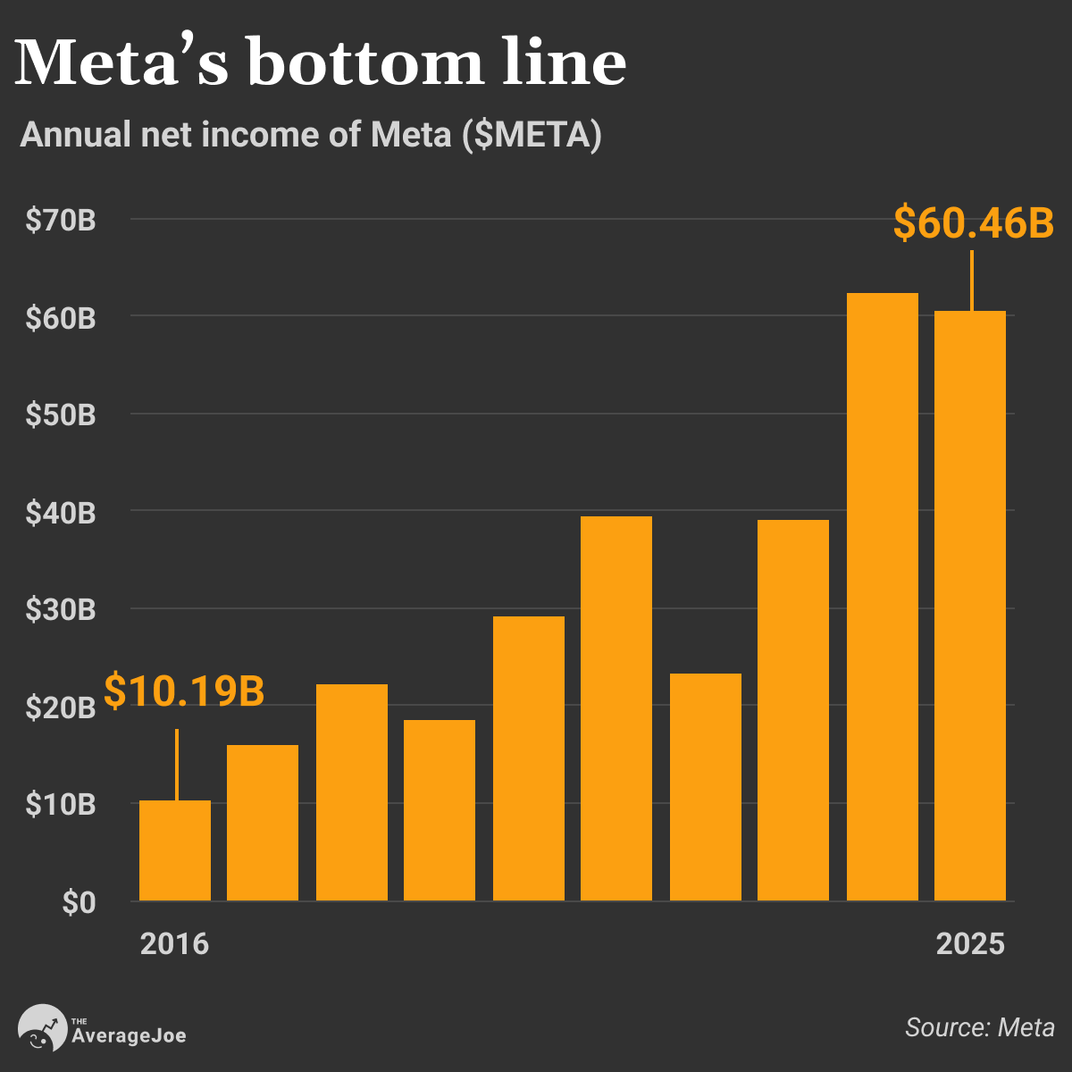
Meta's net income has climbed sharply since 2022, closing 2024 at $62.4B before easing slightly to $60.5B in 2025.
Digit of the Day
Canada Turns to 50% Tariffs After Trade Negotiations Break Down
Canada's trade patience has officially run out. After trade talks collapsed (opens in a new tab), Ottawa announced retaliatory tariffs of up to 50% on US products totaling ~$20B in imports, effective Sept. 8. Prime Minister Mark Carney pledged to match Washington "dollar for dollar," though he acknowledged the move "will raise costs and reduce choice for Canadians."
- Steel and aluminum tariffs double to 50% (opens in a new tab), while cheese, dishwashers, and seafood face 25% duties, and electronics and tools get hit with 15%.
- Canada paired the tariffs with a C$7.5B (~$5.4B) support package (opens in a new tab) covering loans and income supplements for affected firms and workers.
Retaliation's cost: Ottawa’s measures target just 7% of annual US imports, but the economic fallout could extend much further. Strategist Karl Schamotta calls countertariffs “effectively taxes on domestic consumption,” while Trump’s threat to double auto tariffs could put Canadian plants that send more than 90% of their output abroad under pressure. For Ottawa, hitting back without inflicting more pain at home is becoming a harder balance to strike.
Post Credits