FinksDaily
🏗️ Tech's valuation challenger
Good morning. Shoppers are spending like it's a boom year, even though Walmart is calling the mood softer than it was in February. Families are on pace to spend $147B (opens in a new tab) this back-to-school season, but they’re chasing every discount along the way, and retailers are sprinting to keep up. Walmart’s undercutting 2019 prices on school supplies while Target’s matching the energy, marking down 10K products since January to keep pace. If shoppers are this deal-hungry in August, retailers better brace for the holidays.
Sector Spotlight

Industrials Are Now Pricier Than Tech. The AI Buildout Explains Why
The grease-and-gears crowd has elbowed tech out of the valuation penthouse. Industrials now carry the highest valuation in the S&P 500, led by companies making machinery, power equipment, and aerospace hardware. AI spending has helped drive the rerating, and investors are betting it has further to run.
Valuations move upmarket: Industrials now trade at roughly 25 times (opens in a new tab) forward earnings, above the roughly 23 times commanded by large tech companies and well above their historical average of around 20 times. The shift has caught even market watchers by surprise. As DataTrek Research co-founder Nicholas Colas put it, “We’re pretty sure no one had ‘Industrials’ on their 2026 bingo card for best S&P valuation, but here we are nonetheless.”
- Nordson beat Q3 estimates as AI-linked semiconductor demand helped lift sales 10% and backlog 35%, with shares up 45% over the past year.
- Vertiv and Comfort Systems are riding AI infrastructure demand, with projected two-year sales CAGR of 25.7% and 19.6%, respectively.
AI Infrastructure Powers Industrial Growth
Two long-term tailwinds are driving the sector’s re-rating. The AI data center buildout is creating heavy demand for electrical equipment, power generators, turbines, and construction machinery, benefiting industrial names like Caterpillar, Eaton, and Deere. At the same time, RTX, GE Aerospace, and Boeing are benefiting from rising defense budgets and strong demand for commercial aircraft.
- GE Vernova trades at 37.1x forward earnings, down from 50.8x at the end of 2025, while projecting a 14.9% two-year sales CAGR.
- Industrial ETFs are showing signs of cooling demand, with State Street seeing weaker inflows (opens in a new tab) and Vanguard heading for its biggest monthly outflow since April 2025.
The durability question: Analysts at Bloomberg Intelligence warn that expectations for a cyclical recovery in 2027–28, combined with the AI boom, could leave industrial stocks vulnerable if growth falls short. One risk is that companies are simply pulling demand forward (opens in a new tab), concentrating years of AI infrastructure spending into 2026 and 2027. For now, investors are betting the buildout has further to run, with earnings growth supporting that view.
 (opens in a new tab)
Sponsored by Fisher Investment
Are avoidable mistakes putting your retirement at risk?
Even careful investors can make costly errors that put their retirement portfolio at risk. Have you considered how fees, inflation or market volatility could affect your savings over time? Learning ways to spot (and avoid) these pitfalls is key to achieving your long-term goals. A financial adviser who understands your unique needs can help reduce unnecessary risk and keep you on track. Schedule a call with one of our experienced professionals to discuss gaps and opportunities in your strategy. In the meantime, download 13 Retirement Investment Blunders to Avoid (opens in a new tab) to help refresh your investment plan and prepare for your conversation.
Large-Cap Recap
US Beef Import Plan Faces Structural Hurdles
President Trump announced plans to import 300K metric tons of ground beef to lower record prices, yet industry experts remain skeptical. Beef imports currently face minimal tariff barriers, and most foreign supply flows to fast food rather than grocery shelves. The core issue remains a historic cattle shortage, with the US herd at its smallest level since the 1950s. Companies like Tyson Foods are already restructuring by closing plants to adjust to this tighter supply environment. [Read (opens in a new tab)]
The US Auto Market Crown Is Within Reach For Toyota
General Motors faces a stiff challenge to its long-standing US sales lead from Toyota, as shifting strategies redefine the market. While GM prioritizes high-margin vehicles and leaner operations, Toyota is surging through volume-heavy models and hybrid dominance. This divergence is most visible in factory utilization, where Toyota leads at 92% compared to GM’s 73%. GM’s upcoming shift toward gas-powered SUVs in 2027 will prove whether its long-term restructuring can finally boost productivity and defend its market dominance. [Read (opens in a new tab)]
Restaurant Stocks Enter a New Order
Restaurant stocks are splitting into two distinct camps as consumer spending tightens. Global franchise models like Restaurant Brands International and Yum! Brands are holding firm, benefiting from asset-light structures and international diversification. Conversely, domestically focused fast-casual names face a brutal repricing. High valuations for companies like Chipotle Mexican Grill and Wingstop are collapsing as younger consumers pull back amid credit strain. Sit-down chains like Texas Roadhouse are currently outperforming as consumers pivot toward perceived value. [Read (opens in a new tab)]
Market Pulse
Robinhood Markets, Inc.
The brokerage platform’s shares surged as renewed hopes for clearer US crypto regulation lifted digital asset stocks.
Marvell Technology, Inc.
The chipmaker’s shares fell as investors took profits following a two-day rally fueled by its expanded Google AI chip deal.
USA Rare Earth Inc
The rare earth miner’s shares surged as investors piled into critical minerals amid a broader rotation into hard assets.
Markets & Economy
Gold hits three-month high on Treasury bond buyback expansion: Gold is on track for a 5% weekly gain as investors bet that aggressive government debt buybacks will weaken the dollar. Bullion-backed ETFs recorded their largest single-day inflow since September 2025. [Read (opens in a new tab)]
Vaccine uncertainty poses growing public health challenge: Most Americans aren’t firmly anti-vaccine, but many remain unsure about safety and effectiveness. That hesitation is becoming more consequential as childhood vaccination rates slip and measles cases climb to a 35-year high. [Read (opens in a new tab)]
US business activity hits four-year high: The S&P Global composite PMI rose to 56 in August as services strengthened and hiring accelerated. Manufacturing growth slowed, but easing input costs and stronger confidence pointed to resilient economic momentum. [Read (opens in a new tab)]
Business & Wealth
Samsung plans $80B shareholder return: Samsung Electronics announced a record-breaking return package, committing 50% of its free cash flow to investors. The move follows a 250-fold jump in quarterly chip profit driven by the AI boom. [Read (opens in a new tab)]
States move to outlaw ghost job postings: Nearly 20% of online listings lead to no hiring activity, wasting significant time for applicants. Lawmakers in New York, Pennsylvania, and Texas are now pushing legislation to force companies to provide accurate, transparent hiring timelines. [Read (opens in a new tab)]
Volkswagen warns deeper cuts are needed: Volkswagen CEO Oliver Blume said overhead costs remain far above rivals as the automaker prepares a major restructuring. Plans could include tens of thousands of job cuts and division carve-outs to restore competitiveness. [Read (opens in a new tab)]
Chart of the Day
Digit of the Day
Health Insurance Costs Set to Jump 11.1%, a Two-Decade High
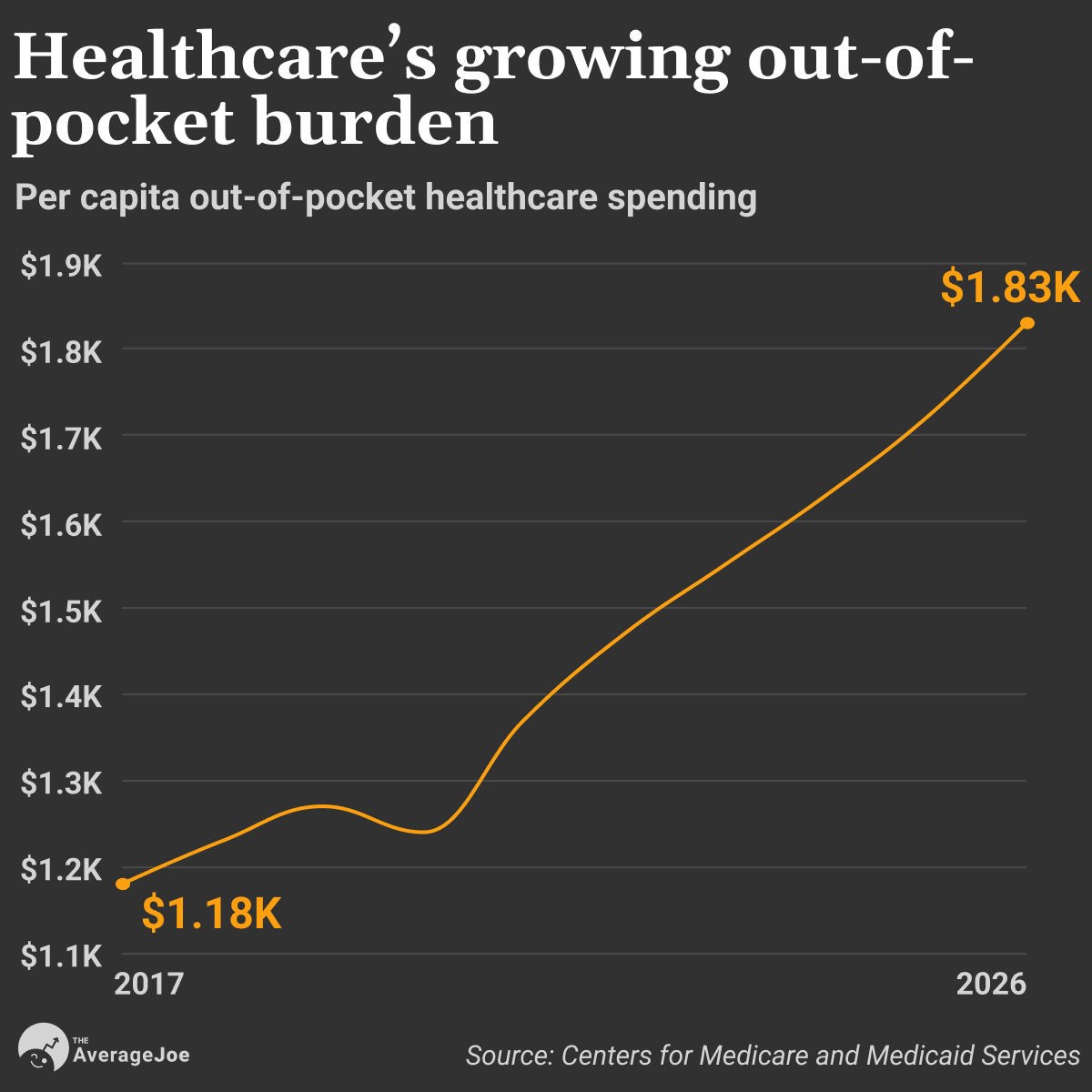
Your paycheck is about to get a health-insurance haircut. Employers are staring down an 11.1% surge (opens in a new tab) in 2027 health costs, the steepest jump in more than two decades, according to a new WTW survey. As insurers and hospitals raise costs, workers are bracing for the impact to trickle to their wallets.
- For a fourth straight year, employer healthcare costs will rise near double digits — now commanding $19K+ (opens in a new tab) per employee, according to Aon.
- That comes as GLP-1 use jumped 75% (opens in a new tab) among the consultant’s clients last year — compounding “unsustainable” costs from cancer treatments and specialty drugs.
Feeling it directly: As healthcare’s bite increases, employers and workers are fighting over what’s left. Workers are already footing $5.3K in 2026 for coverage, up 7.9% from last year. Harvard’s Michael Chernew notes healthcare spending has been outpacing income growth, squeezing every paycheck further. Small businesses aren’t spared either, with one West Virginia glassmaker now spending more on healthcare than it clears in profit. With little relief in sight for 2027, expect employers to explore network cuts and other cost-control moves, risking backlash from workers already stretched thin.
Post Credits