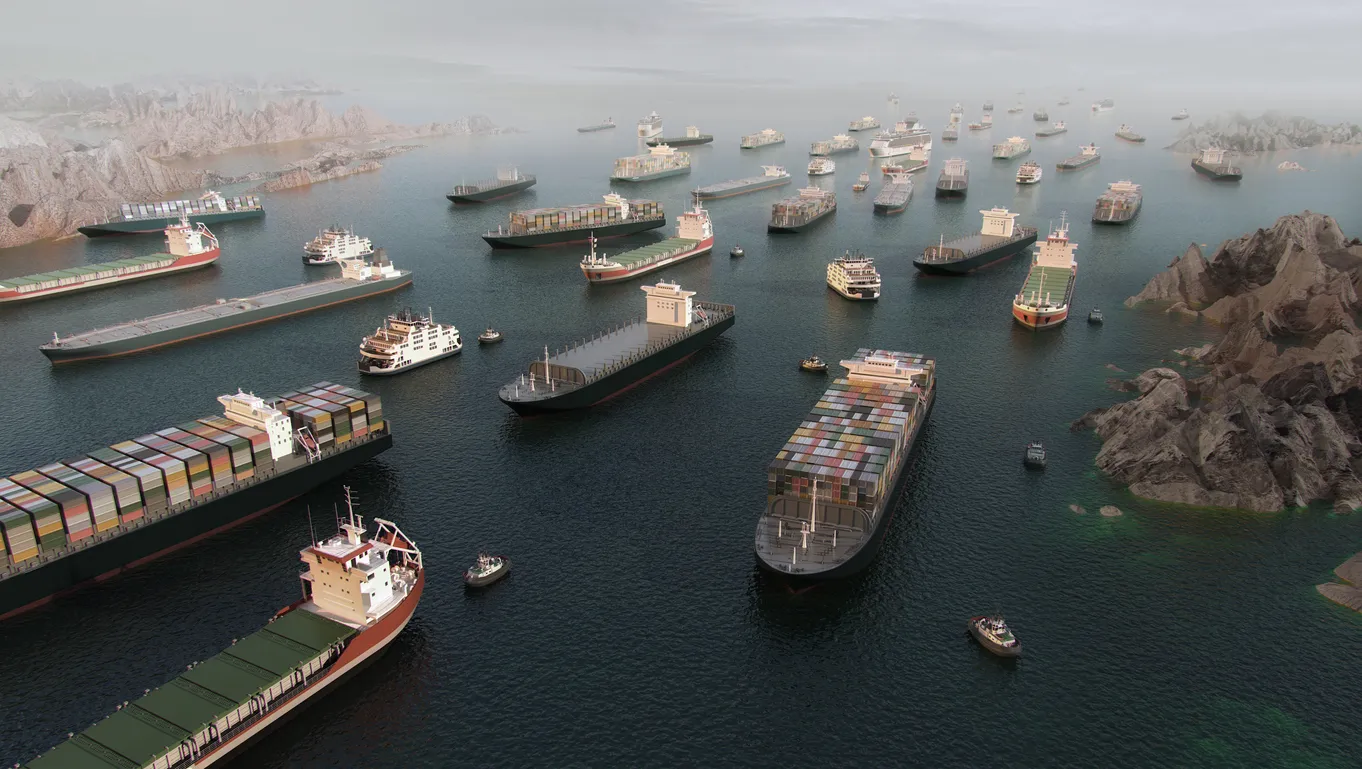
Energy Secretary Chris Wright says the US military has helped move more than 8M barrels of oil per day through the Strait of Hormuz over the past week. Commercial ship trackers put the number at roughly 2M to 6M barrels a day.
Oil prices, bond yields, and Washington’s economic pressure on Tehran all depend on how much crude is actually getting through.
Kpler, a ship-tracking firm, estimates Hormuz crude exports have run at roughly 2.3 million barrels per day so far in August, down from 4.9M in July.
Vortexa, another tracker, recorded a seven-day peak of 9.2M barrels per day recently, close to Wright's figure, but its 28-day moving average sits at roughly 6M, underscoring how much the picture shifts depending on which dates you pick.
The core problem is that many tankers are crossing dark. Ships normally broadcast their position via AIS transponders, but with vessels switching them off before entering the strait, analysts are left piecing together voyages from satellite images and other clues.
"What's remarkable is how similar tanker trackers' numbers are. You'd expect someone to have figured out a way to validate the White House numbers if there was a way."
Rory Johnston, Commodity Context
Loading data from inside the Persian Gulf adds another check. LSEG puts crude and product loadings at roughly 4.4M barrels per day in July and just 1.9M so far in August, well below Washington's transit claims.
Oil markets aren't panicking yet
Brent crude fell 2.5% to roughly $92 a barrel on Monday, still up nearly 30% since the war began but well off earlier wartime highs.
The narrowing gap between physical Gulf crude prices and futures benchmarks, once as wide as $36 per barrel and now less than $6, suggests the market is not in a panic over supply.
While the numbers debate plays out in trading rooms, fuel shortages inside Iran are worsening. Long queues at Tehran petrol stations were reported over the weekend, driven by fears of price hikes.
A senior Iranian energy official cited a daily gasoline deficit of 14M to 15M liters, caused by war damage to fuel infrastructure and shifting budget priorities.
Gasoline prices are a deeply sensitive issue in Iran, where state subsidies keep fuel among the cheapest in the world. Past price hikes triggered deadly protests in 2019.
On Monday, Treasury Secretary Scott Bessent vowed to unveil new Iran sanctions targeting Chinese refiners and the banks funding them, calling it the greatest coordinated economic isolation in the history of the world.
Iranian oil cargoes to Asia have already dried up, with prices flipping from a discount to a roughly $4-per-barrel premium over global benchmarks.
US gas prices hit a national average of $4.10 a gallon on Monday, up 38% since the war began. Diesel averaged $5.61, up 49% over the same period.
Ultimately, the physical market will settle the debate: the oil either reaches buyers’ terminals or it doesn’t.

