Tesla’s Cybercab Is Almost Here. Wall Street Still Has Plenty of Questions
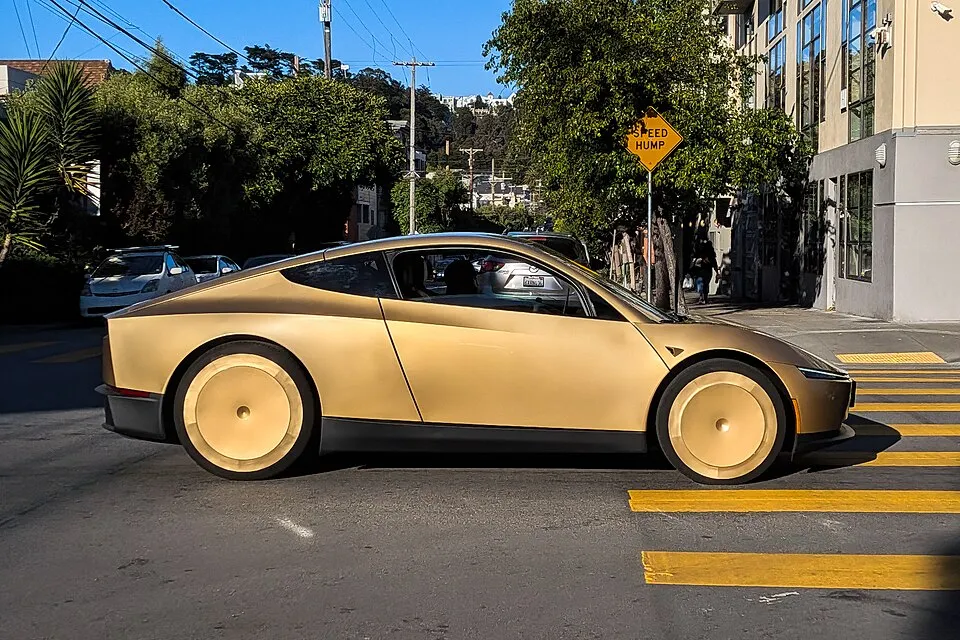
Tesla confirmed a production Cybercab launch event in Austin, Texas, on Sept. 3, but prediction markets give the company just a 17% chance of selling one to a retail customer by year-end.
The Cybercab is a two-seat, purpose-built robotaxi with no steering wheel and no pedals, running on Tesla's Full Self-Driving software.
Elon Musk has promised retail buyers a price of $30K or less before 2027, but prediction market confidence has fallen from 33% in late April despite the upcoming event.
The Sept. 3 launch is expected to start with employee rides before the Cybercab joins Tesla's localized Austin robotaxi service, putting it into commercial service without placing it into retail hands.
Tesla also recently omitted its previous target for volume production in 2026 from its second-quarter financial update, and Musk warned investors the initial production ramp would be agonizingly slow.
Software questions loom large
The Cybercab's launch comes with serious questions about whether its technology is ready for unsupervised public roads.
Tesla's Full Self-Driving software remains under active investigation by the National Highway Traffic Safety Administration for traffic compliance failures, according to independent safety experts and federal regulators.
Over a year after its robotaxi service launched, Tesla still uses human safety monitors in some markets, but the Cybercab is designed to operate without any human intervention.
Tesla says remote operators can take control in emergencies, and it recently added Starlink to its Cybercabs to address connectivity concerns.
Mileage is another gap. Tesla's unsupervised robotaxis have driven 380,000 miles across six cities. Alphabet's Waymo has logged over 220 million fully driverless miles on public roads since 2020.
"We need to accumulate driving data that is specific to the Cybercab before we can put a lot of them on the road."
Elon Musk, Tesla
Nevada recently added a regulatory tailwind. The Nevada Transportation Authority unanimously approved permits for Tesla, Waymo, and Uber to run commercial robotaxis in Clark County, authorizing up to 8K driverless vehicles over the next 12 months.
Tesla drew the largest allocation at roughly 5K vehicles, though its Cybercab chief engineer told regulators the company expects to field roughly 2.5K within the year.
Waymo was cleared for up to 1K vehicles, and Uber secured 1K more through partnerships with Hyundai-backed Motional and Amazon's Zoox.
Locally, taxi and livery operators pushed back against the permits, warning of oversaturation and congestion near the Las Vegas Strip and airport.
The Cybercab's lack of traditional controls also creates a federal barrier to retail sales, since US safety rules require pedals and side mirrors on vehicles sold to the public.
Tesla’s premium valuation rests heavily on its robotaxi fleet becoming a scalable autonomous ride-hailing network. The Sept. 3 event won’t prove that case, but it will mark another step toward it.

