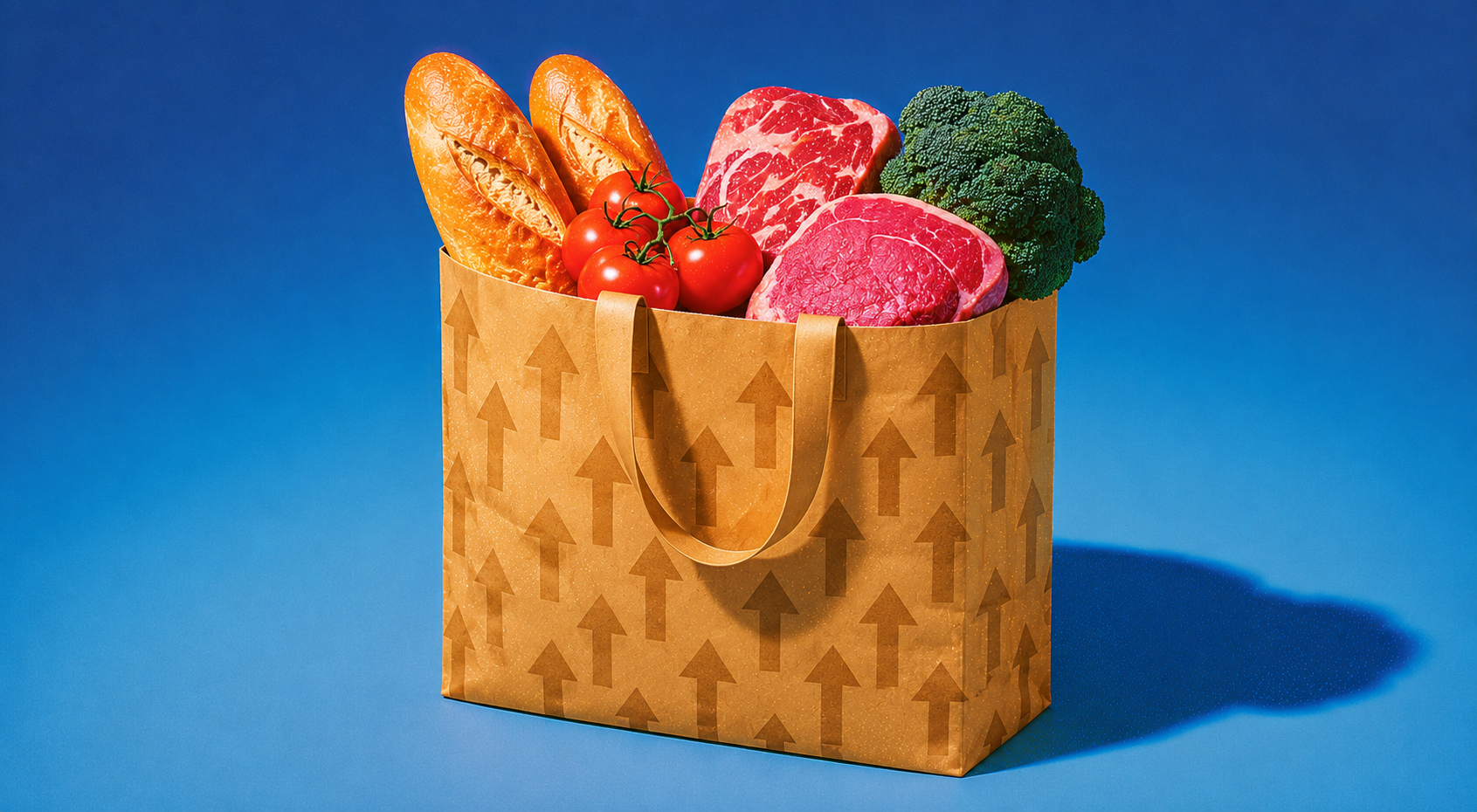
Grocery prices in April 2026 posted their biggest monthly jump in nearly four years.
Severe weather, trade tariffs, a shrinking cattle herd, and war-linked fertilizer costs are all pressing prices higher at once.
Beef and veal prices were 14.8% higher in April 2026 than in April 2025, with the USDA projecting a 12.1% full-year increase.
The cattle herd driving that pressure is at its smallest in 75 years, squeezed by drought and high production costs.
Fresh tomato prices were 39.7% higher in April than a year earlier, per the same USDA report, after Florida winter storms hit the peak growing season and import tariffs cut Mexican shipments.
Overall, the food-at-home consumer price index rose 0.7% from March to April and was 2.9% higher year-over-year (YoY).
The USDA's Economic Research Service forecasts food-at-home inflation at 3.2% for 2026, already above the 20-year historical average of 2.6%.
Ricky Volpe, an agribusiness professor at California Polytechnic State University, puts the number higher still, expecting food inflation closer to 4% to 4.5%.
"It's going to be a challenging year," Volpe told Bloomberg.
More Pressure Is Still Coming
As of May 19, 70% of US winter wheat production sat in drought zones, along with 25% of corn production, per the National Drought Mitigation Center.
California's Sierra Nevada snowpack sat at just 23% of typical levels as of mid-April, threatening irrigation for a state that accounts for nearly half of US vegetable cash receipts.
Fertilizer prices are up 20% since the war began, per a Green Markets index, adding costs that won't fully reach store shelves until harvest.
Forecasters now expect an El Niño weather pattern to emerge by August, with rising odds of a powerful event that persists into 2027.
Real average hourly earnings fell in the 12 months through April for the first time in three years, per Bloomberg. Household debt is rising and the personal saving rate is falling.
Retailers Race to Absorb the Shock
Kroger, the largest US supermarket chain with roughly $150B in annual revenue, is launching a broad price-cutting push across thousands of items.
"The basket has to come down," CEO Greg Foran said, per the NY Post.
Walmart has already cut prices on over 7,200 items, a 20% reduction from a year ago, per the same report.
Planting decisions already made this spring have locked in autumn harvest sizes. Any meaningful price relief before the November midterm elections would require a reversal of forces that are still accelerating.

