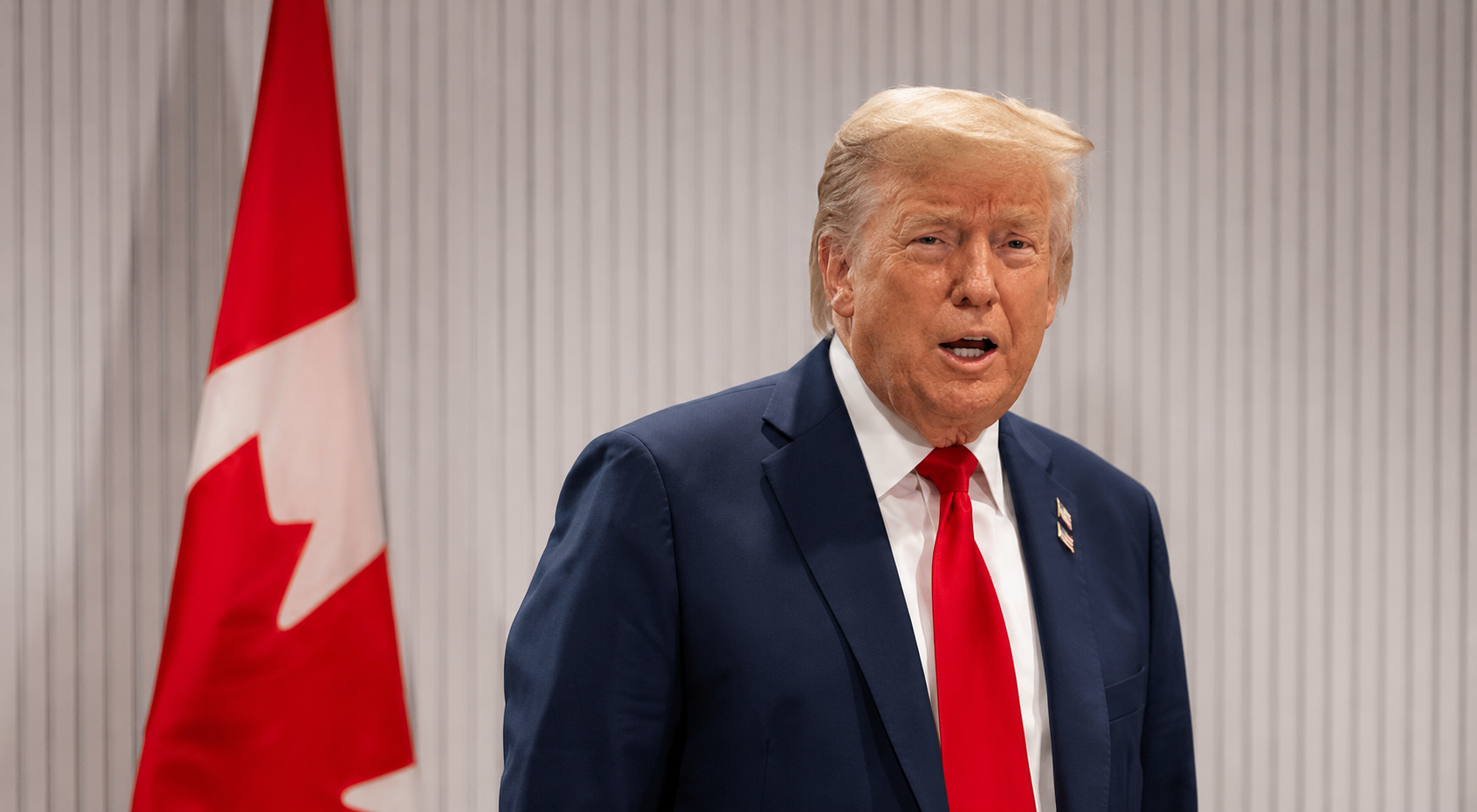
President Trump signed three proclamations Monday imposing 50% tariffs on Canadian goods, targeting the auto, dairy, and alcohol sectors in what the White House called a response to Canada's "continued discrimination" against US goods.
The tariffs cover more than 500 Canadian products worth roughly $20B, or about 2% of the entire goods trading relationship between the two countries, which totaled roughly $720B last year.
Everyday items like wine and hockey sticks are on the list, along with industrial goods such as cement.
Several major categories are exempt, including energy, potash, fish, and critical minerals, as well as goods already facing national security tariffs like steel and many auto parts.
The tariffs are levied under Section 338 of the Tariff Act of 1930, a provision never previously used in this way. Legal experts expect immediate challenges, and the Cato Institute's Scott Lincicome called the invocation "the nuclear option for Trump tariffs."
These tariffs apply even to goods previously protected under the US-Mexico-Canada Agreement, the trade pact Trump himself negotiated during his first term.
Canada isn't backing down
The tariffs won't take effect for 30 days, a window both sides say they intend to use.
Prime Minister Mark Carney said he spoke with Trump and both leaders agreed to accelerate trade negotiations in the coming weeks, though Carney stressed he'd only accept a "comprehensive agreement."
Carney has been building toward this moment since being elected last year on a platform of resisting Trump's pressure while diversifying Canada's trade relationships away from the US.
His room to maneuver appears solid at home. A recent Abacus poll found that while six in ten Canadians see reaching a deal as urgent, only one in five said Canada should make compromises to get there faster.
Ontario Premier Doug Ford took a harder line, saying Canada should respond "tariff for tariff, dollar for dollar" if the duties proceed.
What's actually driving this
The Trump administration pointed to three specific grievances: Canada's 25% retaliatory tariff on US vehicles not covered under USMCA, restrictive dairy quotas on US cheese, and the decision by most Canadian provinces to pull US alcohol from government-run shelves starting in 2025.
Canada was one of only two countries, along with China, to retaliate against Trump's earlier tariff rounds, a fact the White House has repeatedly cited.
Trump and Carney crossed paths at the World Cup final Sunday, but a senior administration official said that meeting wasn't a working session on trade.
The US Supreme Court struck down many of Trump's prior tariffs this February, ruling he exceeded his authority under emergency powers, pushing the administration toward older legal statutes like Section 338 to continue its trade agenda.
Talks with Mexico, by contrast, have been described as far more constructive, with a new round scheduled for later this week.

