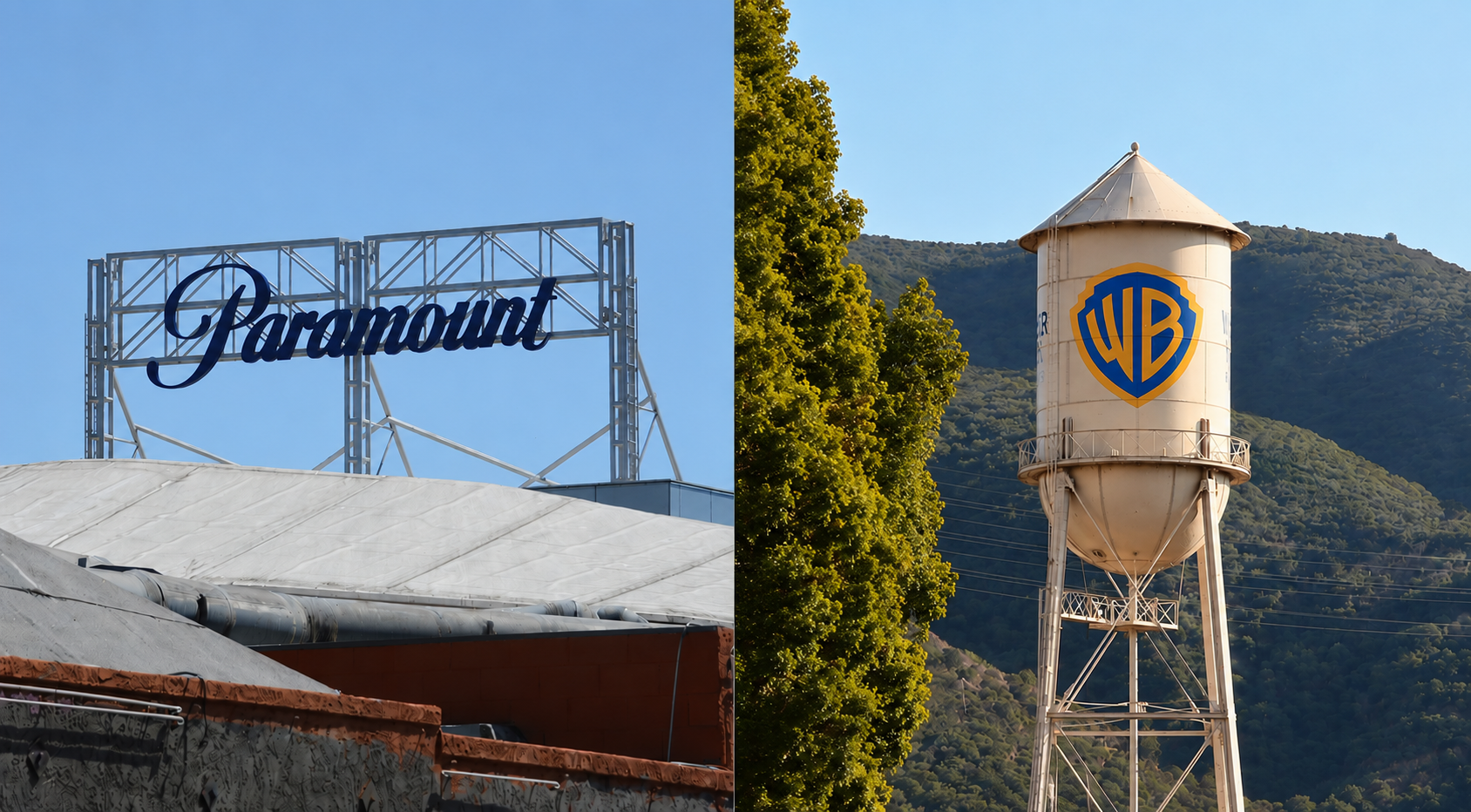
Paramount Skydance agreed Friday to freeze its proposed roughly $110B acquisition of Warner Bros. Discovery until at least June 1, 2027, after a coalition of 12 state attorneys general sued to block the deal on antitrust grounds.
The standstill extends a temporary restraining order issued earlier this week by Judge Araceli Martinez-Olguín of the Northern District of California. It takes effect only after the judge formally approves it.
The states filed a 38-page complaint arguing the deal would extinguish competition in Hollywood. They contend it violates Section 7 of the Clayton Antitrust Act, which bars mergers likely to substantially reduce competition.
The states focus their challenge on three specific markets: wide-release theatrical film distribution, anticipated top-grossing movie distribution, and the market for distributing basic cable channels to cable and satellite providers.
The Writers Guild of America filed its own separate antitrust lawsuit this month.
The ticking fee
The delay is expensive for Paramount. The company agreed to pay WBD shareholders a quarterly ticking fee of 25 cents per share — roughly $650M every three months — starting Sept. 30 if the deal hasn't closed.
Paramount had previously said it intended to wrap up the transaction by the end of September. The merger agreement expires June 4, 2027, if no deal closes by then.
Despite the mounting costs, Paramount framed Friday's court filing as a win. The company said the freeze gives it a direct path to trial, where it plans to argue the deal is pro-competitive.
"This transaction is good for competition, good for consumers, and good for creators."
Paramount Spokesperson
Paramount's argument rests partly on the regulatory clearance it's already received. The US Department of Justice approved the deal in June. European antitrust regulators, along with authorities in Australia and China, also signed off.
The deal, announced in February after David Ellison's company outbid Netflix, would combine Paramount Pictures and Warner Bros. Pictures, the streaming services Paramount+ and HBO Max, and broadcast and cable networks including CBS and CNN.
The deal's fate now rests with Judge Martinez-Olguín, who must weigh whether the states' market definitions hold up against Paramount's claim that they don't reflect today's entertainment landscape.

