

FinksDaily
Sponsored by Elf Labs
🦃 Thanksgiving's rough flight
Good morning. America's Thanksgiving tradition of paying a fortune to sit in traffic is finally losing its charm. Holiday travel is expected to dip for the first time since the pandemic as 81.5M Americans (opens in a new tab) prepare for a trip that's getting harder on the wallet. Flying home now costs an average of $800 roundtrip, up 17% from last year, while drivers aren't catching much of a break with gas prices near record highs for the holiday. Throw in storms on both coasts, and staying home with the leftovers is starting to look like a luxury.
Top Idea
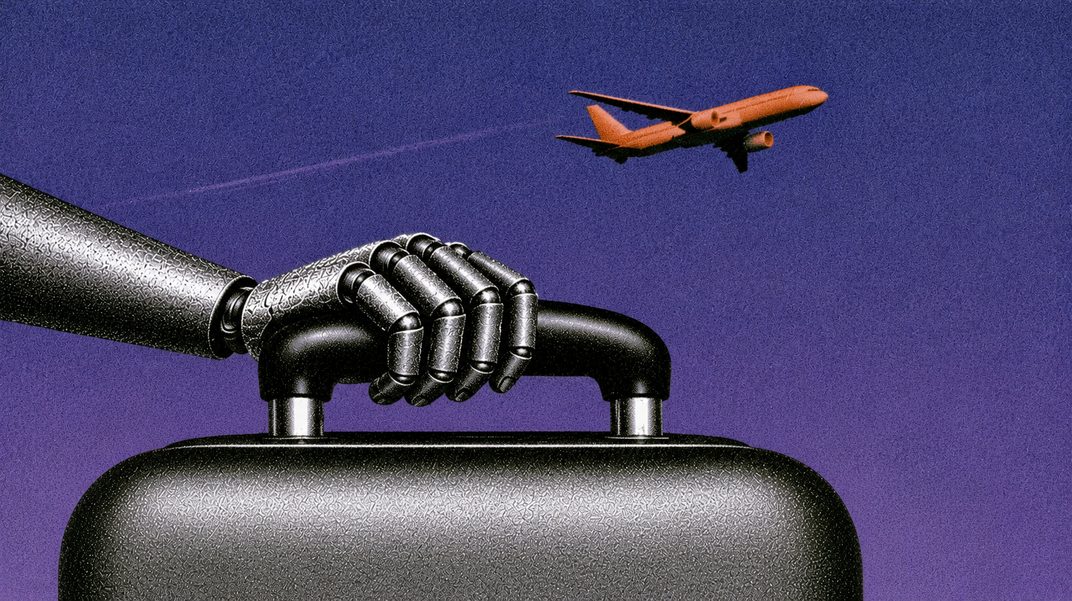
Online Travel Stocks Trade at a Discount as AI Agents Fail to Dent Bookings
When Meta launched Muse in September, Wall Street was ready to write the travel booking industry's obituary. Investors feared AI agents would let travelers bypass Expedia and Booking Holdings, sending shares tumbling as traders turned to hotel chains. Nearly three months later, booking numbers suggest those fears may have been premature.
Travelers aren't budging: Expedia Group saw third-quarter gross bookings rise (opens in a new tab) 11% to $34B, while Booking Holdings reported a 10% increase to $55B. And despite all the hype, referrals from large language models still account for well under 1% of Booking's room nights. Expedia CEO Ariane Gorin believes there is still a difference between letting AI plan a vacation and trusting it with your money.
- Airbnb outpaced both rivals last quarter, with gross booking value jumping 21% to $27.7B.
- Booking's OpenTable seated 190K diners through ChatGPT in September before becoming Muse's first dining partner.
Travel Companies Join the AI Race
Travel companies are already taking steps to keep AI agents from cutting them out of bookings, though not everyone is going about it the same way. Expedia introduced more than 30 AI features in October, including a Vrbo voice assistant that handled over 15% of customer inquiries in its first two months. Conversely, United Airlines is blocking unauthorized third-party booking tools from accessing its systems altogether.
- Citizens named Expedia the most exposed to disruption from AI booking agents in November, with Booking Holdings following closely behind.
- B. Riley's testing found Expedia remained the default source for hotel searches within Meta Muse, despite concerns about AI replacing booking platforms.
The hidden cost: Expedia's advertising revenue growth slowed from 13% to 7% last quarter, while Bank of America warns that Meta could eventually charge commissions on bookings made through Muse. That could force travel agencies to pay for customers they previously attracted on their own, putting further pressure on margins. Even so, the feared disruption has yet to make a dent in actual bookings.
 (opens in a new tab)
Sponsored by Elf Labs
Hollywood Shut Everyday Investors out of a $110B IP Deal. Elf Labs Is Letting You In.
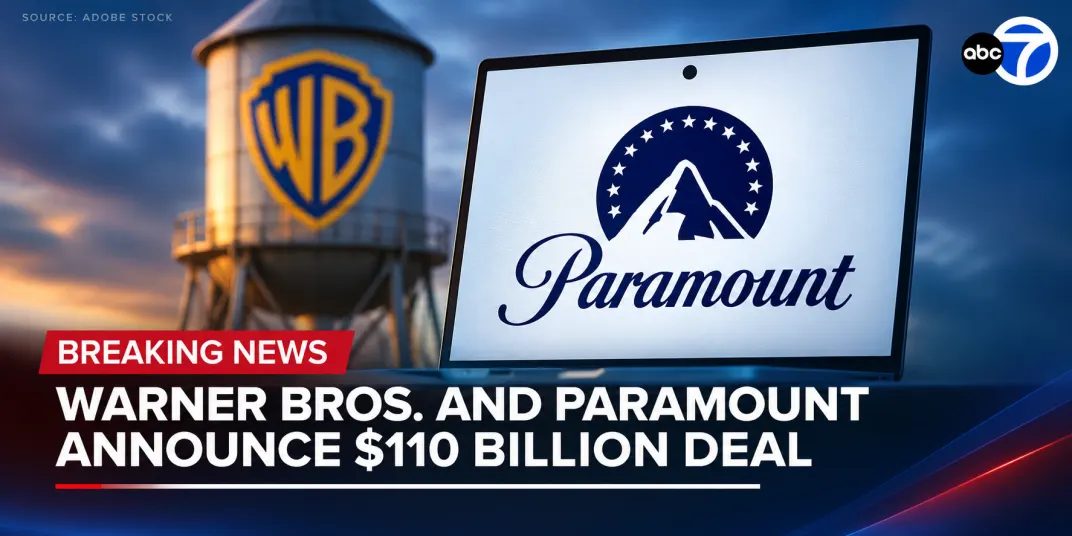
Paramount Skydance just paid $110B for Warner Bros. to buy one thing: its audience. Everyday investors were shut out.
Elf Labs (opens in a new tab) is changing that.
After a 15-year legal effort that went all the way to the Supreme Court, it secured historic rights to 500+ iconic assets including Cinderella, Snow White and more.
And this time, it's letting investors participate.
- Major motion picture deal signed.
- licensing team
- 100+ licensed products already signed up
- 4,000+ investors.
- Share price up 2,000%.*
Now everyday investors can get in while Elf Labs is still pre-IPO: $2.98/share, with up to 20% bonus shares.
Large-Cap Recap
AMC Entertainment Stages a Box Office Comeback
AMC Entertainment is finally giving investors something to cheer about. The theater chain reported record third-quarter revenue of $1.71B and $109M in free cash flow, its first positive third quarter in more than a decade. CEO Adam Aron is counting on premium screens and a strong holiday movie lineup to keep theaters busy. But with a hefty debt load still hanging over the company, AMC needs more than a few box office hits to turn its comeback into a lasting recovery. [Read (opens in a new tab)]
Jensen Huang Returns to Nvidia as Growth Powers On
Jensen Huang is back at the helm, but Nvidia has plenty of unfinished business left to sort out. The chipmaker posted $115.8B in quarterly revenue, driven by surging demand for its AI hardware across cloud and enterprise customers. Yet the blockbuster earnings arrived alongside new governance committees, an ongoing independent investigation, and tighter US export scrutiny following Huang's brief absence. The AI market may still be running at full speed, but Wall Street is learning that even market leaders require a pit crew. [Read (opens in a new tab)]
Trump Meme Coin Dinner Draws Smaller Crowd as Value Plunges
Dinner with President Donald Trump is getting a lot cheaper, and his crypto investors aren't celebrating. Trump recently hosted another gathering for token holders at his Virginia golf club, even as his meme coin slipped below $1. Public leaderboards showed qualifying wallets holding just $8.6M in tokens, a far cry from earlier events. Trump's family has reportedly collected $2.3B across its crypto ventures, while investors who bought near the peak are sitting on steep losses. The price of getting close to the president has dropped, but so has the value of the invitation. [Read (opens in a new tab)]
Market Pulse
Dell Technologies Inc.
The computer maker’s shares surged as Jensen Huang’s return to Nvidia sparked a broad AI hardware rebound ahead of Dell’s quarterly earnings.
SK hynix Inc.
The memory chipmaker’s shares surged as memory stocks rebounded from last week’s selloff, helped by new market-support measures in South Korea and Taiwan.
Cadeler A/S
The offshore wind vessel operator fell sharply as broader market sentiment cooled demand for renewable energy service providers.
Markets & Economy
Delta automation glitch snarls Thanksgiving travel: Delta Air Lines scrambled to use manual workarounds after an automated weight and balance system failed on Sunday. Ramp crews counted bags by hand to keep holiday flights moving ahead of the busy week. [Read (opens in a new tab)]
AI pricing tools shrink holiday discounts: Retailers are leaning on artificial intelligence to protect margins by reining in Black Friday promotions. The algorithms analyze inventory and demand to recommend smaller markdowns than human managers typically would. [Read (opens in a new tab)]
Uber tests video recording for late-night trips: Uber launched a pilot in four cities that lets riders book trips filmed on the driver's phone camera. Riders can decline recording through an in-app notification, and the feature raises privacy questions. [Read (opens in a new tab)]
Business & Tech
Lego breaks ground on Portugal plant: Lego is investing $1.1B in a new automated factory in Estarreja to keep pace with soaring demand from adult collectors. The facility will open by 2030 and create more than 1K jobs. [Read (opens in a new tab)]
Proposed Medicare rule targets insurer bonuses: A new federal proposal would trim star ratings and quality payments to private health plans, with savings starting at $11.5B. Insurers face mounting pressure as regulators overhaul payment structures. [Read (opens in a new tab)]
Tokenized stock trading launches with major corporate pushback: OKXICE debuted blockchain-backed shares, but most targeted issuers opted out during a 30-day window under the SEC's Innovation Exemption, leaving mostly crypto names. [Read (opens in a new tab)]
Chart
Digit of the Day
Why CrowdStrike's $43.9B Zscaler Deal Could Spark More Cybersecurity Takeovers
The cybersecurity industry is getting a lot more crowded at the top. CrowdStrike is acquiring Zscaler in a $43.9B (opens in a new tab) all-stock deal, combining its endpoint protection business with Zscaler's zero-trust technology. Raymond James analyst Adam Tindle has noted CrowdStrike could gain new customers and sell more services to existing ones.
- Alphabet previously struck a $32B deal for Wiz, while Palo Alto Networks completed a $25B acquisition of CyberArk.
- Gartner expects global information security spending to rise nearly 12% this year to $244B.
Consolidation wave: With cyberattacks becoming more sophisticated, businesses are increasingly looking for one provider that can handle multiple security needs. Oppenheimer identified Netskope and SentinelOne as potential takeover targets, while Fortinet and Check Point could face pressure to pursue acquisitions.
Strategize
Washington Is Three Weeks From Another Shutdown. What's at Risk for Your Portfolio?
Washington is about to put investors through another shutdown scare. Lawmakers have until December 11 to reach a funding deal, but disagreements over the Iran war and Trump's $350B defense spending request are holding things up. The deadline comes just two days after the Fed's next rate decision.
Why it matters: Companies that depend on government contracts could face delayed payments, while important economic reports may be put on hold. The last shutdown lasted 43 days, showing how quickly a political standoff can become a business problem.
Ask Finks: Which parts of my portfolio are most exposed to a December government shutdown? (opens in a new tab)
Post Credits
Disclosures
Elf Labs, Inc is offering securities through the use of an Offering Statement that has been qualified by the Securities and Exchange Commission under Tier II of Regulation A. A copy of the Final Offering Circular that forms a part of the Offering Statement may be obtained from: https://www.sec.gov/Archives/edgar/data/2019817/000149315226051783/form253g2.htm (opens in a new tab)
Forward-looking statements were included here that Elf Labs, Inc. believes to be accurate given the current information. They involve known and unknown risks, uncertainties and other important factors which, if changed, may affect the outcome(s).
This valuation has been set by Elf Labs, Inc. There is currently no public market for the Company's Common Stock.