
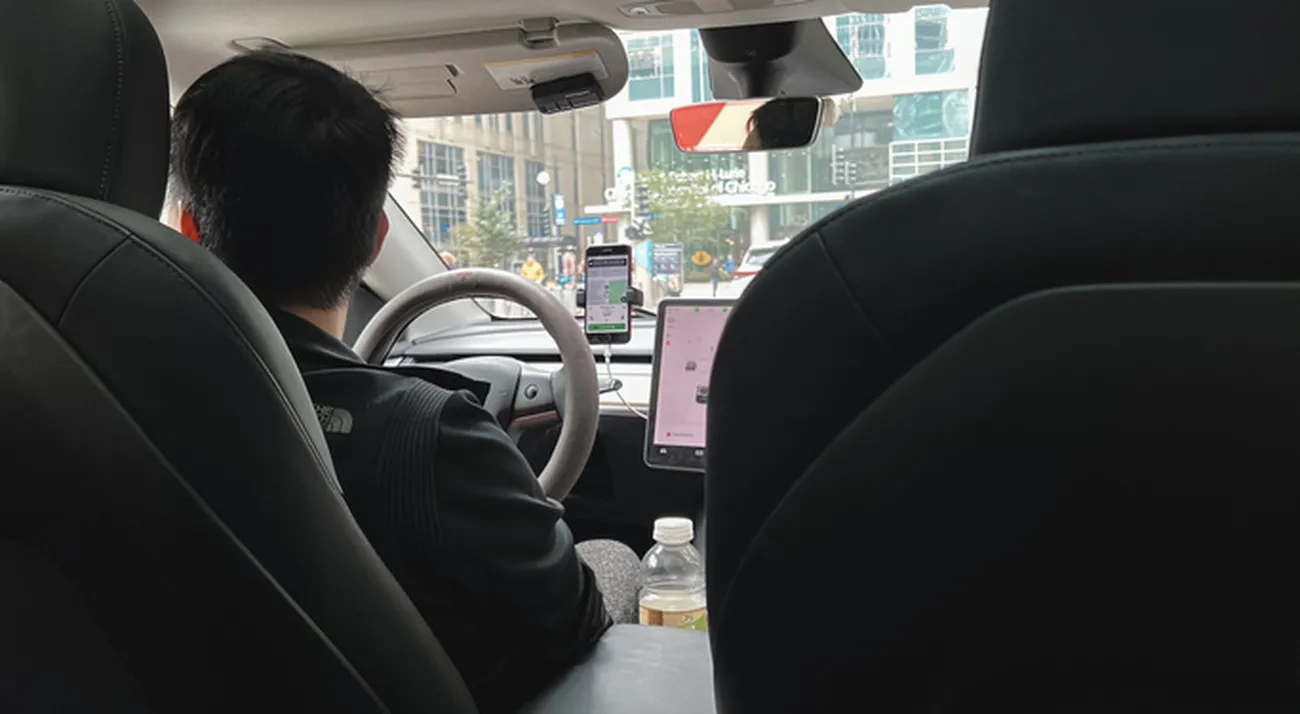
Uber started piloting a booking option called Recorded Rides in Baltimore, Raleigh, Indianapolis, and St. Louis, where the driver's phone camera films the entire trip.
The option shows up in the app as "Recorded Rides" and is built on Record My Ride, a feature drivers switch on themselves. Uber said it's testing the setup specifically for trips booked late at night or involving teens.
Drivers can turn recording off in Settings, and riders can decline through an in-app notification.
Uber is also testing automatic recording when the app detects a ride going off course or a possible crash. The company plans to expand to more locations later, though it hasn't given a date.
Cameras as a legal shield
Uber is facing more than 4.5K federal lawsuits from passengers who say the company did not do enough to prevent sexual assaults. Footage changes what both sides can prove when a trip goes wrong.
The pilot extends safety tools Uber has been layering on for years. It introduced live video streaming for teen rides earlier this year, and before that tested audio recording for late-night trips in some cities.
Uber hasn't reported adoption or usage figures for the four-city test, or said how many drivers have enabled recording.
Key privacy questions also remain open, including where Recorded Rides footage is stored, how long it's kept, and whether the phone captures audio too.
The kids pilot is the template
Uber Kids, a separate limited pilot running in Austin, Nashville, and Madison, requires participating drivers to activate Record My Ride, capturing both audio and video. Those recordings are encrypted and deleted automatically after 14 days unless pulled into a safety investigation.
The service carries children aged 10 to 12 without a parent in the car, runs between 5am and 9pm, and limits trips to one stop. An adult must be present at pickup and enter a unique PIN before the ride starts.
Drivers earn an extra $7 per Uber Kids trip versus a standard UberX ride, plus a $20 bonus after their first qualifying journey. Only highly rated drivers who complete extra training can opt in.
Uber's driver guidance for the program includes instructions on spotting suspected human trafficking, advising drivers to record observations and call the National Human Trafficking Hotline rather than intervene.
That guidance lands as reported suspected child exploitation climbs. The National Center for Missing & Exploited Children logged more than 113.5K reports of possible child sex trafficking in 2025, up 323% from 2024, with online companies filing 93% of them. The group credits much of the jump to the REPORT Act, which widened platforms' legal reporting duties in 2024.
Online platforms file nearly all child trafficking reports
Share of 2025 US reports to NCMEC, %
Bar chart. Share (%). Online company reports (share of suspected sex trafficking): Share of Reports (%) 93%. Missing-child reports involving trafficking: Share of Reports (%) 14%. Missing-from-welfare reports involving trafficking: Share of Reports (%) 17%.
Source: TechTimes, NCMEC
The rise in reports reflects wider legal obligations, not proof that incidents rose at the same rate, and none of it ties to Uber rides.
For Uber, cameras are becoming standard equipment in the parts of its business that carry the most risk.