
FinksDaily
🍎 Mac attack
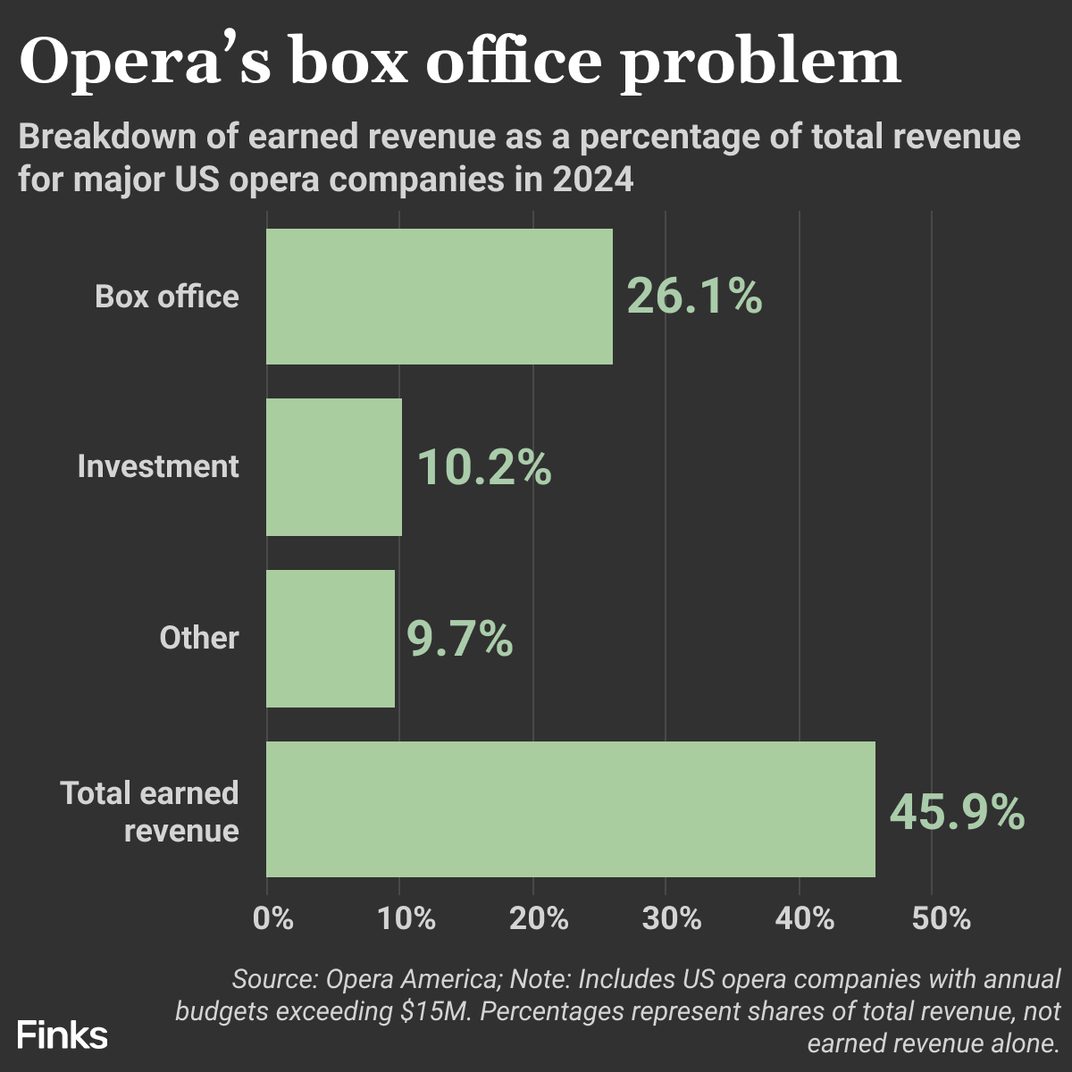
Good morning. Opera houses have mastered the art of bringing audiences to their feet, but keeping their finances afloat is another performance entirely. New York’s Metropolitan Opera spends roughly $326M a year (opens in a new tab) while earning just $70M from ticket sales and tours. Wealthy donors help cover the gap, though younger billionaires aren't nearly as generous. Some venues are even offering $11 tickets to bring in fresh faces. Turns out, the hardest act in opera is balancing the books.
On another note: Between earnings season and the upcoming midterm elections, October has given Wall Street plenty to think about. With November around the corner, it’s time for our monthly market survey: Are you feeling bullish or bearish heading into November? (Click to vote.)
Top Idea

Investors Are Dumping Tech Funds for Healthcare. The Rotation Is Picking Up
Healthcare stocks apparently missed the memo that 2026 was supposed to be all about artificial intelligence. After years of patent expirations, pricing uncertainty, and weak investor interest, the sector is making a comeback (opens in a new tab) as Wall Street's enthusiasm for AI starts to cool.
Change of favorites: Concerns about expensive AI projects and the profits needed to justify them have made the technology trade less appealing. Healthcare offers a different set of businesses, from established pharmaceutical companies to medical device manufacturers, whose revenues aren't tied to building out AI infrastructure. That distinction has become more important as investors reassess their exposure to technology, particularly after years of gains left portfolios heavily concentrated in a few large companies.
- Healthcare ETFs attracted roughly $4B over the 65 days through Oct. 19, more than any other sector, according to Baird Strategas, while technology funds lost around $6B.
- Healthcare reached a record high on Oct. 20 as 10 of the 11 major sector funds finished higher, with technology the only exception.
Healthcare Has Its Own Catalysts
The rally has support beyond changing investor preferences. Weight-loss drugs, improving earnings expectations, and easing drug pricing concerns are helping the sector recover. The global GLP-1 market is projected to grow from nearly $97B in 2026 to around $148B by 2030, according to estimates cited by Lombard Odier. Major drugmakers are also expanding US manufacturing, while pricing agreements have proved less damaging than initially feared.
- Eli Lilly, AbbVie, and Johnson & Johnson have helped drive the S&P 500 Healthcare Index roughly 23% higher since the end of April.
- Lombard Odier expects healthcare earnings to grow 18% in 2027, although underlying growth is closer to 10% after adjusting for one-time factors.
What could go wrong: Healthcare still faces risks that could weigh on its recovery. Planned cuts approaching $1T for Medicaid and $500B for Medicare could hurt insurers, hospitals, and patient access to care. Clinical trial failures and regulatory setbacks remain concerns for drugmakers, while higher valuations leave less room for weak results. Broad ETFs such as the Health Care Select Sector SPDR Fund and Vanguard Health Care ETF can help spread those risks. The market has changed its prescription, but that doesn't guarantee a cure.
Large-Cap Recap
Trading Desks And Payments Outpace Interest Income
Trading and payments emerged as the bright spots for financial companies as interest income lost momentum. Goldman Sachs saw equities trading revenue jump 72%, while JPMorganChase posted a 49% gain. The momentum extended beyond Wall Street, with Visa reporting a 13% increase in fiscal fourth-quarter net revenue as cross-border volume climbed 14%. Robinhood followed a similar trend, with transaction-based revenue rising 19% even as net interest revenue fell 9%. For financial firms, trading activity is becoming a bigger growth engine than interest income. [Read (opens in a new tab)]
Apple Refreshes Its Mac Lineup
Apple has rolled out new MacBook Pro and iMac models powered by its M6 chip, bringing faster performance and improved on-device AI features through dual neural engines. The MacBook Pro gets a modest upgrade over its predecessor, while the iMac makes a bigger jump after skipping the M5 generation entirely. The refresh helps keep Apple's computers competitive ahead of its expected move into OLED touchscreen laptops. [Read (opens in a new tab)]
German Automakers Feel the Heat in China
Mercedes-Benz has lowered its profit outlook as weaker demand in China and rising costs weigh on earnings. The automaker now expects flat core profit and lower margins from its car division, joining BMW and Volkswagen in facing pressure from Chinese rivals like BYD and Xiaomi, which offer cheaper alternatives. Porsche, however, has held up better by expanding its focus on North America and reducing its reliance on China. [Read (opens in a new tab)]
Market Pulse
SoFi Technologies, Inc.
The fintech company’s shares surged after earnings and revenue beat expectations, while record member growth and raised guidance strengthened its outlook.
USA Rare Earth Inc
The critical minerals company’s shares surged as a broad rare-earth rally lifted the sector amid renewed interest in domestic mineral supply chains.
The Boeing Company
The aircraft maker’s shares fell after a wider-than-expected quarterly loss overshadowed stronger revenue, improved cash flow and a record backlog.
Sponsored by Blockchain.com
Diversifying? Try This
Now may be the time to consider broadening your exposure to digital assets with Blockchain Wealth (opens in a new tab), the premium program for crypto trading and investing. Enjoy a dedicated relationship manager, 24/7 concierge, crypto-backed loans at rates from 0%, and private events. Apply today (opens in a new tab).
Markets & Economy
US durable goods orders beat expectations: Orders rose 1.8% in September, topping forecasts for a 1.5% gain and marking the third straight monthly advance. Civilian aircraft bookings surged 28.4% to power the transportation sector higher. [Read (opens in a new tab)]
US home prices outpace expectations in August: Prices rose 0.3% from July, edging past the 0.2% economist consensus. Annual growth slowed to 2.4%, marking 15 straight months of real-terms declines as inflation continues to outpace housing gains. [Read (opens in a new tab)]
US consumer confidence rises to 91.7 in October: Cheaper fuel helped lift consumer confidence from a 12-year low, beating economist forecasts. Planned purchases of electronics and autos continued to slide as higher price levels erode long-term purchasing power. [Read (opens in a new tab)]
Business & Tech
UPS raises 2026 outlook amid strong cash flow: United Parcel Service lifted its full-year guidance and reported domestic package revenue increased 4.5%. Free cash flow surged to $4.22B during the first 9 months of the year, supporting a dividend yield near 6.4%. [Read (opens in a new tab)]
General Motors leaves NYSE for Nasdaq: General Motors is moving its common stock listing to the Nasdaq Global Select Market starting Nov. 17. The switch could make the automaker eligible for inclusion in the Nasdaq-100 Index. [Read (opens in a new tab)]
Anduril and Qualcomm unveil BlueChip military laptop: Anduril and Qualcomm partnered to build a rugged military laptop featuring Qualcomm's Snapdragon X chips. The companies are funding development without subsidies, targeting preorders for 2027. [Read (opens in a new tab)]
Chart
Digit of the Day
Harley-Davidson’s Electric Bike Gamble Has Lost Over $350M
The electric motorcycle revolution is moving at roughly the speed of a flat tire. Harley-Davidson had big plans for its electric spinoff, LiveWire, but more than $350M in losses (opens in a new tab) since 2022 have turned that ambition into an expensive gamble. After selling just 653 motorcycles last year, the company is now bringing in restructuring experts to figure out what comes next.
- LiveWire CEO Karim Donnez resigned on Oct. 21, and the company appointed restructuring specialist Roy Gallagher days later at a cost of $140K per month.
- LiveWire's children's electric bike brand, STACYC, generated $19.6M in 2025 revenue, more than triple the $6.1M brought in by its motorcycles.
Not out of the woods yet: LiveWire once expected to sell more than 100K motorcycles annually by 2026, but weak demand and mounting losses have forced a rethink. Cash reserves fell to $52.9M by June, and the company is now exploring financing deals, asset sales, and other options to stay afloat. Harley-Davidson remains its controlling shareholder, leaving investors to question how much longer it will support the struggling business. Harley bet on the future of riding, but LiveWire may be running on borrowed time.
Strategize
Can Dividend Stocks Keep Outperforming Tech?
Wall Street's boring stocks are having a pretty exciting October. The iShares Core High Dividend ETF has climbed 8.8% this month, compared with a 0.3% gain for the S&P 500 and a 3.7% drop for technology stocks.
Why it matters: Investors are looking beyond Big Tech as falling Treasury yields make dividend-paying stocks more attractive. But after October's rally, the bigger question is whether these steady income plays can continue outperforming technology shares.
Try: Which dividend ETFs could outperform tech stocks in the months ahead? (opens in a new tab)
Post Credits