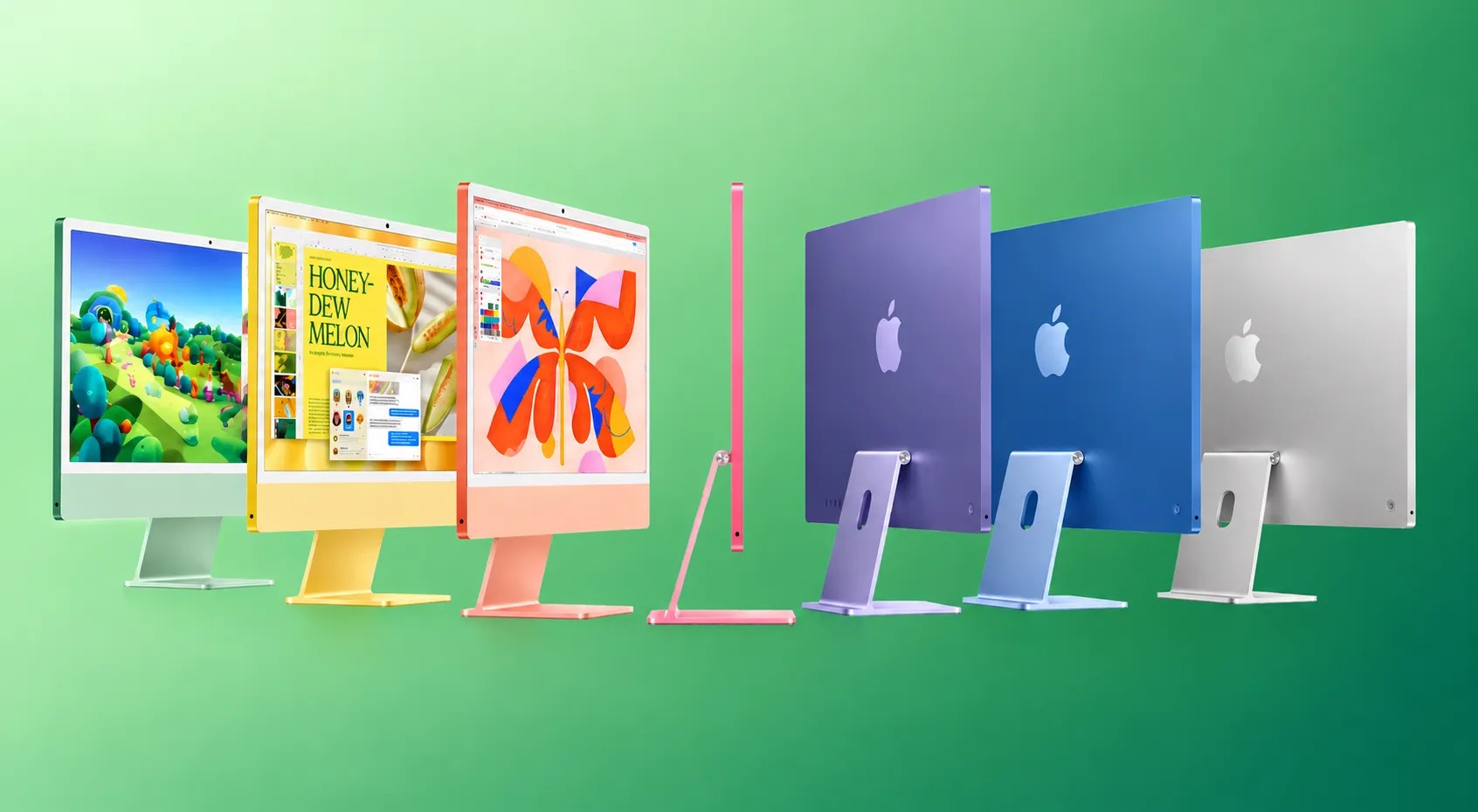
Apple has been busy rolling out new devices this fall, and the latest additions are two familiar Macs with faster chips. The company unveiled updated versions of its MacBook Pro and iMac this week, just a day before an expected touchscreen MacBook announcement.
What's actually new
The 14-inch MacBook Pro and iMac now run on Apple's M6 processor, which debuted in August with the Mac mini.
The new MacBook Pro comes with a 12-core CPU and 12-core GPU, along with dual neural engines designed to handle AI tasks directly on the device.
Apple also added its N1 networking chip, bringing Wi-Fi 7 and Bluetooth 6 to the laptop. Battery life now reaches up to 24 hours, while both computers support Apple Intelligence and the latest Siri features in macOS 27.
The upgrades make the machines faster and more capable, although their designs remain largely unchanged.
The iMac skipped a whole generation
The iMac has gone two years without a major processor upgrade, skipping the M5 generation entirely after launching with the M4 in 2024.
That makes the move to M6 more meaningful for desktop buyers. Built on Apple's first 2nm process, the chip combines improved processing and graphics performance with a dual 16-core Neural Engine.
Apple claims the new iMac can handle on-device AI workloads up to five times faster than its M4 predecessor.
Pricing remains unchanged for the entry-level model, despite the move from an 8-core to a 10-core configuration. The desktop also gains 2.5 Gigabit Ethernet, while Thunderbolt 4 connectivity varies by configuration.
For anyone still using an older iMac, the improvements are easier to justify than they are for recent MacBook owners.
Why the laptop update feels thin
The new MacBook Pro is a tougher sell for anyone who upgraded recently. Last year's M5 already delivered a meaningful graphics boost, leaving the M6 with fewer obvious improvements.
Apple kept the same display, design, finishes, and memory options. The starting configuration still includes 16GB of memory and 1TB of storage, with no change to its price.
Macworld's Michael Simon described the release as a straightforward chip refresh, suggesting M4 and M5 owners have little reason to upgrade.
A bigger redesign could arrive next year alongside the M7, potentially bringing changes to the standard MacBook Pro lineup.
For now, Apple appears focused on keeping its existing computers competitive while preparing for a more substantial hardware shift.
What the refresh does for Apple
Mac sales generated $33.7B in fiscal 2025, compared with Apple's total revenue of $416.1B. The iPhone remained its largest business at $209.5B, followed by services at $109.1B.
iPhone still dwarfs the Mac in Apple's sales
Apple 2025 revenue by segment, $B
Bar chart. $B. iPhone: Revenue ($B) $210. Services: Revenue ($B) $109. Mac: Revenue ($B) $33.7.
That makes the Mac lineup important, but far from Apple's biggest revenue driver.
Refreshing the MacBook Pro and iMac keeps the computers competitive without drawing too much attention away from the expected OLED touchscreen MacBook.
It also gives Apple another opportunity to promote its AI capabilities across the product lineup, particularly as more features move directly onto its chips.
The company has already introduced a thinner iPad mini with an OLED display this week, while demand for the iPhone Duo has pushed deliveries into late January.
However, the Duo has also faced reports of displays cracking near the hinge, prompting Apple to direct affected customers toward replacement support.
Against that backdrop, the Mac refresh is a relatively straightforward launch. Apple gets faster computers on shelves, while buyers looking for something genuinely different may have a better reason to wait.
The bigger question is whether Apple's upcoming touchscreen MacBook can generate the kind of upgrade demand that another processor refresh is unlikely to deliver.

