US construction spending rose 0.9% in August to a seasonally adjusted annual rate of $2.2T, the Census Bureau reported Oct. 1. Economists polled by Reuters had expected spending unchanged in August after a revised 0.1% July dip, while analysts surveyed by The Wall Street Journal looked for a 0.1% gain.
Private construction climbed 1.1% to an annualized $1.66T rate. Residential work rose 1.1% to $882.3B, likely reflecting renovations rather than new homes.
The headline strength is thinner than it looks. Single-family outlays rose just 0.2% on the month and fell 3.5% from a year earlier. Total spending was 1.7% below August 2025, and Census cautioned the monthly move isn't statistically significant.
Data centers are carrying the nonresidential side
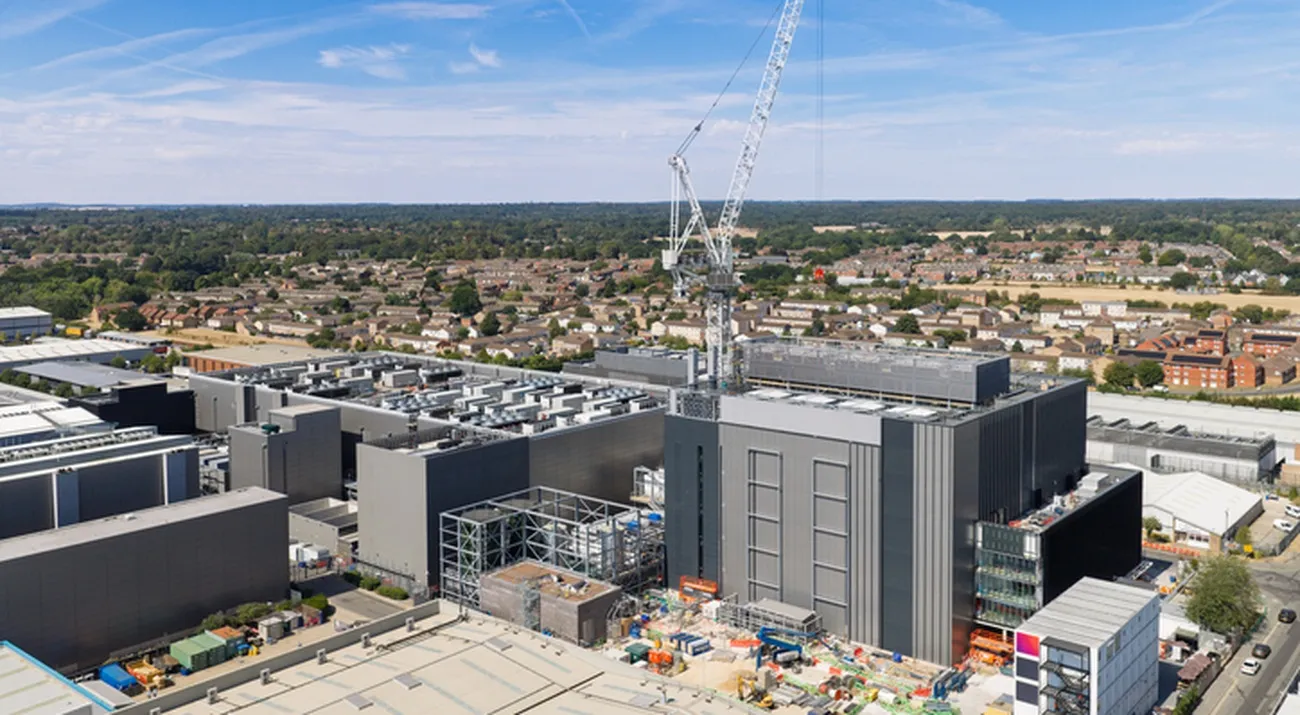
Data center construction ran at an annual rate of $85.0B in August, 73% above the same month last year. No other category in the report's main table is growing at even half that pace. Data centers now account for 63% of all private office construction, up from 48% a year earlier.
Private nonresidential spending rose $8.0B month over month. Data centers supplied about three-quarters of that increase.
Strip them out and the year-over-year drop in total construction widens from 1.7% to 3.4%.
Spending on power plants rose 0.9% and office projects jumped 4.6%, with much of the power buildout tied to the same data center demand. Private factory construction, at $168.2B, was essentially flat and 19.8% below a year earlier.
Rates and input costs are squeezing everything else
The Federal Reserve raised its target range to 3.75% to 4% in mid-September, its first hike since 2023, and signaled another could follow this year.
Construction input prices rose 1.2% in August and are up 8.9% over 12 months. Diesel hit a record $6.53 per gallon, and input costs are rising roughly twice as fast as contractor bid prices.
In an Associated General Contractors survey, 55% of respondents reported cancelled, postponed or scaled back projects over the past six months. Basu expects momentum to stay confined to the data center and power categories in the months ahead.
The August print reads less like a broad construction recovery and more like one AI-driven category masking weakness everywhere else.

