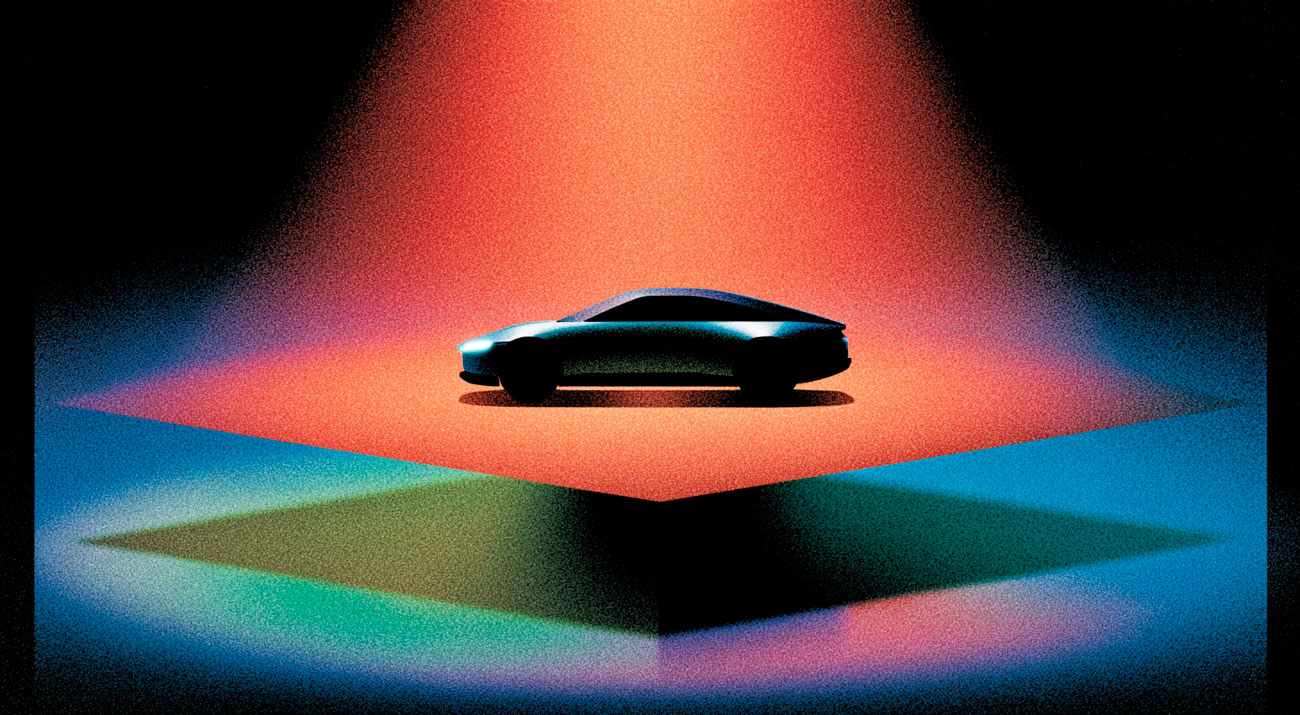
The luxury supercar industry built its entire brand on combustion engines, speed, and noise. Ferrari just tried to evolve beyond that identity with its first fully electric vehicle. When the Luce debuted this week in Rome, the stock market delivered a fast and unflattering answer.
What the selloff is actually saying
Ferrari's Milan-listed shares dropped ~7.7% on launch day, while US-listed shares fell ~4.6%. The stock is now down more than 32% over the prior 12 months.
Analysts split the blame two ways. Ferrari's stock had already climbed sharply in the weeks leading up to the reveal, making a sell-the-news reaction almost inevitable.
Beyond that, longtime investors harbor a deeper fear that the Luce fundamentally undermines what Ferrari has always stood for. Many investors had always dreaded an EV model because the research and development costs are "materially high," creating pressure to recoup them and potentially diluting returns, Michael Field, chief equity strategist at Morningstar, told CNBC.
Anthony Dick, an auto analyst at Oddo BHF, called it "by far the sharpest reaction we've seen for a car design." Dick cited the impact on brand equity, noting the Luce marks the furthest deviation from the brand's ethos ever seen, and the potential hit on profitability if the model doesn't sell.
The Luce itself is a substantial product. It's Ferrari's first five-seater, hits 60 mph in ~2.5 seconds, and tops out at ~192 mph. It's priced at ~550,000 euros, with deliveries scheduled to begin in Q4 2026. The design was handled by LoveFrom, the agency founded by former Apple design chief Jony Ive, which partly explains the sharp aesthetic departure from traditional Ferrari styling.
CEO Benedetto Vigna told CNBC that a new technology demands "respect" and requires a design that reflects it. He argued existing Ferrari customers will embrace the Luce alongside new buyers, and that the car delivers "the same sensation" as a combustion model. Critics aren't convinced the sensation is the point.
Lamborghini already made this call
Ferrari isn't the first luxury supercar brand to wrestle with this. Lamborghini cancelled its all-electric Lanzador earlier this year, pivoting to plug-in hybrids instead after the fully electric version was originally slated for 2029. The shelved model had been pegged at ~$300K and boasted 1,341 horsepower.
CEO Stephan Winkelmann said customers who'd already tried electric cars told him the experience was "very disappointing" when it came to charging times, range, and infrastructure. In the European Union (EU), there are ~910K publicly accessible charging stations, well short of the 3.5M the region needs to support its decarbonization targets. In the US, non-residential EV chargers fully complete a charge just 78% of the time, per a Harvard Business School report cited by Fortune.
But Winkelmann didn't stop at infrastructure. "You don't buy a Lamborghini because you need one, but because you want to have a childhood dream fulfilled," he said. That emotional gap — roar and vibration included — is what keeps supercar buyers away from fully electric alternatives.
Lamborghini still posted a record 10,747 deliveries in 2025 with $3.7B in revenue, a 3.3% year-over-year gain. Operating income still fell to $885M from $962M in 2024, with the company attributing part of that decline to costs tied to its EV pivot reversal and tariff headwinds.
Where the luxury EV retreat stands
The broader pattern across the luxury vehicle segment is a retreat from electrification commitments. Bentley pushed its electric-only target from 2030 to 2035, then scrapped it entirely. Porsche announced last year it would no longer build its own EV battery and scaled back its electrification roadmap. Stellantis and Ford each took write-downs, of $26B and $19.5B respectively, to walk back their all-electric programs.
Tom Narayan, an analyst at RBC Capital, offered a more measured view to Fortune. He argued it's an oversimplification to say no one wants a luxury EV. The buyer pool is real, just smaller than brands had hoped.
Narayan also noted that Ferrari is better positioned than most to absorb EV development costs. Its Formula 1 operation already invests heavily in parts optimization, letting Ferrari share that research and development across its road car business. That structural advantage doesn't exist at Lamborghini, which operates under the Volkswagen Group umbrella alongside brands already building EVs elsewhere in the portfolio.
Ferrari still sells ~14,000 cars a year and commands pricing power that few manufacturers can match. Whether the Luce finds its buyers among that existing clientele, or draws in a new wave of customers, will define whether this launch goes down as a bold strategic inflection or a costly brand experiment.

