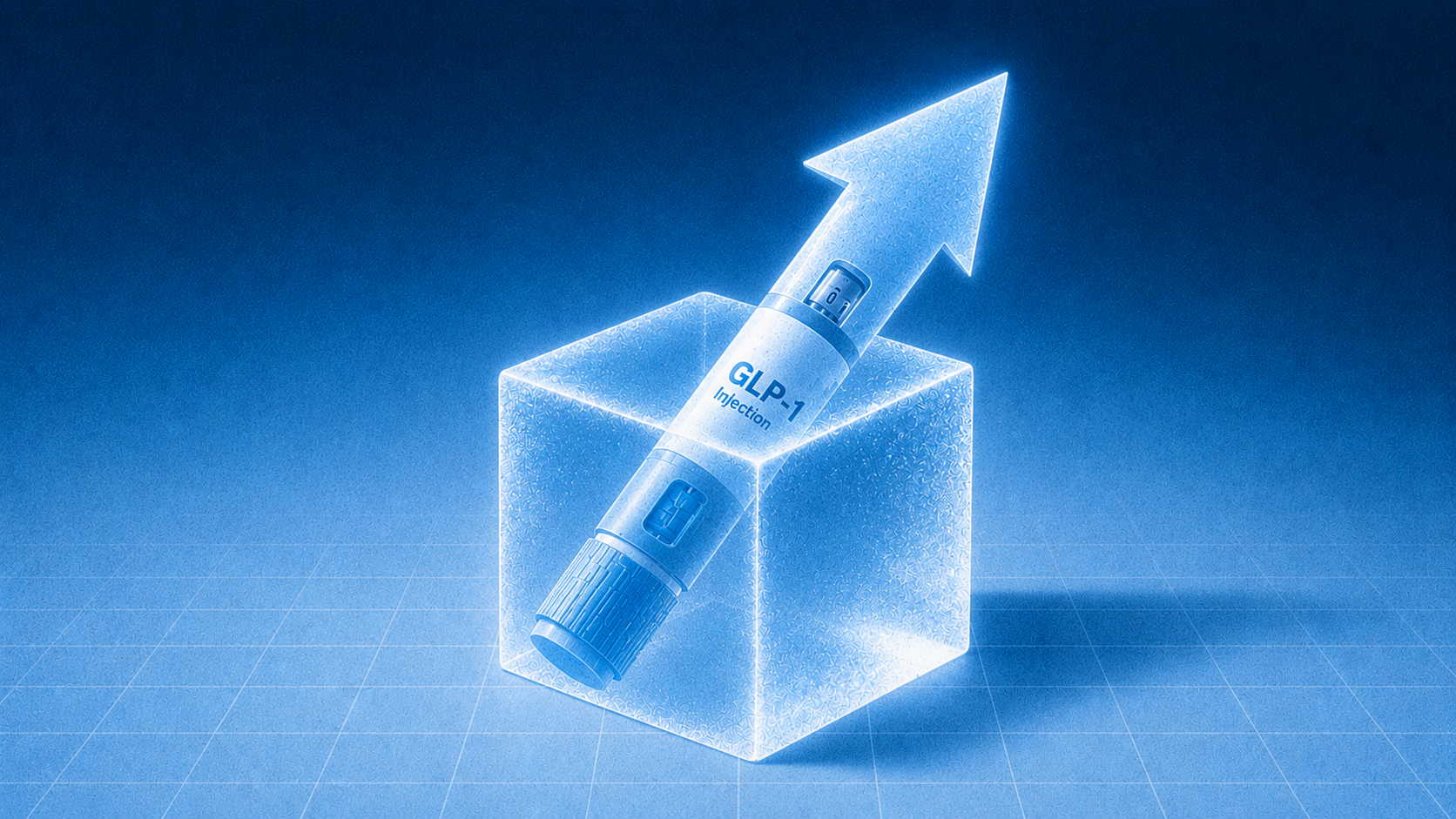
Keeping it cool has become the logistics industry's hottest business. The GLP-1 boom is driving billions into cold-chain infrastructure, turning healthcare into one of shipping's fastest-growing and most lucrative segments.
Racing to refrigerate: The GLP-1 boom has turned temperature control into a competitive advantage. A July Gallup poll found that 11% of Americans now take GLP-1 medications for weight loss, up from just 3% in 2024. Injectable drugs like Novo Nordisk's Ozempic and Wegovy and Eli Lilly's Mounjaro and Zepbound have to stay refrigerated throughout shipping. Even a short temperature swing can affect the medicine, giving logistics companies little room for error.
- The temperature-sensitive biologics market is projected to reach $39.1B by 2033, growing at an 8.3% CAGR as demand for refrigerated pharmaceutical shipping continues to rise.
- United Parcel Service generated its first-ever $3B healthcare revenue quarter in Q1 2026, extending a streak of annual market share gains that dates back to 2021.
Cold Chain, Hot Competition
FedEx is doubling down on healthcare with the launch of FedEx Life Sciences, a business dedicated to pharmaceutical customers. Healthcare transportation generated nearly $10B in revenue during fiscal 2026, making it one of FedEx's fastest-growing businesses. Rival UPS has already committed $48M to cold-chain facilities and spent $1.6B to acquire Andlauer Healthcare Group.
- DHL plans to invest ~$2.3B (€2B) in health logistics by 2030, with half allocated to the Americas, and launched a dedicated pharmaceutical air corridor.
- C.H. Robinson surpassed $1B in healthcare logistics revenue over the past year, driven largely by GLP-1 growth.
The margin equation: Supply Chain Insights founder Lora Cecere says healthcare is one of logistics' most profitable markets because pharmaceuticals carry some of manufacturing's highest margins. A failed cold-chain shipment can mean ruined medicine, regulatory penalties, and wasted product. In this business, certainty is cheaper than failure.

