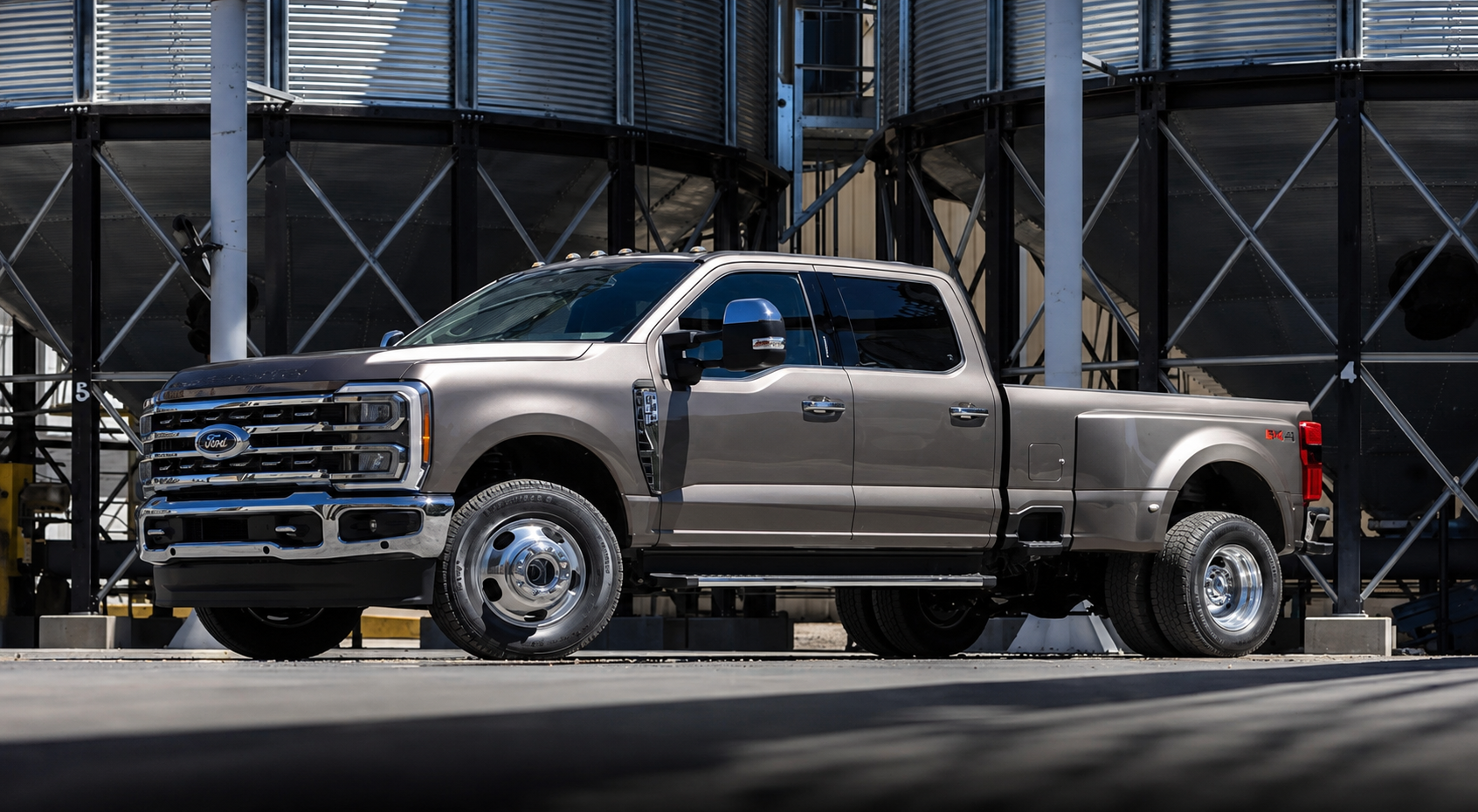
Ford Motor has been awarded a US Defense Department contract to build three prototype tactical trucks based on its F-Series Super Duty pickups, re-entering military vehicle competition for the first time in decades.
The Army confirmed it awarded prototype contracts to Ford, General Motors, and Utah-based off-road manufacturer BC Customs to develop the next infantry squad vehicle, a heavy-duty truck the military calls the ISV-Heavy. First deliveries are scheduled by Mar. 30, 2027.
The vehicle needs to do two things at once: move soldiers over rough terrain and act as a mobile charging unit for drones, command-and-control systems, and other battlefield equipment.
GM is years ahead in this race. Its GM Defense subsidiary, formed in 2017, has already delivered prototypes built off the heavy-duty Chevrolet Silverado with a diesel-electric powertrain that allows silent operation and equipment recharging. The US Army has purchased three of those prototypes for field testing.
GM CEO Mary Barra recently told analysts that GM Defense revenue will reach roughly $700M in 2026, with double-digit profit margins expected within several years. She also flagged a potential $1B contract to build 10,000 light utility vehicles based on the Chevrolet Colorado, contingent on congressional appropriation.
Ford is coming in leaner. CEO Jim Farley has positioned the company's pitch around off-the-shelf commercial vehicles from its Ford Pro division, arguing that ready-made, commercially available products can meet military needs at lower cost.
The current Super Duty lineup, however, doesn't yet have the bidirectional charging capability that GM's prototype already offers.
Detroit's defense ambitions diverge
The two automakers are pursuing defense differently. Ford is focused on ground transportation and supply chain contributions, including potential roles in onshoring critical minerals and semiconductors.
GM is pushing into heavier territory, including a recently announced partnership with Lockheed Martin to apply GM's manufacturing scale to munitions production.
Neither company is new to military work historically. Both built vehicles for the US during World War II. Ford supplied tactical trucks during the Korean and Vietnam wars before exiting defense entirely with the 1990 sale of Ford Aerospace. That subsidiary is now part of Lockheed Martin.
For investors, the defense push is one piece of a broader growth story for both automakers. Ford generated roughly $6.5B in operating profit in 2025, about the same as in 2015.
Ford's new energy storage business is projected to add roughly $500M in operating profit by the end of the decade, and analysts suggest thinking about the defense opportunity in similar terms.
The Army hasn't disclosed the value of the ISV-Heavy contract. For context, the smaller GM-made ISV trucks cost $330K apiece.

