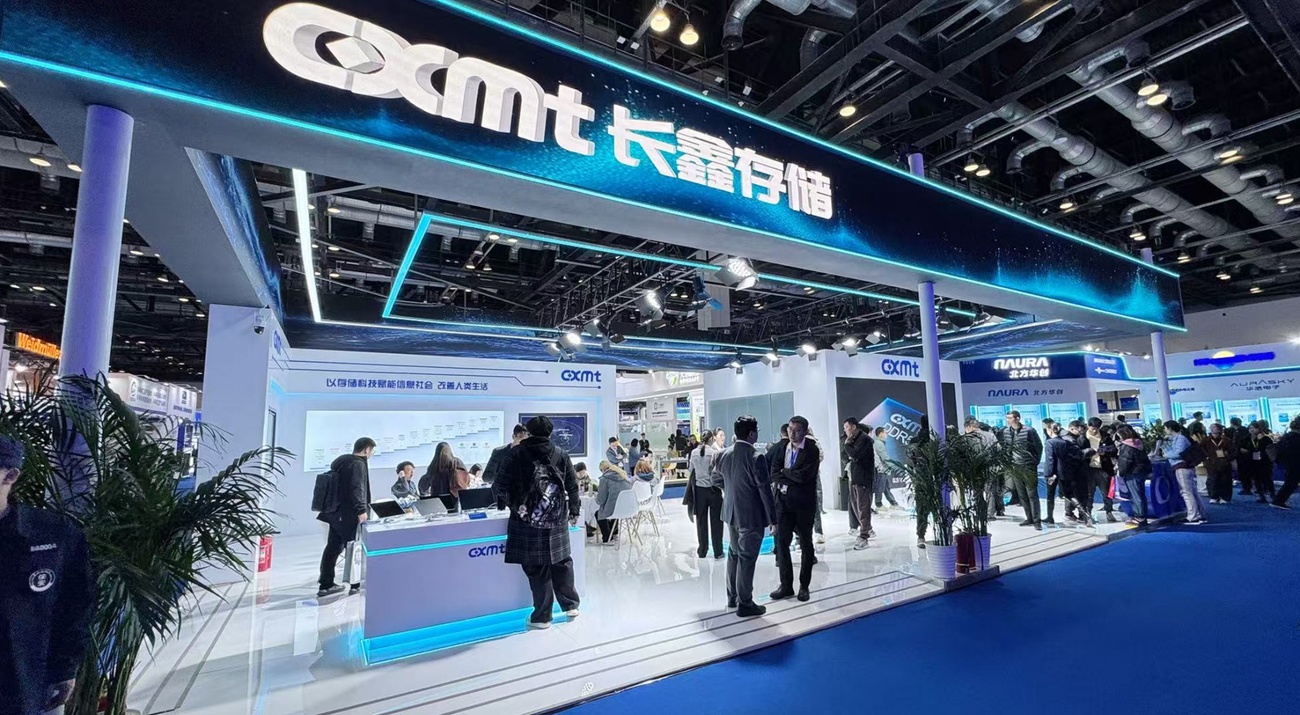
ChangXin Memory Technologies, known as CXMT, surged 466% on its first day of trading in Shanghai. Investors who won lottery access to shares at that price saw their money more than quintuple in a single session.
CXMT is now the most valuable company listed on mainland China, surpassing Industrial and Commercial Bank of China. Only Tencent sits above it. The company raised at least $8.55B in the offering, the second-largest IPO in China's history.
CXMT is the world's fourth-largest producer of dynamic random-access memory, or DRAM, behind Samsung, SK Hynix, and Micron Technology.
Its global market share rose to 8% in Q1 2026 from 3% a year earlier, according to Counterpoint Research. Research firm SemiAnalysis projects that share will reach 12% by next year.
Revenue jumped to $7.5B in Q1 2026, up more than 700% from the same quarter a year prior. Profit in that quarter hit $3.66B, fueled by a global memory shortage that has allowed CXMT to push through price increases.
US export controls have blocked CXMT from acquiring top-of-the-line chip-making equipment.
To compensate, it has used a technique called multi-patterning to squeeze more circuitry onto wafers and invested in advanced packaging to stack circuitry for better performance. Yields remain below industry standards, though they have improved, SemiAnalysis said.
Apple's bet on a backup supplier
Apple has been lobbying the Trump administration to keep CXMT off a trade blacklist, aiming to use the company's chips in devices sold outside the US.
Micron has pushed back, arguing that allowing CXMT access to US tech companies would damage US industry.
Analyst Ming-Chi Kuo of TF International Securities noted that even if Apple's lobbying succeeds, it would not materially lower costs or close the supply gap.
Still, he said Apple has reason to secure an additional source. CXMT's debut is adding pressure to its listed rivals. Micron fell on Monday while SK Hynix ADRs dropped 8%.
A second Chinese memory chipmaker, Yangtze Memory Technologies, is expected to conduct its own IPO in Shanghai as soon as this year, extending China's push into a market it had virtually no presence in just a few years ago.

