Berkshire Hathaway Is Winning as Tech Stocks Fall. Is It Too Late to Buy?
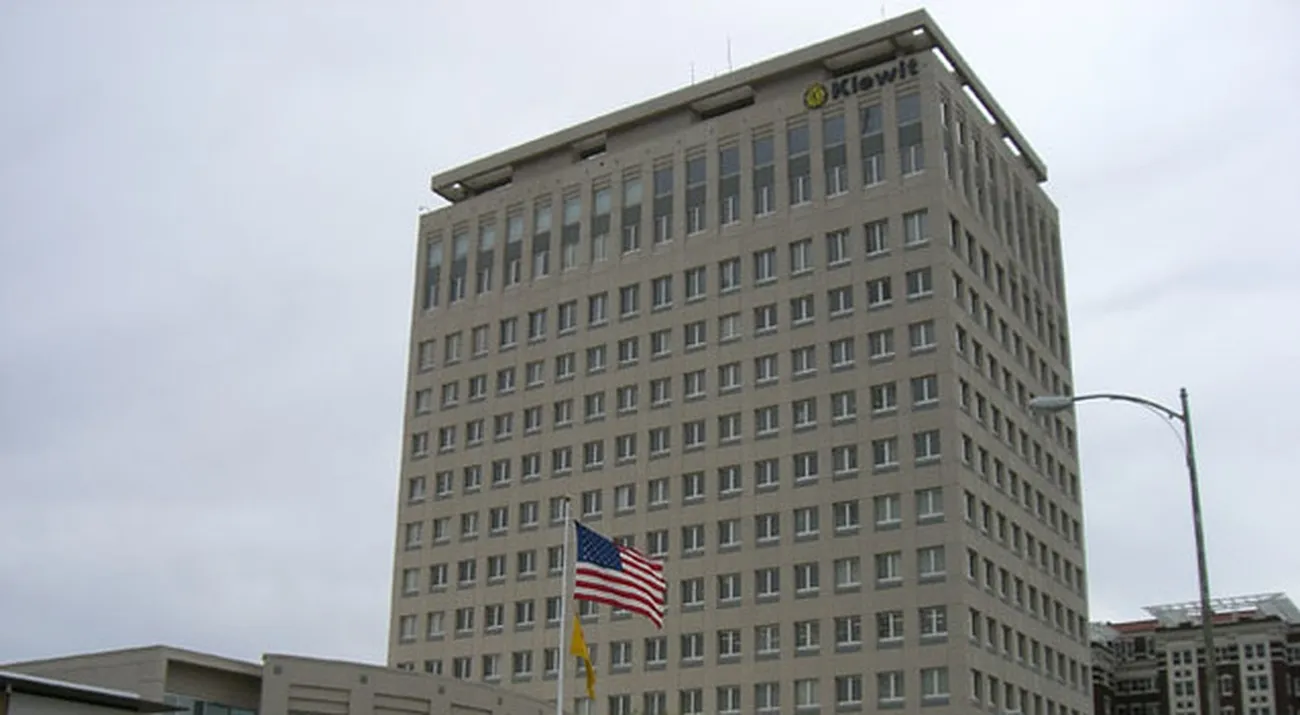
Berkshire Hathaway is getting another look from investors as enthusiasm for artificial intelligence stocks cools. With businesses spanning insurance, energy, railroads, manufacturing, and consumer products, the conglomerate offers something quite different from the tech-heavy portfolios that have dominated Wall Street.
Its enormous cash reserves are another attraction, giving Berkshire plenty of flexibility when opportunities arise. But with the stock climbing, investors have to decide how much they're willing to pay for that financial strength.
The businesses behind Berkshire's cash machine
Berkshire makes money from dozens of operating businesses, while its insurance companies provide another major advantage. They collect premiums before paying claims, leaving the company with funds it can invest in the meantime.
That pool of money, known as insurance float, reached roughly $177.5B at the end of June. Berkshire's subsidiaries largely manage their own operations, while headquarters decides where to put the capital they generate.
The arrangement has helped build a balance sheet with more than $350B in cash, equivalent to nearly 30% of its $1.2T market value.
Berkshire's Cash Pile Approaches 30% of Market Value
Cash vs. total market value ($B), as of Oct. 23, 2026.
Bar chart. Value ($B). Cash: Value ($B) $350. Market value: Value ($B) $1K.
And the underlying businesses are still delivering. Second-quarter operating earnings rose to $12.98B from $11.16B a year earlier, showing how much profit Berkshire can generate without relying on gains from its stock portfolio.
The risks behind the massive cash pile
Having that much money available sounds like an advantage, but finding worthwhile investments becomes harder as Berkshire grows. Even a $1B deal would barely move the needle, leaving the company with a relatively small pool of opportunities large enough to matter.
Keeping the money in cash isn't ideal either. While it provides flexibility, the returns can fall short of what Berkshire might earn by investing in businesses with stronger long-term growth prospects.
That puts more attention on CEO Greg Abel and how he plans to deploy the money. Berkshire repurchased roughly $4.5B of its own shares in the second quarter, up from just $235M in the first. Its policy allows buybacks only when the CEO believes the shares trade below a conservative estimate of intrinsic value.
Abel also added 17.5M shares of Delta Air Lines, increasing Berkshire's position by 44%. Meanwhile, the company has been exploring investments outside its traditional areas of focus.
Berkshire invested $600M in Italian software company Bending Spoons during its July IPO, followed by another $330M in October. The business trades at a relatively high earnings multiple, making it an unusual addition for a company long associated with value investing.
Morningstar analyst Greggory Warren sees that investment, along with Berkshire's Alphabet stake, as a sign that its approach may be changing.
"The firm is finally moving out of its comfort zone to find places to put capital to work."
Greggory Warren, Morningstar
Why investors are buying Berkshire anyway
For investors looking to reduce their exposure to technology stocks, Berkshire has recently offered a compelling alternative. Over three weeks, chip stocks fell 15% while Berkshire gained 7%, a divergence last seen on Oct. 3, 2001.
The pattern has appeared only six times before. One year after those instances, semiconductor stocks were lower in five cases, while the S&P 500 declined in four. It's an interesting historical comparison, although hardly a guarantee of what comes next.
The more immediate concern is valuation. Berkshire trades at roughly 1.5x Barron's estimate of third-quarter book value and 24x projected 2026 operating earnings, both above their averages over the past year.
Berkshire Narrows Its Gap With the S&P 500
Year-to-date share price change (%) at month-end closes for BRK.B and the SPDR S&P 500 ETF (SPY), as of Oct. 23, 2026.
- Berkshire (BRK.B)
- S&P 500 (SPY)
Line chart. YTD change (%). 2025-12-31: Berkshire (BRK.B) 0%, S&P 500 (SPY) 0%. 2026-01-30: Berkshire (BRK.B) -4.40%, S&P 500 (SPY) 1.50%. 2026-02-27: Berkshire (BRK.B) 0.50%, S&P 500 (SPY) 0.60%. 2026-03-31: Berkshire (BRK.B) -4.70%, S&P 500 (SPY) -4.60%. 2026-04-30: Berkshire (BRK.B) -5.80%, S&P 500 (SPY) 5.40%. 2026-05-29: Berkshire (BRK.B) -5.60%, S&P 500 (SPY) 10.90%. 2026-06-30: Berkshire (BRK.B) -0.40%, S&P 500 (SPY) 9.50%. 2026-07-31: Berkshire (BRK.B) 1.80%, S&P 500 (SPY) 9.50%. 2026-08-31: Berkshire (BRK.B) 0.30%, S&P 500 (SPY) 12.50%. 2026-09-30: Berkshire (BRK.B) -0.90%, S&P 500 (SPY) 11.80%. 2026-10-23: Berkshire (BRK.B) 7.70%, S&P 500 (SPY) 11.50%.
UBS analyst Brian Meredith estimates Berkshire's intrinsic value at $815K per Class A share, among the more optimistic estimates on Wall Street. Even so, the stock is trading above that figure, suggesting investors are already paying a premium.
Institutional interest remains strong. The number of hedge funds holding Berkshire rose to 135 in the second quarter from 126, with their combined positions valued at approximately $22.73B.
The next test comes Nov. 7, when Berkshire reports third-quarter earnings. Beyond operating profits, investors will be watching how much of its cash pile Abel has put to work and whether more buybacks are on the table.
Berkshire can still make sense for investors looking to balance a portfolio heavily exposed to tech. But at today's valuation, much of the appeal rests on what management can do with that $350B cash pile. The opportunity is substantial, and so are the expectations already built into the stock.

