
FinksDaily
🛒 Discount aisle
Good morning. After years of price hikes, the kids’ menu suddenly looks appetizing (opens in a new tab). Popmenu’s CEO says restaurants have maxed out on price increases, and a survey of 3K diners shows just how much those higher bills have changed eating habits. Some 16% are ordering from the kids’ menu for themselves, while most diners say they’re spending less at restaurants than they did last year. Smaller portions, cheaper checks, maybe even some crayons. Finally, a budget hack that comes with a toy.
Top Idea
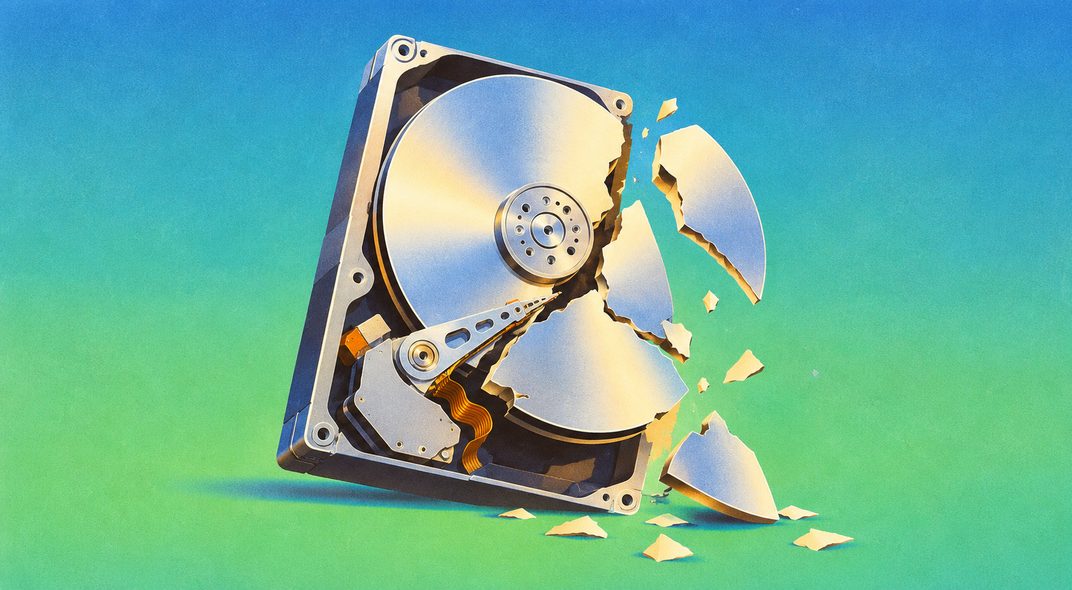
The AI Hard-Drive Boom Has a New Threat. Here’s Why Investors Shouldn’t Panic Yet
The AI boom’s least glamorous winner just got spooked by a factory in the Philippines. Hard-drive makers have been riding a brutal supply crunch as data-center operators scramble for storage capacity. But signs of a potential shift were enough to send investors rushing for the exits.
Storage shock: A Nikkei report said Toshiba plans to double its hard-disk drive production capacity in fiscal 2027, aiming squarely at AI data-center demand. The Japanese firm is spending ~$380M to add lines at its Laguna Technopark site, its first major drive investment in roughly five years. Investors read that as the beginning of the end for the shortage that handed Western Digital and Seagate record profits.
- Toshiba wants to lift its market share from just over 10% today to as much as 30% in the medium term (opens in a new tab).
- The new lines support 30TB-class drives in 2027, with 65TB-class HDDs (opens in a new tab) targeted around 2030.
Why The Selloff Looks Like An Overreaction
Analysts spent Friday pouring cold water on the panic. Citi's Asiya Merchant noted Toshiba buys media and heads from outside suppliers, who would need to expand too. LYNX Equity Strategies argued the spending looks aimed at Japan's domestic shortage rather than a global share grab, and expects buyers to step into the selloff. Mizuho's Jordan Klein compared Toshiba's one-year target to wanting a roster spot on the New York Yankees.
- Seagate and Western Digital are expected to spend a combined $1.7B in capital expenditures (opens in a new tab) during fiscal 2027.
- The selloff comes after a massive run, with Seagate more than tripling over the past year and Western Digital still up 140% in 2026.
The waiting game: Both US makers have raised prices more cautiously than memory peers like Micron, capping margin upside and softening the blow if supply ever catches demand. Long-term supply agreements lock in terms, and Klein argues extra Toshiba capacity may not meaningfully shift negotiations until 2028. Even Toshiba has sold out every unit (opens in a new tab) it produced recently. For now, the new capacity looks more like a future fix than a present threat.
Large-Cap Recap
Diesel Crunch Puts Energy Stocks in Focus
Energy stocks are navigating a diesel market squeezed by disrupted supply from the Middle East and Russia, with refiners especially exposed to tight fuel markets. ExxonMobil and Valero initially fell after the G7 agreed to tap emergency reserves, before recovering some losses, while Occidental Petroleum, Permian Resources, and Kosmos Energy offer different exposure across the sector. The reserve release could ease near-term pressure, but it does not replace lost production, leaving supply recovery as the bigger driver for energy names. [Read (opens in a new tab)]
The High Price of Political Investing
Politically branded exchange-traded funds let investors align their portfolios with their values, but new research shows that choice comes with steep costs. Funds such as the American Conservative Values ETF and the Democratic Large-Cap Core Fund charge expense ratios up to 0.75%, far above broad-market alternatives. Despite partisan screens, these portfolios hold dozens of the same underlying companies. Historical data shows they often lag behind the S&P 500. [Read (opens in a new tab)]
Store Brands Force Packaged Food Giants to Defend Shelf Space
Private label sales have reached $330B across the US as shoppers continue buying store brands instead of name labels. That shift has put pressure on major packaged food companies trying to protect margins through price increases. Meanwhile, Kroger and Walmart are expanding their own portfolios because store brands deliver higher gross margins than national names. McCormick recently reported lower US volumes as consumers pushed back against higher prices. [Read (opens in a new tab)]
Market Pulse
Space Exploration Technologies Corp.
The space company’s shares jumped after a rapid run of successful launches reinforced investor confidence in its growing launch cadence and AI business.
Hewlett Packard Enterprise Company
The server maker’s shares surged after raising its networking growth outlook, landing a $1.2B AI server order and drawing several Wall Street target hikes.
Grindr Inc.
The dating app’s shares sank after its $250M PurposeMed acquisition raised concerns around dilution, near-term margin pressure, and its push into healthcare.
Markets & Economy
US employers added just 29K jobs in September: Hiring fell well short of the 90K economists expected, while steep downward revisions to prior months showed July actually lost jobs. The weaker figures point to a labor market that was losing momentum before September’s slowdown. [Read (opens in a new tab)]
G7 countries agree to emergency oil release: The Group of Seven will draw 100M barrels from emergency reserves over the next four months following pressure from Washington. European diesel benchmarks topped $200 per barrel prior to the agreement. [Read (opens in a new tab)]
Citadel Securities sees five tailwinds for Q4: Following a September reset that cleared out excess leverage and pushed trading volumes to yearly lows, Citadel Securities expects a constructive setup as corporate buybacks and seasonal tailwinds return. [Read (opens in a new tab)]
Business & Tech
McCormick sales jump 17.4% on higher prices: McCormick & Company posted solid third-quarter revenue growth as price increases offset softer volumes in the Americas. It also advanced integration planning for its upcoming combination with Unilever's food division. [Read (opens in a new tab)]
Nike overhaul targets $2.5B in savings: Nike unveiled a sweeping restructuring plan dubbed Pace to streamline operations and cut costs. The multiyear initiative will incur $1B in implementation expenses alongside $300M in prior severance charges. [Read (opens in a new tab)]
Amazon seeks to offload $8B in Nvidia chips: Amazon is in talks to move $8B of advanced Nvidia chips into a special-purpose vehicle and lease them back. The move aims to ease balance sheet pressure as capital expenditures approach $220B this year. [Read (opens in a new tab)]
Chart
Digit of the Day
Tesla Leans on Its Cheapest Cars for 98% of Deliveries
Tesla keeps talking up robotaxis and humanoid robots, though its paycheck still comes from the cheapest cars. The entry-level Model 3 and Model Y made up 98% of quarterly deliveries (opens in a new tab), and the tally beat Wall Street’s forecast. Shares climbed on the news, but the future can wait while the basics pay the bills.
- Tesla delivered 486.5K vehicles, clearing the consensus by about 25K — and edging up from 480.1K in the second quarter.
- Even so, the US EV market remains a grind (opens in a new tab), with total sales down 30.4% through August — making’s 16.2% domestic plunge look like a win.
Budget brigade: Tesla isn’t the only EV maker leaning on a cheaper car. Rivian delivered 19.2K vehicles (opens in a new tab), up 46% from a year ago as production of its smaller, less expensive R2 SUV ramps up. The company also reconfirmed its 2026 guidance of 65K to 70K deliveries, which needs a fourth-quarter jump of at least 20.5%. Moonshots wait in the parking lot, because it’s the cheap seats filling the stadium.
Sponsor
Corteva Split in Two. Which Stock Comes Out Better?
Corteva’s breakup has given investors two very different ways to bet on agriculture. Vylor now houses the seeds and genetics business, while Corteva keeps crop protection, leaving each stock with its own growth story, valuation, and set of risks.
Why it matters: Spinoffs can create opportunities when investors value the newly independent businesses differently from when they were bundled together. But a cheaper stock isn’t automatically the better buy, and faster growth doesn’t always justify paying more.
Ask Finks: Which is the better investment after the split, Corteva or Vylor? (opens in a new tab)
Post Credits