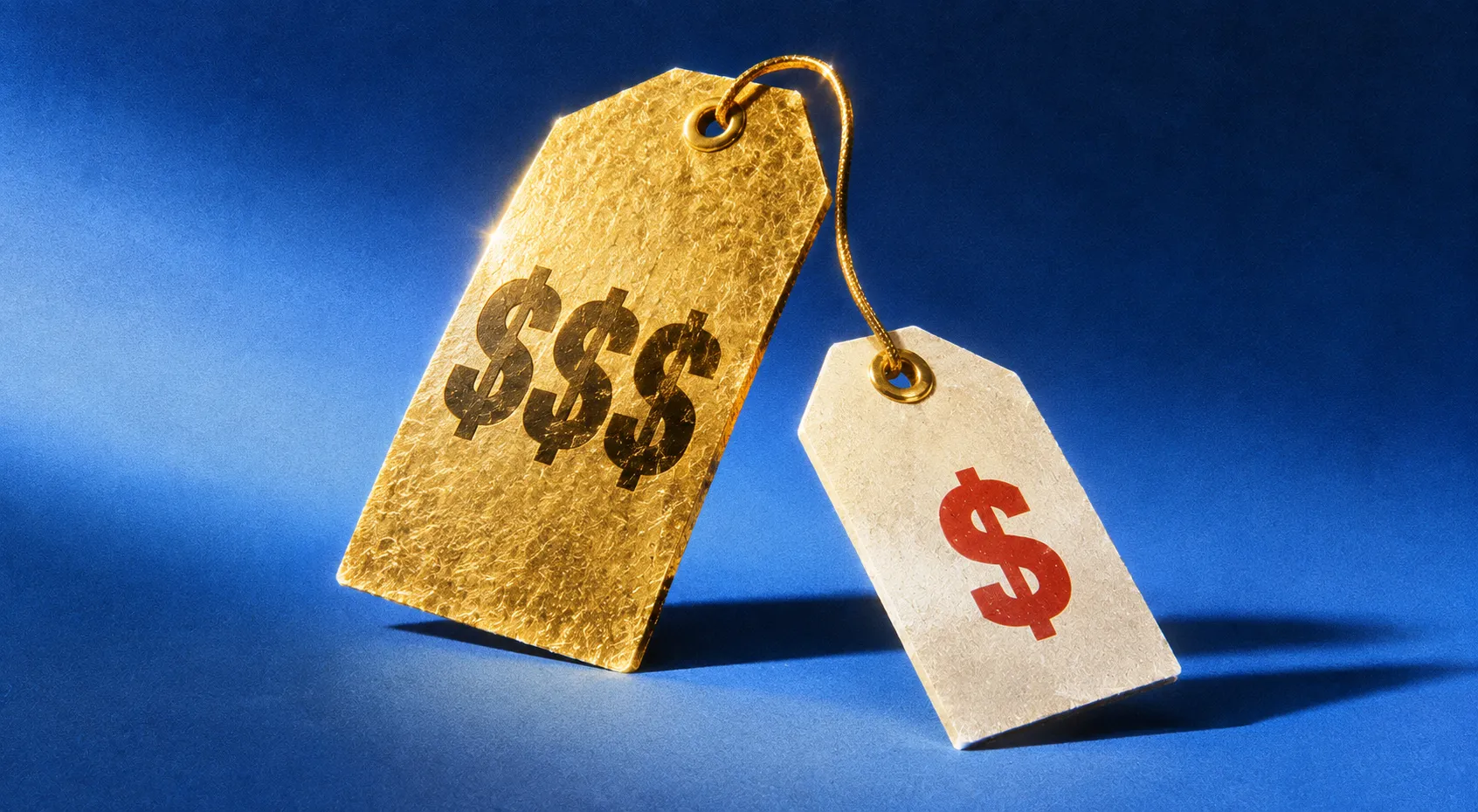
Store brands are taking up more of the grocery aisle as retailers pour money into products carrying their own names instead of those of national brands. Recent results from some of the biggest packaged-food companies show what happens when shoppers become less willing to pay extra for the familiar label.
Private-label sales have already crossed a major threshold, and shoppers aren't treating them as a temporary inflation fix. That puts more pressure on national brands competing for the same grocery spending.
Store brands cross a threshold
Private-label packaged-goods sales in the US have reached $330B, according to Circana. Store brands now account for 24% of unit sales and 23% of dollar sales, with their share of food and beverage spending sitting around the same level.
The habit looks increasingly durable, with 92% of US grocery shoppers keeping private-brand products at home, according to FMI-The Food Industry Association. Nearly half bought more over the past year, while 94% said they would continue buying them even if grocery prices fall.
Why grocers keep pushing
The margin math gives retailers plenty of reason to keep expanding their own brands. Grocers typically earn mid-20% gross margins on national brands, while the store label sitting beside them can deliver meaningfully more.
Kroger's Our Brands portfolio generated more than $39B of sales in 2025, with its Simple Truth line having previously crossed $3B annually. Walmart is taking a similar approach by refreshing nearly 10,000 Great Value products across food and consumables in what it calls its biggest private-brand overhaul.
Walmart's newer Bettergoods line reached $500M in its first year. Across the market, private-label sales increased 2.5% in 2024 as national brands declined 0.8%.
Price hikes stopped working
McCormick reported third-quarter sales of $2.02B, beating the $1.98B consensus, but the underlying volume numbers were weaker. The company raised prices an average of 2.2% from last year while total sales fell 0.3%.
US consumer unit sales declined 2.5%, showing how higher prices can support revenue even as fewer products move off the shelf. Management pointed to elevated gas prices and a cyclospora outbreak as drags on US volumes.
Conagra Brands and General Mills have also used pricing to protect margins as tariff uncertainty and higher input costs raise expenses. The harder part is keeping volumes steady when shoppers have cheaper alternatives sitting beside the national brand.
What the damage looks like
Conagra's second-quarter fiscal 2026 net sales fell 6.8% year over year to about $3B. The company also recorded $968.3M of non-cash goodwill and brand impairment charges, which contributed to a large reported operating loss.
Its most recent quarter was steadier, with net sales decreasing 1.4% to $2.6B in the first quarter of fiscal 2027. Organic sales declined 1.1%, while reported operating margin came in at 10.3% and adjusted operating margin reached 11.5%.
Diluted earnings per share rose 5.9% to $0.36, and Conagra reaffirmed its fiscal 2027 guidance. Kraft Heinz has also announced a $600M reinvestment plan.
How to think about exposure
The numbers show how far store brands have moved into the grocery basket, with private labels accounting for nearly a quarter of unit and dollar sales. Kroger and Walmart are also putting more resources behind their own-label portfolios as shoppers continue buying them.
For packaged-food companies, the pressure shows up most clearly in volume when price increases no longer translate into sales growth. McCormick's latest quarter offers one example, with higher pricing arriving alongside lower total sales and weaker US consumer volumes.
That makes volume the number to watch in coming quarters rather than revenue alone. If pricing continues to rise while unit sales fall, branded-food companies will have a harder time showing that higher prices are translating into underlying growth.

