Why Twilio’s AI Rally Doesn't Match Its Underlying Business Fundamentals
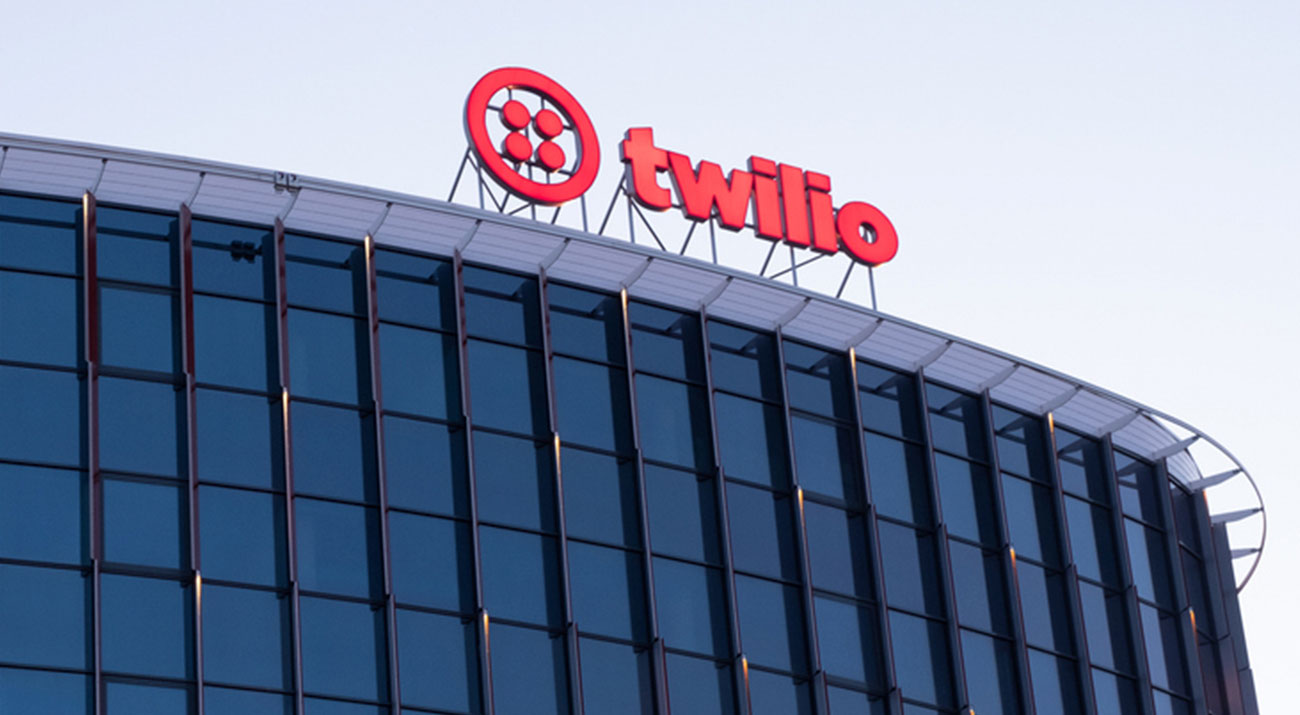
Twilio is the only enterprise software stock acting like it's 2021. While large SaaS names have shed ~30% this year, Twilio shares are up ~36%, a gap that Wall Street has largely credited to its voice AI ambitions. The problem is that the business underneath that enthusiasm doesn't quite match the premium you're already paying.
The company sells software tools that help businesses communicate with customers over text messages, phone calls, and email. Its pitch to the AI moment centers on voice: software that lets companies build and manage AI agents capable of handling customer phone calls without a human in the room.
That story has been enough to detach Twilio's stock from the broader SaaS collapse. Whether it's enough to justify the valuation is a different question entirely.
The Usage Machine
Twilio charges customers based on how much they use its platform, billing by message volume or call minutes rather than flat subscription fees. That model creates a direct link between customer activity and Twilio's revenue, meaning every AI agent deployed and every marketing text fired through the platform shows up on Twilio's top line.
Revenue growth doubled to 14% in 2025, and the company grew 20% year-over-year in the January 2026 quarter.
But the architecture of that growth matters. Messaging accounts for nearly 60% of Twilio's revenue, per The Information's reporting.
Voice revenue held at just 12% of the total in 2025, unchanged from 2024. That's the segment carrying the AI narrative and drawing picks-and-shovels infrastructure comparisons.
CEO Khozema Shipchandler told investors that AI was a "catalyst" behind six consecutive quarters of voice revenue acceleration, reaching 20% year-over-year growth in January 2026. Overall revenue also grew 20% that quarter.
Where the Growth Is Actually Coming From
The AI tailwind for messaging is real, even if it's less cinematic than voice agents. Businesses are increasingly using AI to generate and send marketing messages through platforms like Meta's WhatsApp, which Twilio supports.
UBS equity analyst Taylor McGinnis has pointed to a multiplier effect. When a voice agent resolves a customer inquiry, a confirmation SMS often follows, and Twilio captures both sides of that exchange. The business is expanding, just not in the way the bull case advertises.
Wing Venture Capital's Zach DeWitt, whose portfolio includes Deepgram, one of Twilio's AI model partners, framed the voice opportunity plainly. "You can think of them as the end-to-end infrastructure provider for a lot of their end customers building voice agents. Twilio will put together various parts of the stack."
That's a credible thesis. The issue is that infrastructure for a business generating 12% of revenue doesn't yet move the needle at the scale the stock's valuation implies.
The Margin Trap in Messaging
Messaging revenue carries a structural liability that rarely surfaces in the AI narrative. It's low-margin. Twilio pays telecom carriers hefty fees to deliver its customers' messages, which compresses profitability on the segment that generates the majority of its sales.
Jackson Ader, an equity analyst at KeyBanc Capital Markets who is bullish on the stock, laid out the math plainly. "The messaging side of things is very low gross margin. Part of the potential for their margin expansion would be a mix shift toward more software-like margins, which come from email and voice."
That means Twilio's path to margin expansion runs directly through the segment it can't seem to grow as a share of total revenue. If messaging keeps rising as a portion of the mix, it drags margins down regardless of how well the AI story plays out.
Ader and several other analysts also expect overall revenue growth to slow in 2026 and 2027, partly because usage-based pricing models are inherently difficult to forecast.
Undercut From Below
The competitive threat is sharpening. Smaller messaging rivals including Infobip and Bird are targeting Twilio's customer base directly on price.
According to The Information, a startup currently using both Twilio and Infobip is actively considering dropping Twilio entirely when its contract expires, citing a significantly higher per-message rate and a monthly support fee structured as a percentage of message volume, versus Infobip's lower flat monthly fee.
Twilio's response, through a spokesperson, was that its pricing "reflects the premium reliability, global reach, and compliance security that's required from all of its customers."
That's a defensible answer if enterprise customers agree. The risk is that mid-market and startup customers, more price-sensitive and less locked into compliance requirements, start migrating before Twilio can replace them with higher-margin voice revenue.
The AI Battlefield Gets Crowded
The voice AI segment, Twilio's supposed growth engine, is drawing new entrants who aren't operating on its terms. Firms such as LangChain and Sierra are building products that could compete directly with Twilio for customers deploying conversational phone agents.
Twilio recently announced a cross-selling partnership with Sierra, but Wing VC's DeWitt acknowledged the lines could blur. "Over the next decade, I think we will see some blurring of competition between providers and applications. We will see people competing against their own vendors at times."
That's a polite way of saying today's partner is tomorrow's competitor. For a company where voice AI is the core growth narrative, the prospect of Sierra encroaching on that turf runs a big risk.
A Premium That Needs Proof
Twilio's forward sales multiple sits at 4.6x next year's revenue. Its two publicly listed peers, Sinch and Bandwidth, both trade at under 2.5x, per The Information's analysis. The gap is wide, and the author of that analysis called it "hard to justify."
Sinch's revenue is shrinking and Bandwidth's growth swung from 25% in 2024 to under 1% last year, so Twilio deserves some premium. The question is how much.
Simply Wall St's proprietary valuation model assigns Twilio a "Fair Ratio" of 4.55x on a price-to-sales basis, slightly below the current 5.38x trading multiple, flagging the stock as overvalued on that metric.
Its discounted cash flow model, projecting free cash flow reaching ~$1.87B by 2030, produces an intrinsic value estimate of ~$233 per share versus a recent price of ~$188, which points the other way. Twilio scores just 2 out of 6 on Simply Wall St's valuation checks overall.
Buying Twilio at current levels means betting that voice AI becomes a meaningfully larger share of revenue. It also requires messaging margins to hold under competitive pressure and usage-based pricing to stay predictable enough to support a premium multiple through a slowdown cycle.
Each of those assumptions is shaky on its own. Put together, they require nearly everything to go right at the same time. That's a tough case to make for a company where the growth narrative comes from just 12% of revenue. The main business is caught in a pricing war, and the higher-margin mix still isn't scaling fast enough to materially change the picture.

