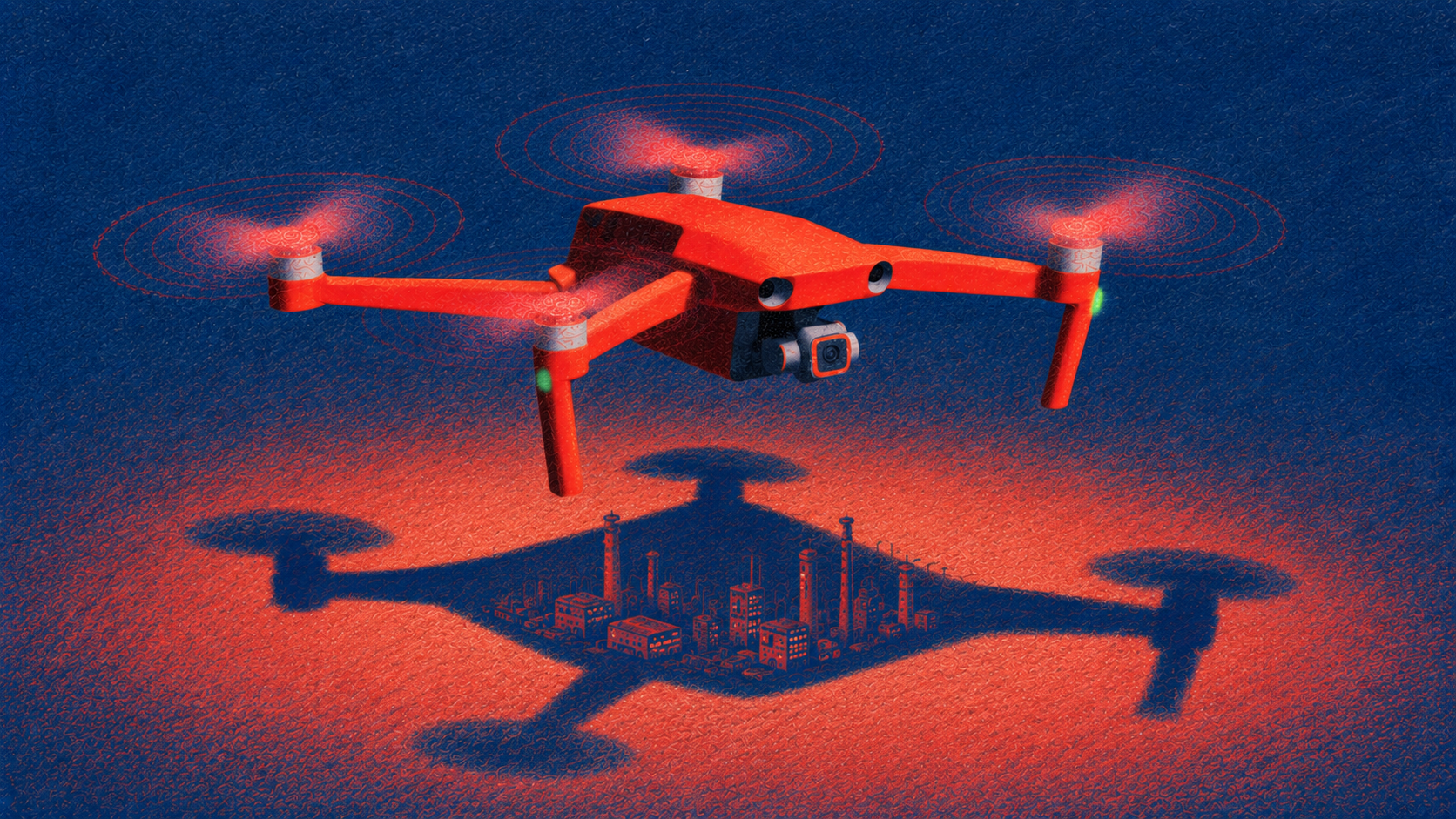
The drone trade has found its runway. President Trump signed a sweeping drone tariff order on Thursday, imposing duties as high as 100% on foreign-made drones and components. Domestic manufacturers rallied immediately.
What the tariff order actually does
The structure is tiered. Large drones with militarily sensitive capabilities face a 100% tariff. Smaller drones and components without those capabilities face a 25% duty.
Drones from US allies face lower rates, with 15% tariffs for the EU, Japan, South Korea, Switzerland, Taiwan, and Liechtenstein and 10% for the UK, provided the hardware and software originate in those countries.
Most duties take effect within 21 days. Components that aren't considered particularly sensitive get a longer runway, with tariffs kicking in after 180 days.
The order also authorizes the Commerce Department to launch an onshoring program for companies investing in domestic drone manufacturing.
The legal mechanism is Section 232 of the Trade Expansion Act of 1962, which lets the president restrict imports on national security grounds.
Commerce Secretary Howard Lutnick concluded that US reliance on foreign drone producers is "substantial" and poses a security risk. Section 232 tariffs have already survived legal challenges that knocked down other Trump-era levies, making this framework more durable.
Stocks that moved and why
Unusual Machines led the rally, surging ~25% on Friday. The Florida-based drone component maker has a domestic motor production facility, which positions it directly to capture demand that would have gone to foreign suppliers.
AeroVironment rose after falling the prior session. Ondas also gained despite reporting a wider-than-expected quarterly loss on Thursday.
Kratos Defense and Security Solutions surged after already climbing double digits in August through Thursday’s close. Red Cat Holdings, which makes military-grade autonomous drones, also rose.
Not every name benefited. Swarmer fell as its Europe-heavy operations raised questions over whether it meets the tariff’s domestic-origin requirements. Its headquarters are in Texas, but its operational and engineering teams are primarily based in Europe.
The China backstory driving urgency
The tariffs are explicitly aimed at reducing US dependence on China, which has dominated the global drone market. The Atlantic Council estimated China controlled 90% of the US drone market and 80% of the global market as of 2024.
Chinese drone exports to the US fell to ~$50M in the first half of this year, roughly half the level from a year earlier, as scrutiny mounted.
"In the long term, we're probably slipping towards an outcome of a hard decoupling for at least certain types of drones."
Christopher Beddor, Gavekal Dragonomics
The Federal Communications Commission had already moved to block imports of new models from Shenzhen-based DJI Technologies, which held ~70% of the US commercial drone market last year.
Thursday's tariffs extend that pressure to components, which previous FCC actions didn't fully cover. Beijing responded earlier by placing drone exports and related technologies on strict case-by-case review.
The timing also matters geopolitically as Trump and Chinese leader Xi Jinping are expected to meet around Sept. 24, and both sides are calibrating their moves heading into that summit.
How big the policy backing actually is
The tariffs aren't the only force behind this sector. The Defense Department launched a $1B Drone Dominance program in December aimed at accelerating domestic manufacturing, with a second stage set to begin this month.
Trump's fiscal 2027 budget proposal asks for $1.5T in total defense spending and includes $75B specifically earmarked for drones.
The iShares US Aerospace and Defense ETF rose ~0.9% on Friday and has gained ~5.2% in August. Boeing and Northrop Grumman each added modestly.
The broader defense industry is catching a bid, but the clearest beneficiaries are companies with verified US manufacturing footprints, exactly the kind of businesses the tariff structure is designed to protect.

