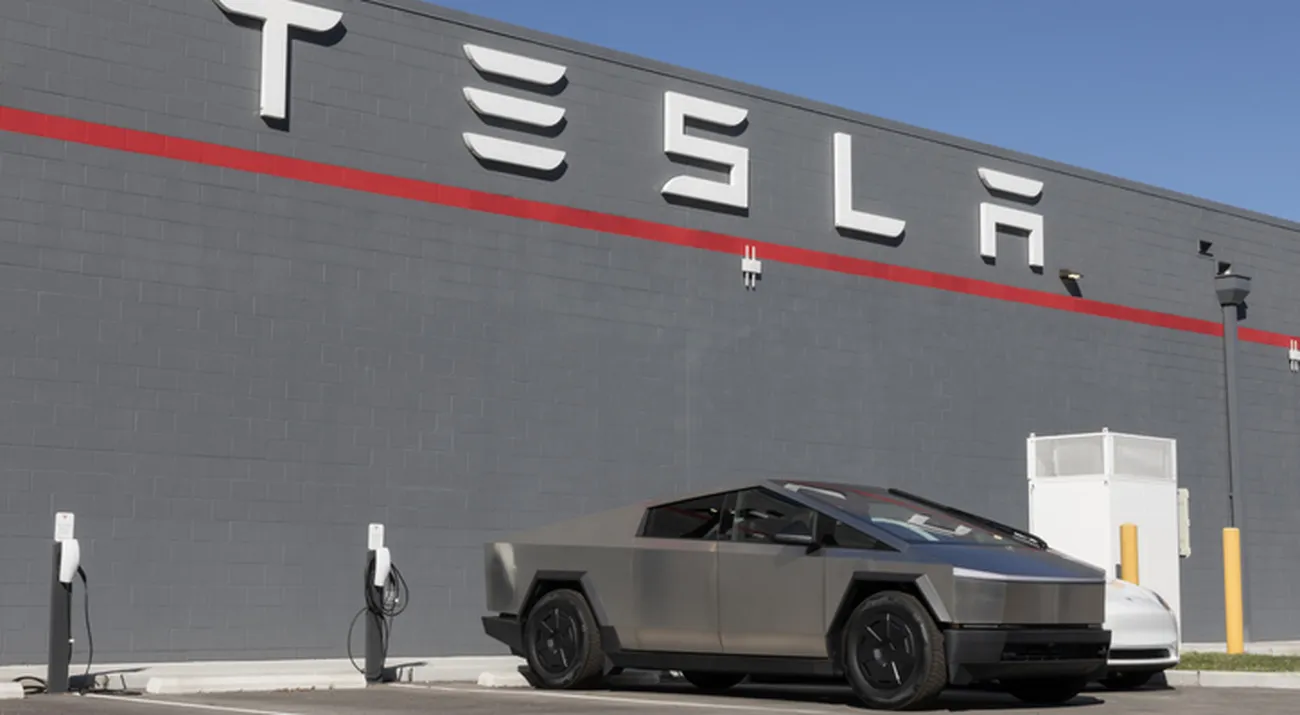
Tesla will wind down Cybertruck production at Gigafactory Texas around the middle of 2027, CEO Elon Musk said in a post on X on Friday, Nov. 6.
The space goes to the Cybercab, the two-seat robotaxi with no steering wheel, pedals, or mirrors.
Musk did not say whether the truck dies entirely, though the Austin plant is the only known Tesla facility tooled for its specialized components.
The truck never got close to its target
When the first Cybertrucks went to customers in late 2023, Musk predicted annual sales of 250K units, and Tesla had talked about the Texas plant as the "Cybertruck factory" before it was even built.
US sales came to 38,965 in 2024, then fell 48% to 20,237 in 2025, per Kelley Blue Book estimates. The Cybertruck sales slump has a longer history.
Through the first nine months of 2026, 11,586 Cybertrucks sold in the US, down 28% from the same period a year earlier.
That is against an installed capacity of more than 125K trucks a year at the Texas factory.
SpaceX, one of the truck's biggest customers, bought $131M worth in 2025 at list price, according to its IPO filing.
Cybertruck US sales have fallen every full year since launch
US Cybertruck sales, units, Kelley Blue Book estimates; 2026 covers January through September
Bar chart. Cybertrucks sold (units). 2024: Cybertrucks sold (units) 39K. 2025: Cybertrucks sold (units) 20K. Jan-Sep 2026: Cybertrucks sold (units) 12K.
Source: Kelley Blue Book
The pickup also carried a quality record that did not help. Tesla has issued 11 recalls for the Cybertruck since it went on sale, according to the National Highway Traffic Safety Administration, some requiring physical repairs and others fixed over the air.
Musk still called the Cybertruck the best vehicle Tesla has ever made and the wind-down the end of an era.
Europe stayed closed to it. Pedestrian impact rules made approval impossible for the sharp-edged stainless steel body, which cut off the market where electric vehicles sell best.
Price was the other problem. Tesla promised a $39,900 starting point in 2019, and the truck that finally arrived cost far more.
The capacity goes to autonomy
Tesla began offering paid Cybercab rides in a small fleet in Austin in September, after years of missed self-driving deadlines.
About 570 of the more than 1,200 Tesla robotaxis operating in Texas are Cybercabs, with Model Y vehicles making up most of the rest, according to the state's Department of Motor Vehicles.
The program still faces a federal check. NHTSA opened an audit in September into whether Tesla properly self-certified the Cybercab against federal motor vehicle safety standards.
This is the third vehicle Tesla has cleared out for its AI ambitions, following the earlier decision to end Model S and Model X production and hand that floor space to Optimus humanoid robots.
Cybertruck lead engineer Wes Morrill framed the truck as a development platform that lives on through the Cybercab.
Production of the robotaxi only started this year, so the volume it replaces won't come back quickly. Tesla is trading a pickup that sold roughly 71K units in three years for a vehicle whose commercial case rests on software that regulators are still reviewing.

