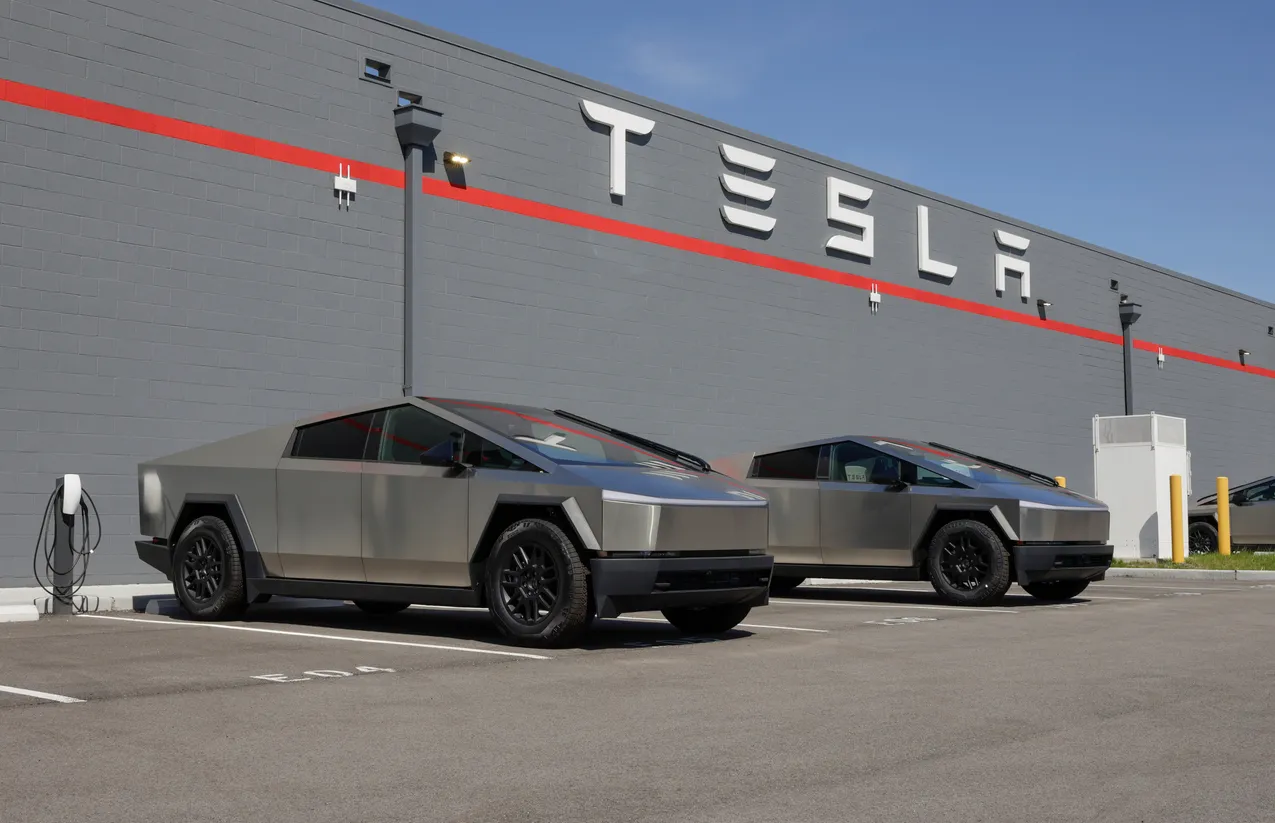
Tesla has started offering paid rides in the Cybercab, a two-seat vehicle with no steering wheel, no pedals, and no easy path to mass ownership under current US rules this week.
That makes the launch more than another product reveal. It tests the core claim behind Tesla’s premium valuation. Investors are watching watching whether Tesla can turn a small, controlled fleet into a real transportation business.
The car arrived before the market
The Cybercab embodies Elon Musk’s long-running plan to make Tesla a leader in fully autonomous transport. Tesla’s market value sits near the top of the global auto industry because investors expect autonomy to become a major business.
The problem is that Cybercab demand can’t be measured like normal car demand. Private buyers may struggle to operate a vehicle without human controls legally in much of the US.
That leaves Tesla as the most likely first customer. The company can use Cybercabs in its own Robotaxi service. It can also target businesses that can maintain and support fleets.
Tesla has already published a form for companies interested in buying Cybercab fleets or supporting robotaxi infrastructure through its network.
That form matters because it hints at a shift. Tesla may not want to scale robotaxis alone. It may need fleet operators, mobility hubs, maintenance partners, and local infrastructure providers.
That model could help Tesla enter more cities faster. It could also reduce how much capital Tesla must spend itself.
Scale is the missing proof
Tesla’s robotaxi footprint remains small compared with its ambition. Its service operates in several Texas and Florida cities. Coverage often stays in simpler outlying areas rather than dense urban centers.
Reuters reported long waits and failed downtown drop-offs during tests after the Dallas and Houston launches earlier in 2026. That gap between demo and daily reliability is the issue.
A robotaxi business needs high availability. It also needs predictable pickups and drop-offs. Tesla’s technology can impress passengers and still disappoint investors if utilization stays low.
Musk has framed the Cybercab as Tesla’s eventual highest-volume vehicle. He has also described a future where individual owners can add vehicles to a Tesla-managed ride-hailing fleet.
"Initial production will be very slow."
Elon Musk, Tesla
That caution now matters more than the vision. Tesla’s earlier target for rapid robotaxi expansion did not materialize.
Executives have recently used more careful language because safety failures could slow approval and damage trust.
Regulators control the speed
Cybercab’s biggest constraint may be legal rather than technical. Federal rules limit how many vehicles without steering wheels and pedals a manufacturer can sell.
Testing rules are looser, but test deployments can restrict Tesla’s ability to charge fares. California remains a major hurdle because Tesla lacks permits to operate a robotaxi service or test driverless vehicles without a safety driver.
Texas is friendlier, but it has tightened oversight. State records showed Tesla had 420 autonomous vehicles registered in Texas before the event. That total included 45 Cybercabs.
Alphabet’s Waymo had 988 registered autonomous vehicles in Texas. Investing.com reported the same 45 Cybercab count while noting Waymo’s larger Texas registration base before launch.
Those numbers explain the market’s skepticism. Tesla is no longer selling investors a distant autonomous future without competition.
Waymo already runs paid autonomous rides in multiple US cities. Other operators also use human support, remote oversight, cleaning teams, and maintenance crews.
The valuation needs evidence
Tesla’s auto business faces pressure from global EV rivals. That makes autonomy more important to the stock story.
A Cybercab network could support a higher-margin services business if Tesla can scale safely. A slow rollout would leave investors focused on vehicle sales, pricing, and competition.
The Cybertruck is a warning sign for premium Tesla launches. Its sales fell sharply in 2025 after a high-profile debut and shifting price points according to 24/7 Wall St..
Cybercab is different because it’s built for fleets, not driveway status. Still, the lesson is useful. A striking product can dominate attention before proving a market. For Tesla, the next milestone is a repeatable operating model that regulators allow, riders trust, and partners can help expand.

