
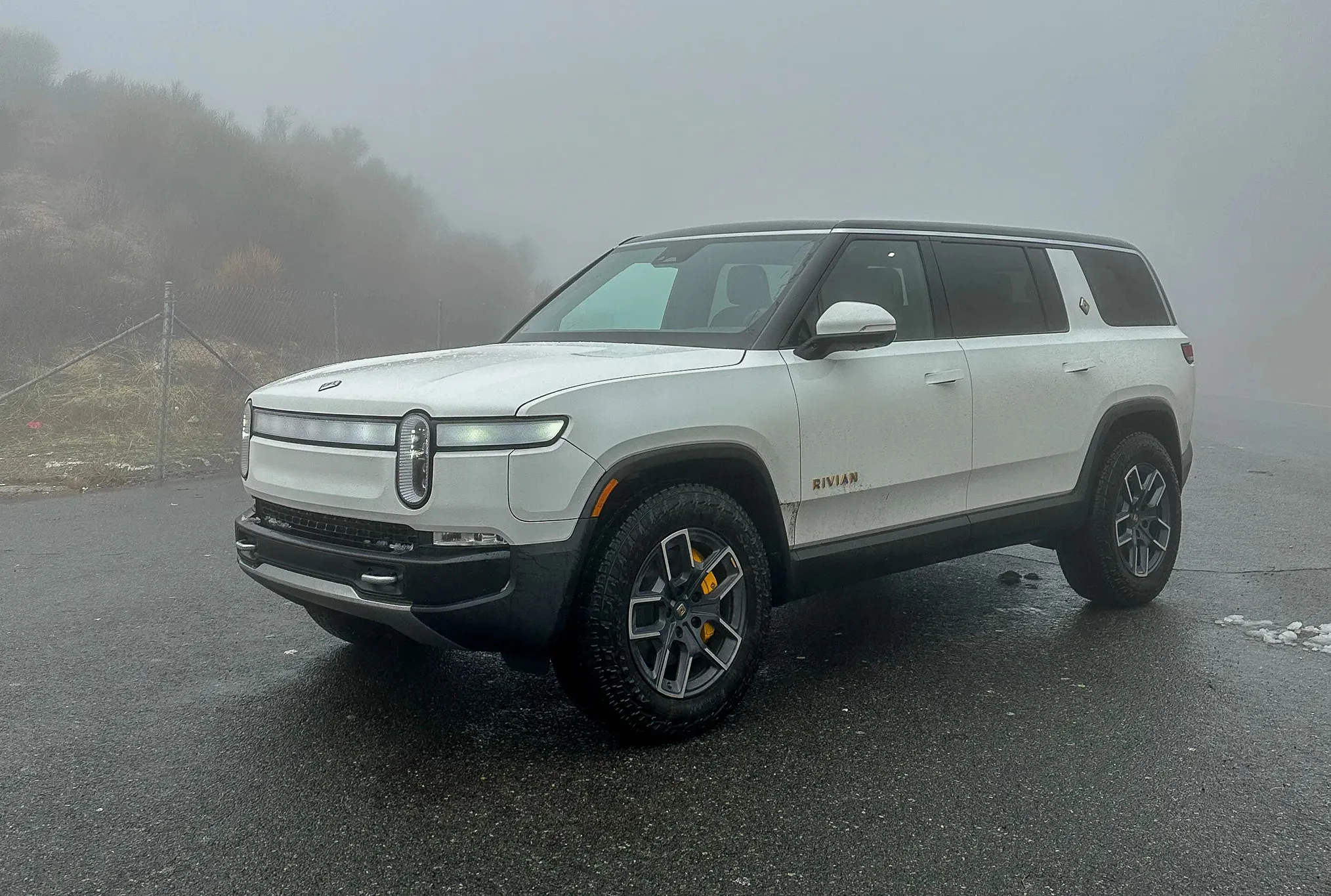
The US electric vehicle market has struggled since the federal tax credit expired last year, prompting major automakers to scale back their EV ambitions. But Rivian Automotive is moving in the opposite direction, gaining market share and attracting renewed interest from Wall Street as its more affordable R2 SUV begins reaching customers.
EV demand continues to weaken
The expiration of the $7.5K federal EV tax credit in September 2025 has weighed heavily on demand. Americans purchased approximately 726K electric vehicles through September 2026, down 30% from the same period last year, according to Kelley Blue Book.
Traditional automakers have been particularly hard hit. Ford's U.S. EV sales have fallen roughly 68% this year, while several manufacturers have shifted their attention back toward gas-powered and hybrid vehicles.
Automakers have also canceled or delayed roughly two dozen electric models over the past year as they adjust to weaker demand.
However, companies focused exclusively on electric vehicles have fewer alternatives, making sales growth and cost reductions increasingly important.
Rivian gains ground on competitors
Despite the broader slowdown, Rivian increased its share of U.S. EV sales to approximately 7% in the third quarter, up four percentage points from a year earlier.
That helped the company climb from sixth to second place among U.S. electric vehicle brands, trailing only Tesla.
Rivian Now Holds Seven Percent Of US EV Sales
Share of US electric vehicle sales, Q3 2026, %
Pie chart. Rivian: value 7. Others: value 93.
Source: Barron's, Kelley Blue Book
Commercial vehicles contributed significantly to the growth. Rivian delivered approximately 8.5K electric vans during the quarter, an increase of nearly 221%, while its newly launched R2 SUV added roughly 3.5K deliveries.
However, demand for its older models remains under pressure. Sales of the R1S SUV declined 31.8%, while R1T pickup sales fell 27.2%.
The results suggest Rivian's growth is increasingly dependent on newer, more affordable vehicles rather than its original premium lineup.
The R2 could improve profitability
The R2 represents a major shift in Rivian's strategy, targeting a broader group of buyers with a midsize SUV priced below its existing vehicles.
UBS analyst Joseph Spak recently upgraded Rivian to Buy, citing encouraging early demand and expectations that rising R2 production could improve automotive gross margins.
The company still faces significant manufacturing costs. Rivian's automotive business recorded an $80M gross loss in the third quarter, representing a negative 5% margin, partly due to approximately $120M in additional expenses associated with launching the R2.
Its software and services division performed considerably better, generating $256M in gross profit at a 42% margin, helping offset losses from vehicle production.
Interim CFO Derek Mulvey expects the R2 to support a positive automotive gross margin exit rate by the end of 2026.
Can Rivian reach the scale it needs?
Rivian's biggest challenge remains producing enough vehicles to become consistently profitable.
Automakers typically need annual production approaching 400K vehicles to achieve sustainable profitability. Rivian delivered approximately 42K vehicles in 2025 and recently raised its 2026 delivery forecast to between 67K and 70K.
Rivian's Growth Case Rests On Volume Years Away
Rivian vehicle sales, actual 2025 and Wall Street expectations through 2030, units (thousands)
Line chart. Vehicles (thousands). 2025: Vehicles Sold (thousands) 42. 2026: Vehicles Sold (thousands) 69. 2028: Vehicles Sold (thousands) 207. 2030: Vehicles Sold (thousands) 375.
Source: Barron's, FactSet
Wall Street expects deliveries to reach roughly 207K vehicles by 2028, driven largely by the R2, with profitability potentially arriving in 2030 when annual sales approach 375K.
That leaves several years of expected losses, although Rivian has strengthened its funding position.
The company estimates approximately $13B in available and targeted future capital, including expected funding from Uber ($UBER), Volkswagen, and a federal Energy Department loan, subject to conditions. UBS doesn't anticipate another capital raise before 2029.
Still, financial risks remain. Rivian expects an adjusted EBITDA loss of $1.75B to $1.85B in 2026, while average U.S. EV prices have declined 3.1% to approximately $55.8K, adding pressure to profitability.
For investors, Rivian's growing market share and early R2 demand offer encouraging signs, particularly as competitors retreat from electric vehicles. However, sustained profitability will depend on whether the company can increase production while bringing manufacturing costs under control. The R2's ability to deliver positive automotive margins will be an important milestone to watch.