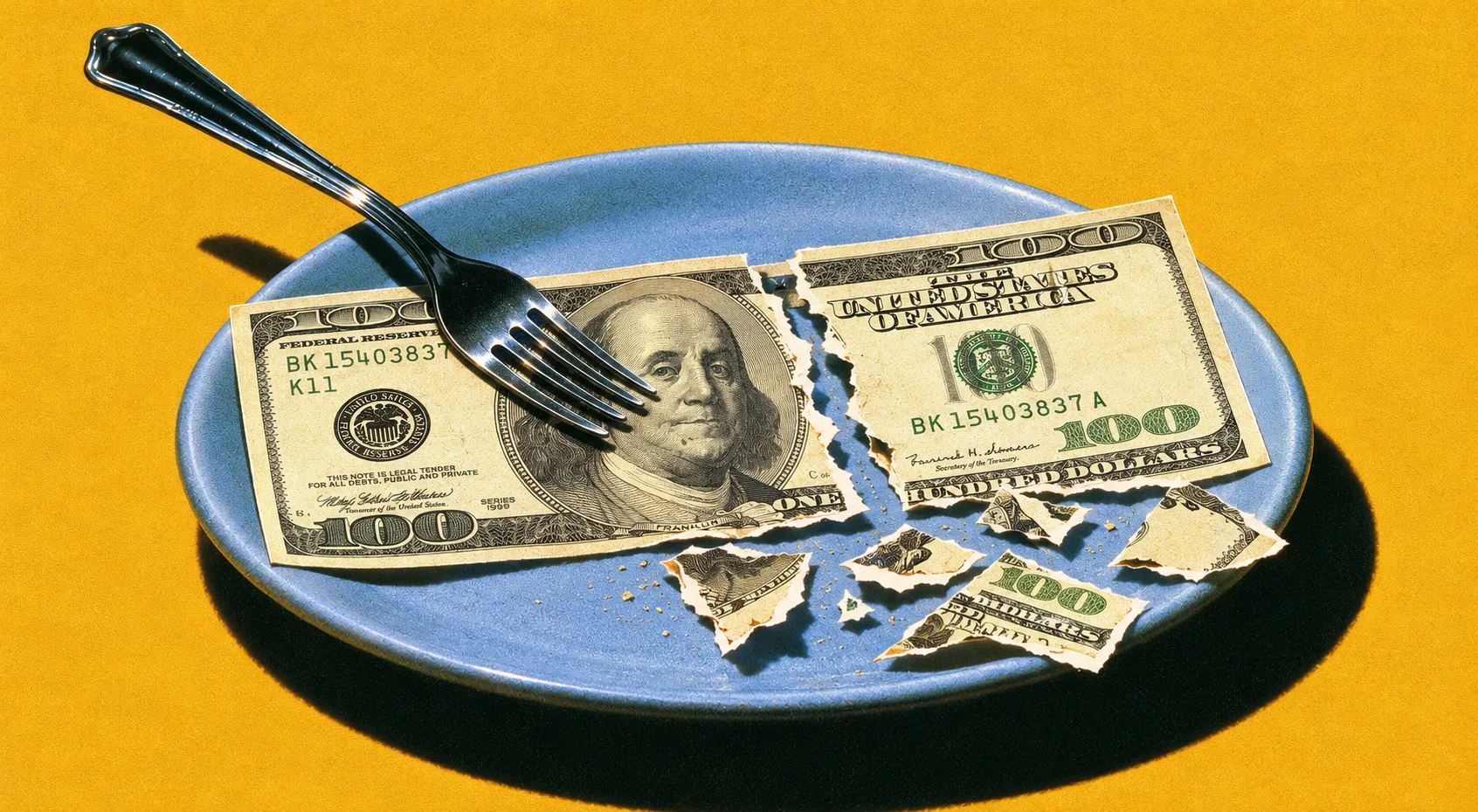
When you leave a job, it's easy to forget about your old 401(k), especially if the balance is small. But your former employer can move that money into an IRA without your permission, where fees could slowly eat into your savings.
And the losses are more common than you might expect. An Oct. 21 white paper from retirement provider PensionBee found that 68% of automatic rollover IRAs lose value within their first year. Even after eight years, 39% are still worth less than when they were opened.
These accounts are meant to be temporary, but 52% remain open after eight years. Most account holders are 44 or younger, meaning they could be missing out on years of potential investment growth while their money sits in low-yield accounts.
Most Rollover IRAs Lose Money in Year One
Share of automatic rollover IRAs worth less than their starting value, as of Oct. 21, 2026
Bar chart. % worth less than starting value. After 1 year: % of accounts 68%. After 8 years: % of accounts 39%.
How a force-out works
So how does your retirement money end up in an account you never opened? Federal law allows employers to remove small 401(k) balances from their plans after workers leave, through a process known as an involuntary distribution or force-out.
Under the SECURE 2.0 Act, the limit increased to $7K for distributions made after Dec. 31, 2023. If your balance is above $1K but no more than $7K, your former employer can generally transfer it into a safe harbor IRA.
For balances of $1K or less, the plan can send you a check instead, potentially triggering 20% federal tax withholding and a 10% early withdrawal penalty if you're under age 59 and a half.
The money isn't necessarily exposed to risky investments once it's moved. Department of Labor rules require these IRAs to hold investments designed to preserve principal, usually money market funds or stable value products.
The catch is that they tend to earn very little, which becomes a problem when account fees start adding up.
"Dollar-based fees of $30 or $50 per year, that can be really toxic on a small account."
Romi Savova, CEO of PensionBee
Why fees eat into savings
To see how quickly the costs add up, consider what these accounts earn. Automatic rollover IRAs typically generate just 1% to 2% in annual interest, compared with historical average annual returns of roughly 5% to 8% for traditional 401(k) investments.
Meanwhile, providers may charge up to $100 to open an account and another $5 each month. That's $160 in first-year fees, regardless of how much money you have saved. For someone with a $1.2K balance, those charges alone would eat up more than 13% of the account before interest.
And the longer the money stays there, the more those fees matter. PensionBee's earlier research found that a $1K account earning 1% annually could be completely drained in about 29 years.
Fees Can Eat 13% of a Small Rollover IRA in Year One
First-year costs on a $1.2K automatic rollover IRA balance, as of Oct. 21, 2026
| Cost item | Amount |
|---|---|
| Account opening fee | up to $100 |
| Monthly maintenance fee | $5 per month |
| Total first-year fees | ~$160 |
| Share of a $1.2K balance | ~13% |
How to find and move your money
If you've left a 401(k) behind, start by contacting your former employer's HR department or retirement plan administrator. They should be able to tell you whether the money was moved and which provider has it.
If that doesn't work, there are a few free resources that can help. The Department of Labor's Retirement Savings Lost and Found database helps identify plans linked to previous employers. You can also search the National Registry of Unclaimed Retirement Benefits using your Social Security number or check Missing Money for unclaimed property held by states.
It's worth checking if you left a job within the past decade without moving your 401(k), had a balance below $7K, changed your address or email, or received correspondence from an IRA provider you don't recognize.
Once you find the account, you can generally roll the money into an IRA of your choosing or your current employer's 401(k), if the plan accepts rollovers. That gives you more control over your investments and the fees you're paying.
And more workers may find themselves dealing with this in the coming years. Annual automatic rollovers are projected to double from 1.1M in 2022 to 2.2M by 2030, when an estimated 13M accounts could hold $43B.
Industry estimates already put forgotten or left-behind retirement savings of all kinds above $2T. Yet earlier PensionBee research found that only 35% of savers with an old 401(k) know their employer can move it without asking.
Your retirement savings shouldn't be shrinking simply because you changed jobs. Checking where your old 401(k) ended up could save you years of unnecessary fees.

