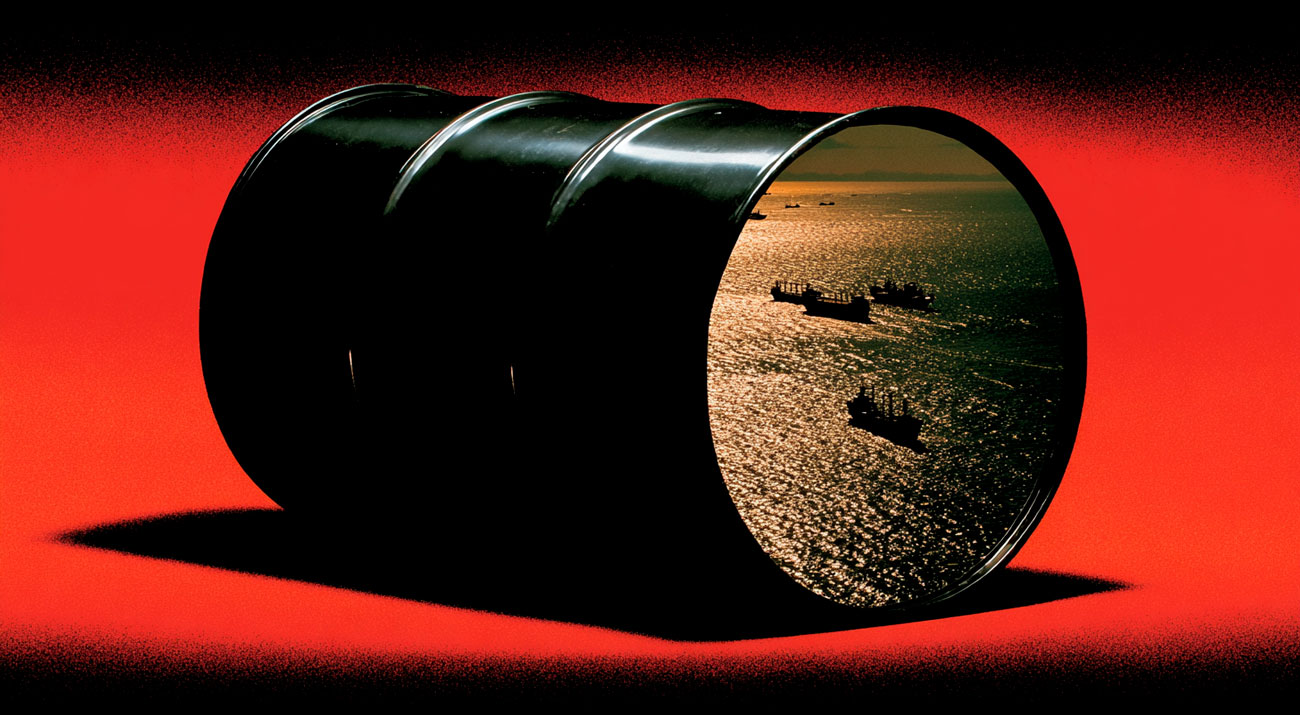
Brent crude climbed 2.4% to $97.46 a barrel Wednesday. The overnight exchanges between the US and Iran were the most serious since a ceasefire took effect on Apr. 8.
Iran fired ballistic missiles at Kuwait and Bahrain, targeting the US's main naval base in the region and the Ali Al-Salem airbase. Iran simultaneously sent drones at commercial ships in the area.
American forces struck a communications tower on Iran's Qeshm Island, near the Strait of Hormuz. The US said all strikes were conducted in self-defense with no US personnel harmed.
At least one person was killed in a separate Iranian strike on Kuwait's civilian airport. The strike forced a brief suspension of flights and prompted Kuwait to expel two Iranian diplomats.
Iran's foreign ministry alleged Kuwait and Bahrain bore "direct and clear responsibility" for Washington's actions, a claim Kuwait rejected outright.
The two sides had been converging on a memorandum of understanding that would extend the truce by two months. Final details over reopening the Strait of Hormuz remain unresolved.
Lebanon is a central sticking point. Israel wants to keep targeting Iran-backed Hezbollah militants there, while Tehran insists any interim deal must include a ceasefire in that country.
Trump confirmed Wednesday he used profanity during a phone call with Israeli Prime Minister Benjamin Netanyahu. He said he was "a little bit perturbed at him constantly fighting with Lebanon."
Netanyahu said in a CNBC interview the same day that his relationship with Trump was unchanged. He called Trump "the greatest friend that Israel has ever had in the White House."
Strait of Hormuz Keeps Energy Markets on Edge
The Strait of Hormuz normally handles one fifth of the world's oil and liquefied natural gas supply. Traffic through the chokepoint has dropped sharply since Iran began attacking ships in late February 2026.
Some vessels have resumed transit in the past two weeks in coordination with US forces, though volumes remain well below pre-war levels, per Bloomberg.
US crude stockpiles fell almost 8M barrels last week, the sixth straight weekly decline. Holdings at the Cushing, Oklahoma hub fell to 22M barrels, nearing the roughly 20M-barrel minimum operating level.
West Texas Intermediate extended its weekly gain to roughly 5.5%. The gain reversed most of the losses from the prior week, when traders had anticipated an imminent deal.
"Uncertainty is the name of the game right now," said Rabobank Energy Strategist Florence Schmit. She added that a credible peace deal remained unlikely without resolution on Iran's enriched uranium stockpiles, the strait's status, and Lebanon.
Gold fell as much as 1.4% to below $4,430 an ounce, its lowest in nearly a week.
Elevated oil prices have pushed inflation expectations higher, increasing the likelihood the Federal Reserve raises rates at its June meeting. Higher rates reduce demand for non-yielding assets like bullion, per Bloomberg.
Silver dropped 2.3% to $73.36 an ounce in the same session.
Trump said he still believed the standoff with Iran would "resolve itself fairly quickly," though broader negotiations over Tehran's nuclear program remain far from settled.

