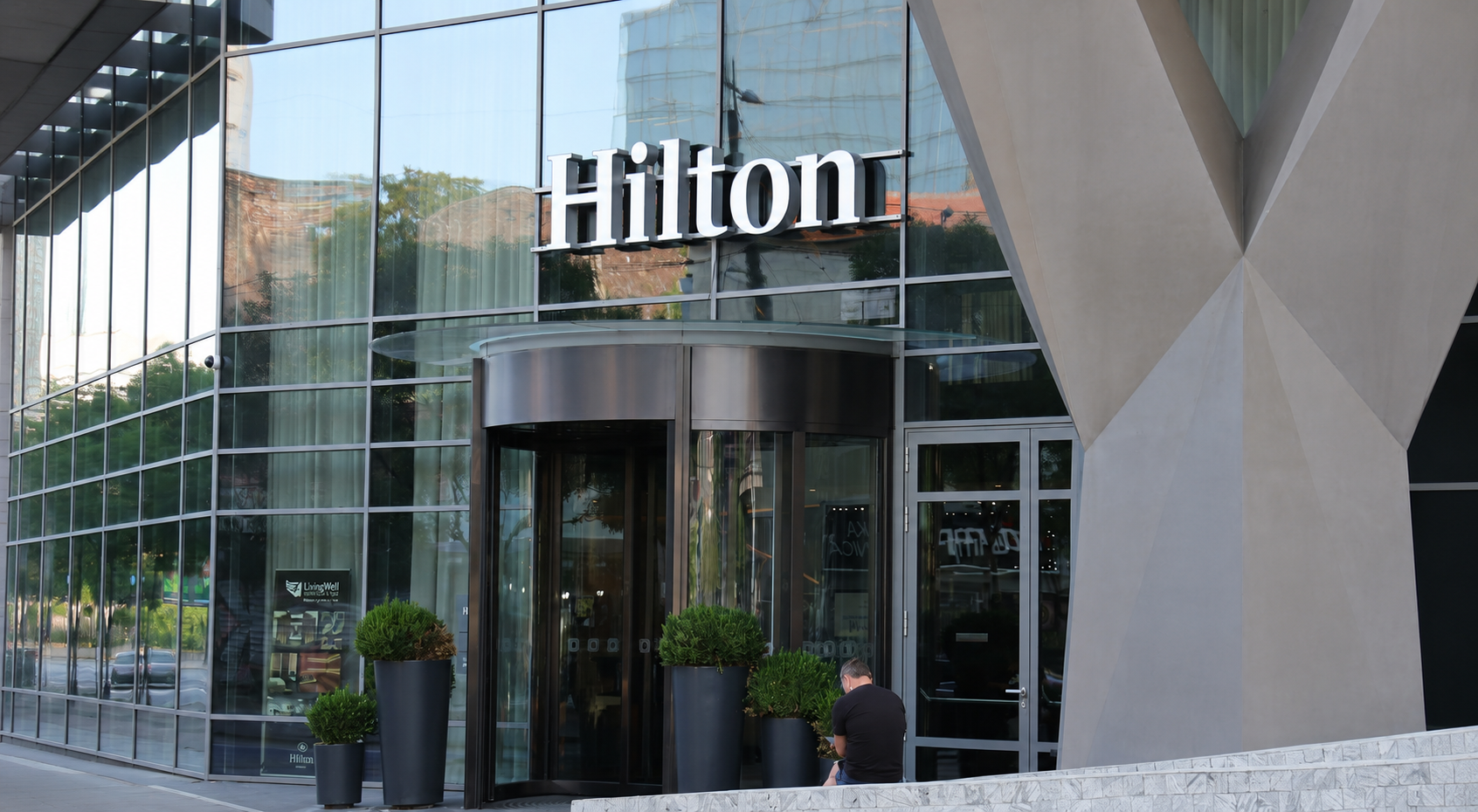
Hilton Worldwide Holdings raised its full-year revenue-per-available-room forecast to 3%–3.5%, after second-quarter RevPAR rose 3.9% year over year.
The biggest demand surprise came from mid-scale hotels, not luxury. CEO Christopher Nassetta said mid-scale and upper mid-scale segments were negative last year but have since reversed course.
Nassetta attributed the shift partly to the AI infrastructure boom, arguing that contractors and engineers working near new data centers are filling mid-tier hotel rooms.
"All that investment going on in the country, like, the people that do it aren't staying in luxury hotels."
Nassetta, Hilton
Hilton's pipeline grew 6% to 541.3K rooms in development globally. The company added 24.1K rooms to its portfolio in Q2, a 6.1% growth rate from 2025.
New openings include properties in Crete and Athens, and a new brand called Undergraduate by Hilton is set to open its first location in 2027.
Analyst Conor Cunningham of Melius Research said some investors had expected even stronger RevPAR growth and viewed the guidance as underwhelming.
The World Cup is expected to give Hilton a third-quarter lift in North America, though the company flagged a partial offset in Q4 from calendar shifts and midterm elections.
One drag already visible: RevPAR in the Middle East fell nearly 30% due to the ongoing war, though Hilton said the drop was better than feared.
Cruise lines face a different current
Royal Caribbean reported a stronger earnings beat but cut its top-line outlook. The cruise line trimmed full-year revenue growth to 9% from roughly 10%, citing foreign exchange headwinds and geopolitical uncertainty weighing on bookings for the back half of 2026.
Rival Carnival recently flagged similar headwinds, with geopolitical volatility disrupting bookings and higher fuel costs pressuring profits.
The broader US tourism picture has its own complication. Canadian visits to the US fell 25% in 2025, costing the US tourism industry roughly $2.3B in spending, according to Statistics Canada.
Early 2026 data suggest the decline has persisted, though automobile crossings have started to recover.

