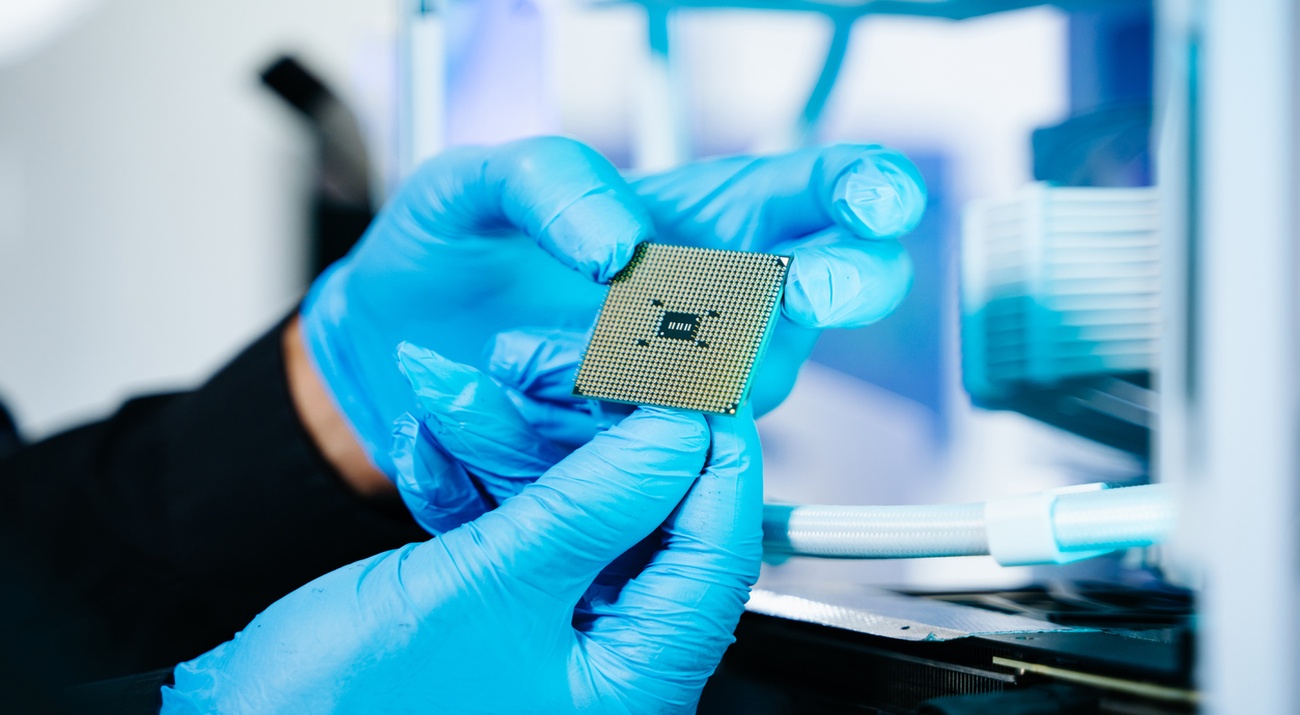
The US Department of Commerce signed letters of intent to provide $874M in incentives to seven companies developing semiconductor technologies for AI and advanced computing systems.
The funding comes from the CHIPS and Science Act, the 2022 law signed by then-President Biden that provides federal subsidies to domestic chip manufacturers.
GlobalFoundries lands the largest share at up to $300M for co-packaged optics, a technology that combines light-based data transfer with AI processors for faster computing.
Kepler will receive up to $245M for new AI memory technology, while Multibeam Corporation gets up to $140M for advanced chip-packaging equipment.
The remaining funds are split across four smaller firms: Extropic, Thintronics, OBSIDIA Semiconductors, and Aeluma, covering projects from lower-power computing to counterfeit chip detection.
The government is taking a cut
As a condition of the funding, the Commerce Department will take a minority, non-controlling equity stake in each company, pending further review before final awards are issued.
"These strategic investments will enhance our country's domestic capabilities, create high-paying jobs and keep America at the forefront of the semiconductor industry."
Howard Lutnick, Commerce Secretary
The equity-stake model has drawn pushback from within Trump's own party. Sen. Todd Young (R-Ind.), who drafted the foundation of the CHIPS and Science Act, previously said the law never intended for the federal government to take major stakes in chip companies.
The announcement follows a pattern set recently by the Trump administration. It took a 10% stake in Intel as part of roughly $11B in federal subsidies, then took a $150M stake in laser-tech startup xLight in December.
Timing of the announcement matters. Chip stocks suffered what one analyst called the largest momentum crash in modern history before rebounding sharply Thursday.
The PHLX Semiconductor Index dropped 5.3% on Wednesday before a broad chip stock rally took hold on strong earnings from Lam Research and Microsoft.
Memory stocks surged after Samsung warned a memory shortage could last into 2028, with Micron and Sandisk jumping 17% to 23% respectively.
BTIG's chief market technician Jonathan Krinsky cautioned the rebound may not hold, warning a 20% rally in semis would likely stall at the 50-day moving average before eventually testing the 200-day moving average.
The federal funding announcement adds a policy tailwind to a sector navigating heavy volatility, though final award agreements remain subject to further government review.

