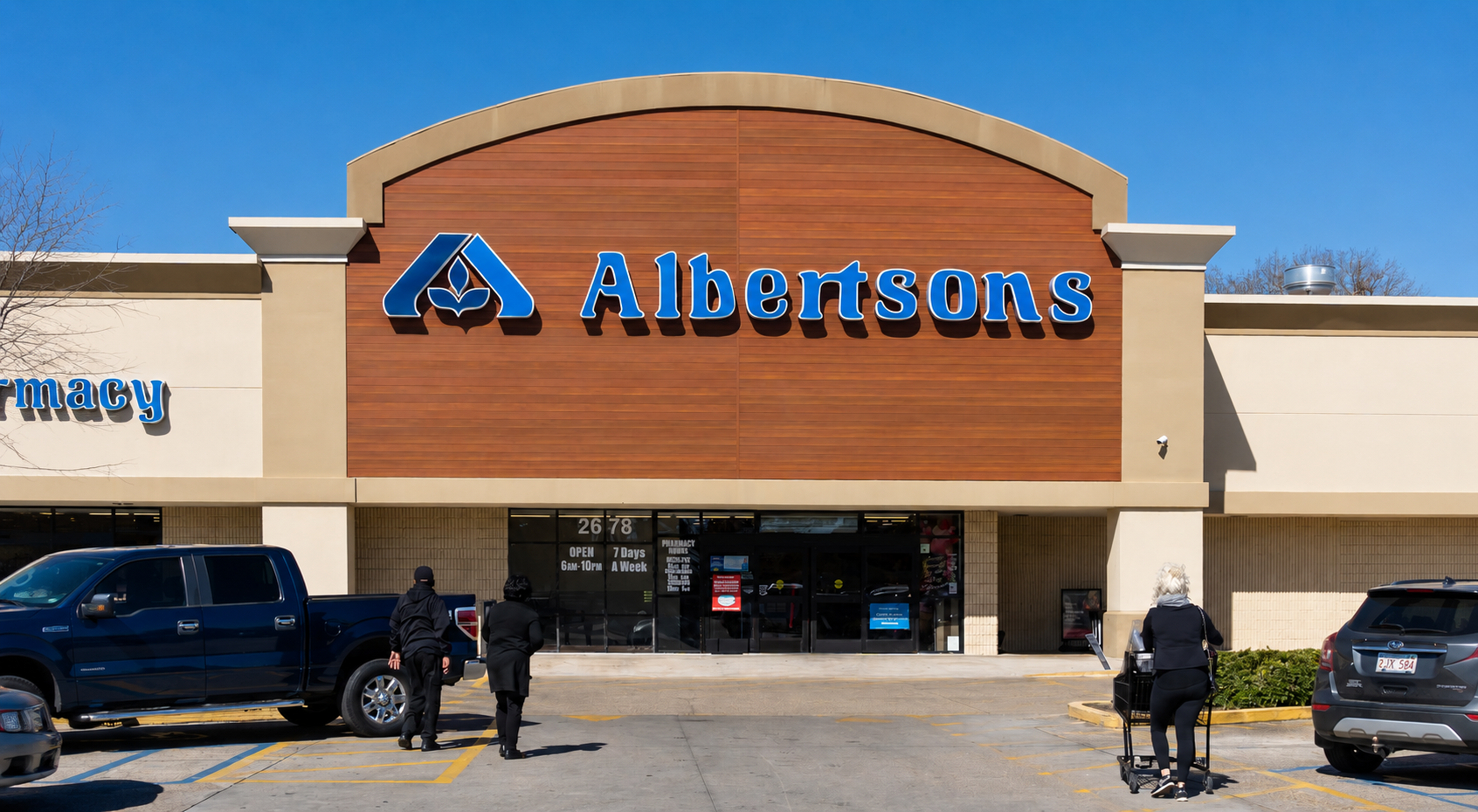
Albertsons slashed its full-year sales and earnings outlook on July 23 after the grocer said cautious consumers are pulling back hard.
The stock hit its lowest level since Albertsons went public on the news. Kroger and Sprouts Farmers Market also declined, reflecting broader concern about competitive pressure across the grocery sector.
Where the customers went
CEO Susan Morris was direct about the problem. Lower-income shoppers are buying fewer items, switching to generic brands, and buying in bulk. The biggest losses are to Walmart, Amazon, and Aldi — pure price-focused retailers that Albertsons can't easily match.
"We're seeing a shift to private label. We're seeing a shift to value packaging, trade downs."
Susan Morris, CEO, Albertsons
Morris said demand is weakest in the western US, and price cuts will be concentrated there. The company plans to use its loyalty program to target lower-income shoppers with more promotions rather than cutting prices across the board.
Albertsons said it won't pass rising fuel and packaging costs (partly driven by the escalating war in Iran) onto consumers. Instead, it plans to negotiate aggressively with suppliers to absorb those costs, even if it squeezes margins further.
A new operating structure
Albertsons is consolidating 11 divisions into four geographic regions under a plan called "ACI Edge." The four regions cover California; Portland and Seattle; the South; and the East. The company says this will sharpen accountability and centralize supplier relationships across its roughly 2.2K stores.
No stores will be closed or realigned as part of the restructuring. Albertsons says it's accelerating investments in price and customer experience ahead of expected productivity gains, which it believes will improve traffic and loyalty over time.
The company also announced that President and CFO Sharon McCollam will retire later this year. McCollam, who joined in September 2021, will stay in her role until a successor is named and serve in an advisory capacity through the end of the fiscal year in February 2027.
RBC Capital Markets analyst Steven Shemesh called the departure a likely negative given current business pressures, noting McCollam is well-regarded by investors.
The company now expects identical sales to decline 0.5% to 1.5% for the full year, a sharp reversal from its prior guidance of flat to up 1%. Adjusted earnings per share guidance fell to $1.75–$1.85, down from $2.22–$2.32 previously.

