
FinksDaily
Sponsored by Alumni Ventures
💵 Dollar magnet
Good morning. Doomers keep insisting money is fleeing America, but the numbers say otherwise. Overseas investors funneled a record $426B into US stocks and investment funds last quarter, per new government data (opens in a new tab) out this week. That cash rush is part of why the dollar has been on a tear the past two months, alongside a Fed rate hike and pricier oil. Chalk a lot of it up to the AI boom pulling in global buyers. The world won’t convert to miles and Fahrenheit, but it’ll happily convert its cash into dollars.
Top Idea

Cable Lost Ground to Streaming. Now Its Broadband Business Is Under Attack
Cord-cutting was only the beginning of cable’s troubles. After streaming gutted its TV business, telecom giants are coming for one of its most profitable remaining business: home broadband. The fallout has left two cable giants among the cheapest stocks in the S&P 500, yet Wall Street still isn’t convinced they’re bargains.
Price war, no winners: Broadband prices are falling even as inflation keeps squeezing household budgets. UBS estimates fiber prices (opens in a new tab) have dropped 7% to 14% over the past year, while cable prices have fallen 17% to 27%. Telecoms can afford it, since bundling internet with wireless keeps phone customers from wandering. Cable can't, since stand-alone broadband carries gross margins of 70% to 90% and was the fallback after streaming gutted pay TV.
- Comcast has lost nearly 60% of its market value over five years, while Charter has plunged 84% as broadband competition intensifies.
- Fiber holds roughly 22% of broadband share versus cable’s 56%, but now reaches 65% of US households, threatening cable’s remaining customers.
The Cheap Stock Trap
Charter trades at just three times forward earnings, the lowest multiple in the S&P 500, while Comcast ranks sixth-cheapest at six times. Neither valuation comes with a quick turnaround in sight. Comcast CFO Jason Armstrong warned this month that broadband subscriber losses (opens in a new tab) aren't likely to ease soon, citing soaring fiber-optic cable costs, fixed wireless competition, and satellite broadband.
- Fixed wireless has captured 14% of broadband share, while Starlink holds 4% and is gaining ground in rural markets.
- Morningstar slashed Charter’s fair value estimate (opens in a new tab) from $400 to $280 and lowered Comcast’s from $41 to $36 as broadband growth expectations weaken.
Defense case: Cable’s counterpunch is DOCSIS 4.0, bringing fiber-like speeds to existing networks, alongside cheaper mobile plans and streaming bundles. Morningstar still sees both stocks as undervalued but favors Comcast’s lighter debt load. UBS prefers AT&T, which overtook Verizon in fiber reach after buying Lumen’s fiber business. Yet Comcast CFO Jason Armstrong warned, “Satellite looms out there as a potential threat.” Even rock-bottom valuations can’t save a business losing its grip on the market.
 (opens in a new tab)
Sponsored by Alumni Ventures
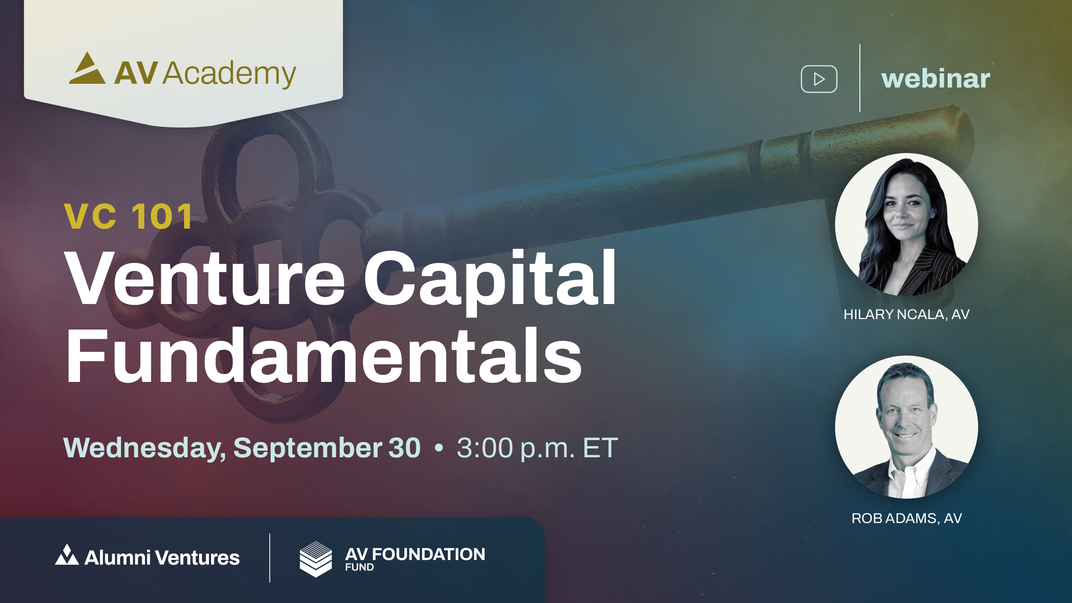
Join Us on Sept 30 at 3 PM EST
Ready to diversify beyond traditional asset classes? Join the Alumni Ventures team for a quick, high-impact breakdown of venture capital fundamentals (opens in a new tab).
What You'll Learn:
- VC Fundamentals: How venture capital differs from private equity, traditional assets, and why its structure creates the potential for outsized returns.
- How Funds Work: How AV builds diversified portfolios across stages, sectors, and funds — and the logic behind each layer.
- Who It's For: How accredited investors can access an asset class once reserved for institutions, and what getting started with AV looks like.
Large-Cap Recap
Drugmakers Chase The Oral Peptide Boom
Major drugmakers are investing billions to transform injectable peptide treatments into oral pills that can withstand the digestive system. Protagonist Therapeutics and Johnson & Johnson are leading this shift with Icotyde, an oral psoriasis treatment projected to generate over $5B in annual revenue. Meanwhile, Novo Nordisk is partnering with Orbis Medicines to improve oral drug delivery for obesity treatments. That transition threatens blockbuster injectables like AbbVie's Skyrizi as companies compete for market share. [Read (opens in a new tab)]
Resale Growth Clashes With High Processing Costs
The global secondhand clothing market has doubled in five years, accounting for roughly 10% of apparel sales. Yet companies doing the heavy lifting to resell clothes often struggle to make money. H&M majority-owned Sellpy processed over 20M items last year through European warehouses, but remains unprofitable after 12 years. High labor costs for inspecting and photographing individual garments eat into margins. Meanwhile, platforms like Vinted shift logistics to users, achieving better profitability. [Read (opens in a new tab)]
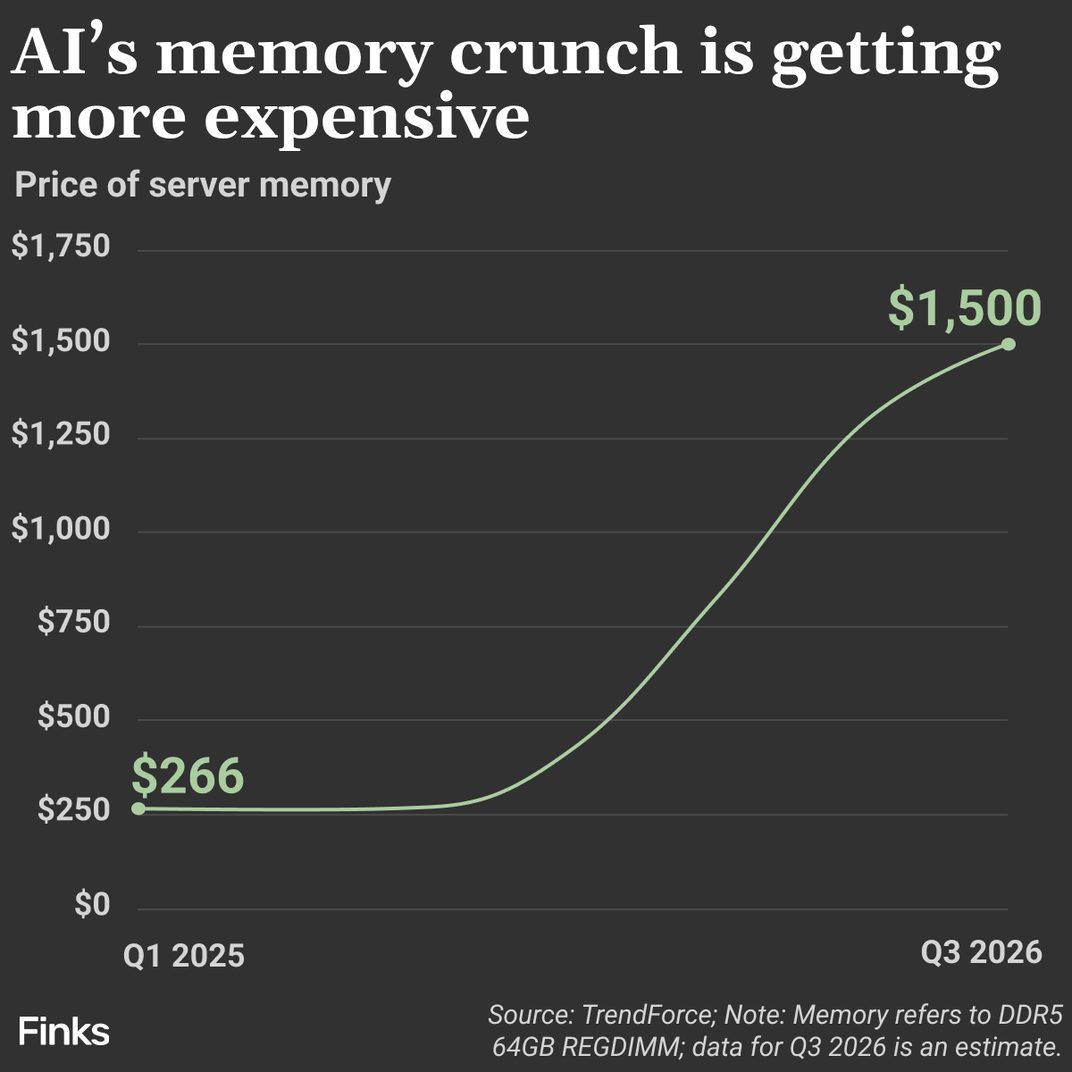
Memory Shortages Meet Rising Tariffs and Costs
Proposed US import tariffs threaten to add costs for memory components just as AI demand drives prices higher. Micron Technology is investing heavily in domestic facilities, but new plants will not begin production until 2030. That gap leaves buyers facing steep price increases for flash storage and server memory. Meanwhile, major smartphone makers and device brands are already passing those higher component costs directly on to consumers. [Read (opens in a new tab)]
Market Pulse
Humana Inc.
The health insurer’s shares surged after Barclays upgraded the stock to Overweight and sharply raised its price target.
BlackBerry Limited
The software company’s shares sank as profit-taking outweighed a strong earnings report and record quarterly QNX revenue.
Bloom Energy Corporation
The fuel-cell maker’s shares jumped after Oracle reaffirmed its major power deal despite delays surrounding Project Jupiter.
Sponsored by BluSky AI
The Word Heard Around Wall Street: ‘Buy’
Market experts have identified an early-stage AI compute center company aiming to solve an alarming AI shortage. Their solution was so impressive, it earned them a “Buy” rating and an estimated fair value of $15.81, 3X the current offering. But you can invest in BluSky AI today at $5.50/share. (opens in a new tab)
Their SkyMod prefabricated AI compute centers are scheduled to deploy 3X faster, fit onto smaller footprints, use less power, and near-zero water versus traditional data centers.
The AI data center market could depend on this tech. Become an early-stage investor today. (opens in a new tab)
Markets & Economy
Consumer sentiment hits four-month low: Americans grew more pessimistic in September as higher grocery and gas prices strained household budgets. Expectations for inflation over the next year climbed, underscoring persistent concerns about the cost of living. [Read (opens in a new tab)]
AI spending drives surge in US equipment orders: Core capital goods orders jumped 1.6% in August, far exceeding forecasts as businesses invested in equipment tied to AI infrastructure. Higher energy costs and borrowing rates could weigh on investment outside the sector. [Read (opens in a new tab)]
Diesel surge squeezes schools and farms: US diesel prices hovered near $6.50 a gallon, sharply raising costs for school buses, agricultural equipment and delivery fleets. The squeeze is forcing budget cuts and threatening to push transportation and food prices higher. [Read (opens in a new tab)]
Business & Tech
Costco margins squeezed by AI memory demand: Costco fourth-quarter revenue reached $95.72B, beating estimates. However, tightening AI-driven memory supplies pushed up consumer electronics costs and squeezed gross profit margins. [Read (opens in a new tab)]
Novo Nordisk licenses long-acting drug tech: Novo Nordisk partnered with Nanexa to use its PharmaShell drug-delivery system across five cardiometabolic programs. The deal follows a mixed market reaction to Novo's 2030 targets as Eli Lilly widens its US market lead. [Read (opens in a new tab)]
Microsoft revamps Copilot with agentic tools: Microsoft rebuilt its Copilot app with Home, Code, and Autopilot sections to counter rivals bundling chat and coding into single interfaces. Fewer than 7% of 450M Office 365 seats currently carry AI add-on licenses. [Read (opens in a new tab)]
Chart
Digit of the Day
The AI Hail Mary Needs 80% Growth to Survive
The receipts are in, and they’re eye-watering. Columbia professor Stijn Van Nieuwerburgh warns America’s AI titans need revenue to grow 80% every year (opens in a new tab) through 2032 to justify the $10.3T buildout, a bet already bigger than the canals, railroads, and power grid combined. This time, it’s funded by debt so opaque even the Fed is watching closely.
- Van Nieuwerburgh’s math traces back to a specific target — $3.7T in annual AI revenue by 2032, vs. ~$100B combined revenue at OpenAI and Anthropic today.
- “This is freaking complicated,” he says, pointing to a web of bank and private-credit debt — a run-up he likens to the subprime mortgage crisis.
Red flags: Miss that target, and the leverage (opens in a new tab) ripples straight through the special purpose vehicles holding the debt. Investors got a taste this week, as Oracle triggered force majeure (opens in a new tab) on Blue Owl’s data center, positioning itself to defer payments after regulators blocked a needed gas pipeline. Investors didn’t wait around, sending both stocks lower Thursday. The facility isn’t due online until 2028, leaving plenty of time for more cracks to show.
Post Credits
Sponsor
Trump and Xi Bought More Time. Which Stocks Have the Most at Stake?
Trump and Xi extended their trade truce until January 10, but tariffs, rare-earth supplies and chip restrictions remain unresolved. With another potential meeting in November, investors have plenty riding on what comes next.
- Semiconductors: Nvidia and AMD face uncertainty over Chinese market access.
- Rare earths: MP Materials could benefit from America's push to secure domestic supplies.
- Automakers: General Motors and Ford remain exposed to tariffs and critical mineral restrictions.
Which stocks have the most to gain or lose before the next summit? Use Finks to compare their China exposure, valuations, and potential upside under different trade scenarios (opens in a new tab).
Disclosures
This is a paid advertisement for BluSky AI Regulation A offering. Please read the offering circular at invest.bluskyaidatacenters.com (opens in a new tab)
*BluSky AI, Inc. has paid FRC a fee for research coverage and distribution of reports.