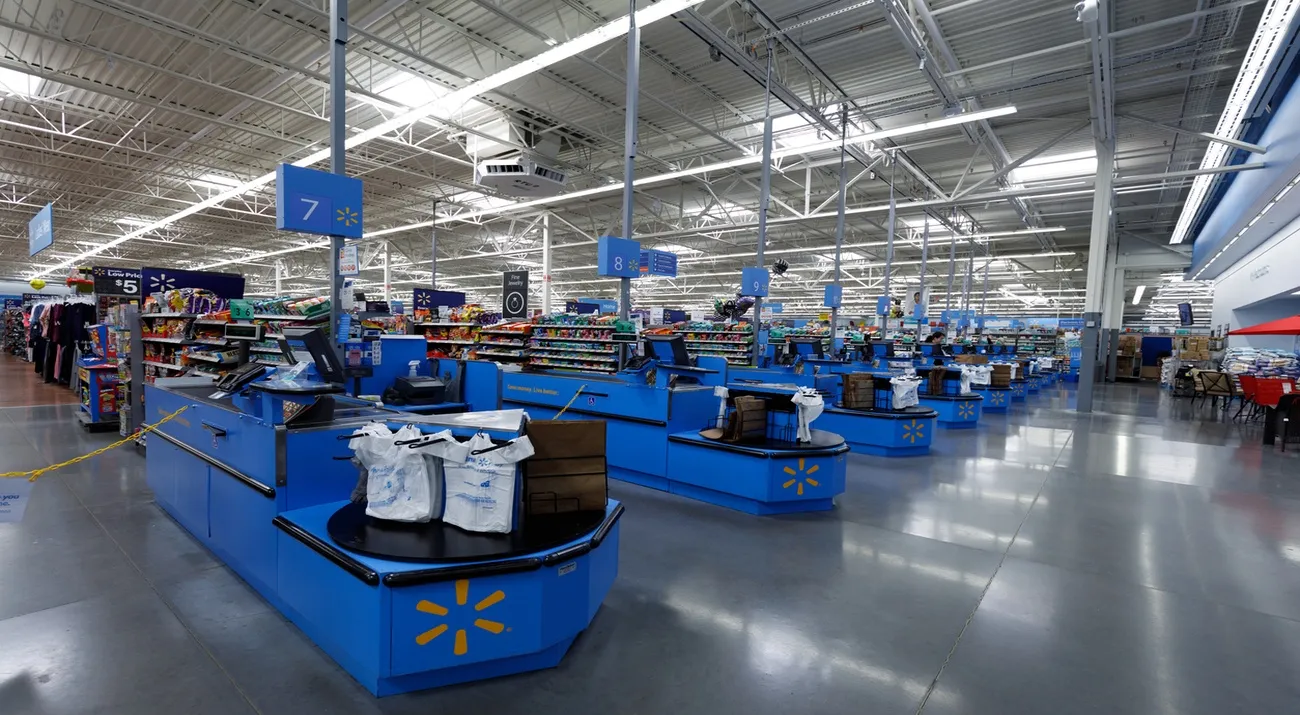
Walmart reported its slowest US comparable sales growth in more than six years, sending shares down roughly 9% and erasing tens of billions of dollars in market value.
US comparable sales rose 2.6% last quarter, down from 4.1% in the prior quarter. The miss came despite total revenue climbing 5.9% and adjusted earnings per share of 81 cents beating the consensus.
The quarter's headline number was a $2.9B tariff refund from the US government, following a Supreme Court ruling that struck down many Trump-era import taxes.
Walmart said it has received nearly all of that sum and plans to deploy it on price cuts. It temporarily lowered prices on 11K items last quarter, up from 7.2K the prior quarter, with the goal of making reductions permanent where possible.
The refund boosted gross margin to 25.4% and helped Walmart beat on profit, but investors were not satisfied.
"Our business is strong. We feel really good about the progress we're making."
John David Rainey, Walmart CFO
The market disagreed. Comparable sales missed by nearly a full percentage point, and the guidance disappointed too.
For Q3, Walmart guided net sales growth of 3% to 3.75% and adjusted EPS of 62 to 64 cents. Full-year EPS guidance of $2.80 to $2.87 came in below the $2.90 analysts expected.
What's driving the slowdown
Rainey pointed to gas prices as the key behavioral trigger. When the national average crossed $4 per gallon in July, Walmart saw shoppers start making trade-offs. The company expects to absorb just over $2B in incremental fuel costs this year.
A health and wellness drag compounded the problem. Federal legislation capping prices on certain Medicare drugs weighed on pharmacy sales, creating a 0.8 percentage-point headwind to comparable sales.
The broader retail picture backed up Walmart's read. US retail sales fell 0.6% in July from the prior month. Home Depot and Lowe’s both flagged cautious consumers.
TJX, parent of TJ Maxx, was the exception, posting 4% comparable sales growth as shoppers hunted for deals.
Target, by contrast, beat its own comparable sales estimate at 3.8% against a 2.4% expectation, even after stripping out its $994M tariff refund. That contrast made Walmart's miss look worse.
Walmart's strongest growth is coming from households earning over $100K annually, a sign that its value positioning is pulling in higher-income shoppers even as lower-income customers pull back.
E-commerce rose 24% domestically and now represents 23% of US sales, double its share from five years ago.
The retailer raised its full-year sales outlook to 4% to 5% growth, up from a prior range of 3.5% to 4.5%, but the market read the overall print as a warning sign on the US consumer.

