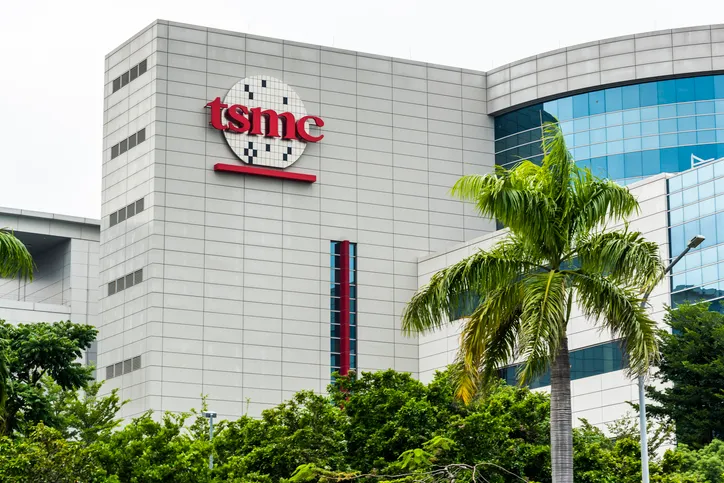
Taiwan Semiconductor Manufacturing Co. reported third-quarter net profit of approximately $23.6B, up 69% from a year earlier and marking its sixth straight quarterly record.
Revenue jumped 51% in local currency to $46.72B, as demand for advanced chips continued to climb. Earnings reached $4.60 per US share, beating analyst expectations of $4.46.
As a major chip supplier to Nvidia and Apple, TSMC is benefiting directly from the race to expand AI computing capacity.
High-performance computing accounted for 68% of sales, making it the company's largest business segment.
TSMC Q3 2026 results vs estimates and prior year (as of Oct. 15, 2026)
| Metric | Q3 2026 reported | Estimate or year-ago comparison |
|---|---|---|
| Revenue (US$) | $46.72B | +50% YoY |
| Net profit (NT$) | NT$763.06B | +69% YoY |
| Earnings per US share | $4.60 | $4.46 (Analyst est.) |
| 3nm node revenue | +117% YoY | N/A |
| 2nm share of wafer revenue | 8% | N/A |
| HPC share of sales | 68% | N/A |
| Q4 2026 guidance | $52.3B - $54.3B | N/A |
Advanced chip demand comes with higher costs
TSMC's advanced manufacturing processes are taking on a larger role in its business. Its 3nm chips accounted for 33% of wafer revenue, while its newer 2nm technology contributed 8%.
That expansion comes at a cost. CFO Wendell Huang warned that building additional capacity would continue to pressure gross margins, estimating 2% dilution in 2026.
TSMC is maintaining an annual capital spending budget of $60B to $64B, with management expecting spending from 2026 through 2028 to be significantly higher than in the preceding three years.
CEO C.C. Wei also discussed the possibility of a new Texas fabrication plant as TSMC considers expanding its US manufacturing footprint.
The company remains confident in AI demand, but bringing new production capacity online could put further pressure on profitability.
Fourth-quarter guidance points to another step up
TSMC expects fourth-quarter revenue between $52.3B and $54.3B, comfortably ahead of analyst forecasts.
At the midpoint, the outlook implies 58% YoY growth, reinforcing management's expectations for sustained AI-related demand.
Growing adoption of agentic AI, which can carry out tasks with limited human intervention, is among the demand drivers management highlighted.
For investors, the question is shifting from whether TSMC can keep growing to how much that growth will cost. Record profits and stronger guidance show the scale of the opportunity, but the company's aggressive expansion plans will test how much of that demand translates into higher margins.

