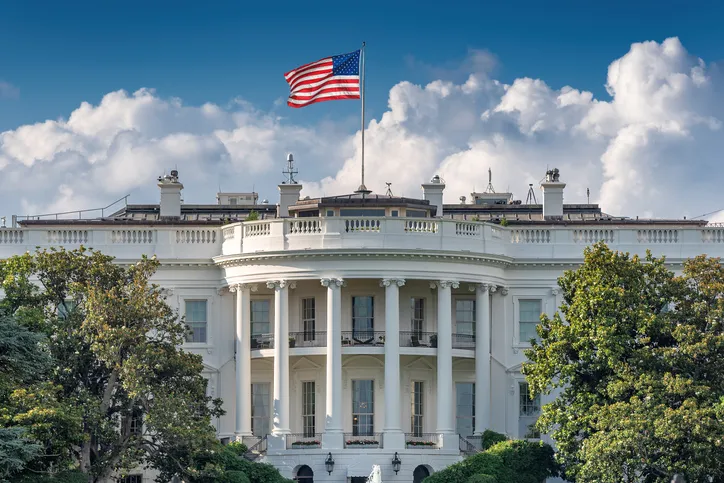
President Donald Trump signed an executive order on Friday, Oct. 16, waiving the sanctions, restrictions, and duties in the Lindsey O. Graham Sanctioning Russia and Iran Act of 2026.
The order landed two days before the law was due to take effect, and about a month after Trump signed the bill himself.
The law raised the rate of duty on goods from the Russian Federation by 500% ad valorem, with a separate 100% duty aimed at the five largest importers of Russian crude oil and natural gas that keep buying.
Section 115 lets the president waive any of it, provided he certifies to Congress that the waiver serves US national interests. Trump said he submitted that certification.
Key terms of the Graham Act order, as of Oct. 18, 2026
| Provision | Detail |
|---|---|
| Duty on goods from Russia | Increased by 500% ad valorem under the order, then waived |
| Duty on largest 5 importers of Russian crude oil and natural gas | Increased by 100% ad valorem if new purchases made on or after Oct. 18, 2026, then waived |
| Sanctions covered | Russian officials, oligarchs, and financial institutions; authority to sanction major buyers of Russian oil and gas |
| Law signed | Sept. 18, 2026 |
| Waiver signed | Friday, Oct. 16, 2026, two days before the law was due to take effect |
| Stated length of pause | 60 days |
| Legal basis | Section 115 of the Graham Act, requiring written certification to Congress that the waiver is in US national interests |
| Officials involved | President Donald Trump (signed order); Secretary of State Marco Rubio (explained 60-day pause) |
| Products enabled | Russian diesel exports under a deal with Vladimir Putin |
The pause clears the way for Russian diesel
The order followed a deal with Kremlin leader Vladimir Putin allowing exports of Russian diesel in exchange for sanctions relief.
Diesel powers US road hauling, agriculture, and construction, and price spikes tied to the Iran war are already feeding into the economy.
Secretary of State Marco Rubio framed the waiver as a 60-day study period, not a reversal.
"These conflicts around the world are starting to crash into each other."
Marco Rubio, US Secretary of State
Rubio said the administration needs time to weigh what sanctions and tariffs would mean for the global and US economies, given pressure on energy supplies from the Ukraine war, the Iran war, and Houthi strikes on Saudi Arabia.
He argued Russian diesel was reaching the global market regardless, and the only difference was how much of it the US would get.
Lawmakers in both parties pushed back
Republican Senator Thom Tillis called the move beyond irresponsible, and Texas Senator Ted Cruz called it a mistake. Ukraine's President Volodymyr Zelensky said the action rewards Putin.
The sanctions were seen as part of the legacy of the late Senator Lindsey Graham, a Trump ally and Russia hawk who died in July after returning from Ukraine.
The timing is awkward for Republicans heading into Nov. 3 midterms, with cost-of-living worries dominating and Trump's approval near historic lows.
Meanwhile, Ukraine resumed hitting Russian energy infrastructure, launching an attack in which Russia's defense ministry said it shot down roughly 1K drones, with fires reported at a St. Petersburg oil terminal.
For energy markets, the practical question over the next 60 days is how much Russian diesel actually reaches US buyers before the waiver expires.

