This Year’s Hot Trades Are Cooling Down Due to Slowing US Growth and the Bank of Japan
Global markets just discovered what Teahupo’o surfers have always known: even the most exhilarating ride can end in an unforgiving crash. After months of gains, a shake-up was inevitable to rouse the bulls from their stupor. The signs were clear, with the Cboe Volatility Index surging over 40% on Friday. And now, investors are seeing what insiders had been preparing for.
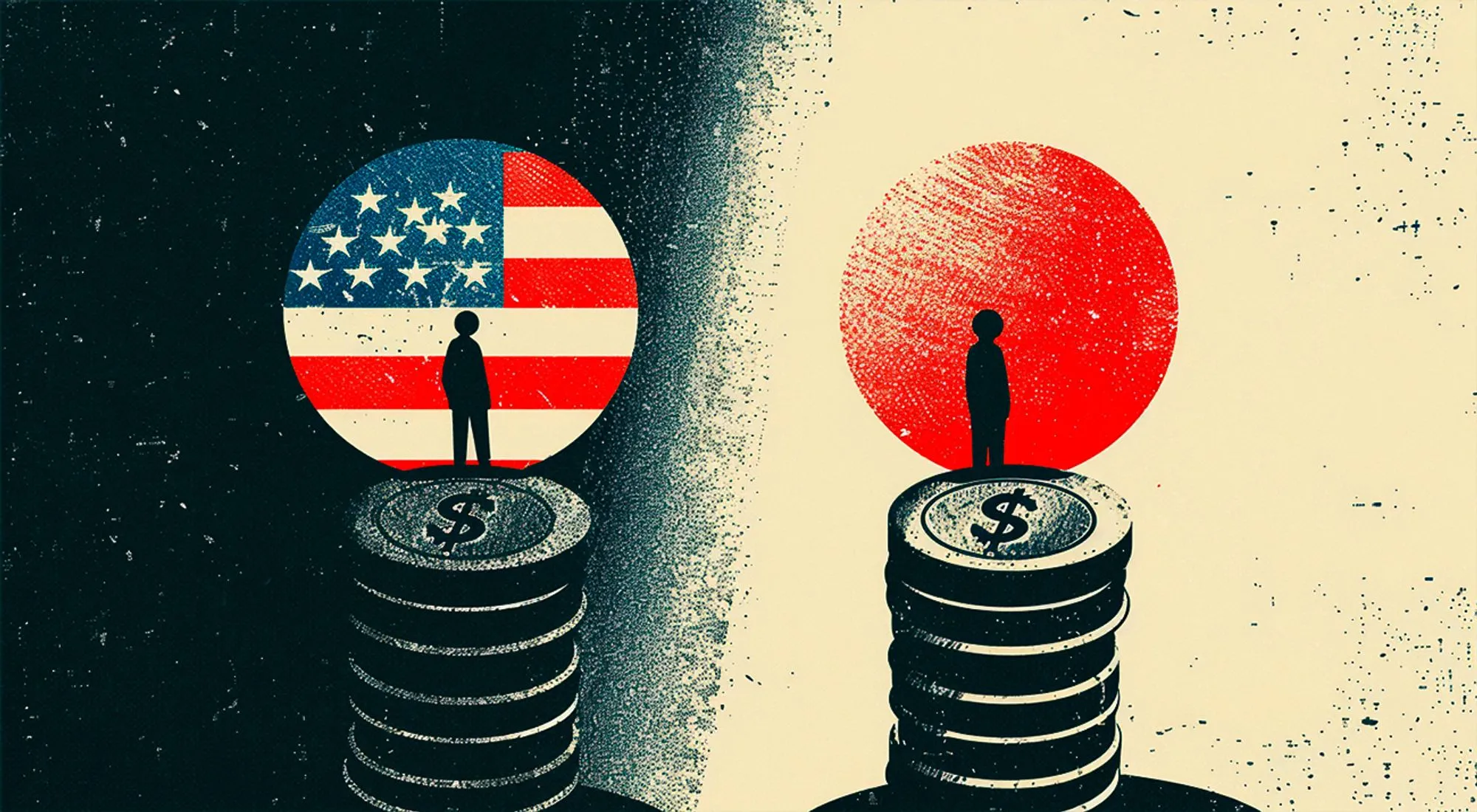
Market breakdown: The Bank of Japan’s 0.25% interest rate hike disrupted one of the year’s most popular trades — the carry trade. Sophisticated investors have borrowed Japanese Yen at near-zero interest rates and invested in higher-yield assets, profiting from the asset’s decline. As a result, Asian countries had some of the bleakest showings they’ve seen in years — with Japan booking its worst trading day since 1987 and South Korea’s KOSPI exchange briefly halting trades. The impact was global, affecting risk assets from stocks to crypto.
- The Vanguard Total World Stock Index Fund ETF fell 2.5% yesterday, led lower after global stocks followed the overseas downturn.
- Crypto markets had their worst day since 2022, with over $500B lost in market cap over the weekend. Bitcoin and Ethereum dropped below $50K and $2.4K, respectively.
Going Out of Style
The carry trade is hardly the only trade attracting scrutiny. In the US, an unexpected increase in unemployment has stoked fears about slowing US growth, leading investors to pull back from some of 2023’s most crowded trades — including Big Tech names, semiconductors, and growth stocks.
- After earnings from Magnificent Seven darlings such as Nvidia and Tesla failed to impress, the tech-heavy Nasdaq-100’s fell within earshot of correction territory on Monday.
- The growth-focused Russell 2000 lost most of its year-to-date gains, and the red-hot VanEck Semiconductor ETF decreased 11% week-over-week.
Did the Fed wait too long? Stocks originally rallied on optimism that the Federal Reserve would begin cutting interest rates before things went awry. Now, Fed officials are clarifying that if economic troubles emerge, they will step in to “fix it.” This has drummed up a discourse about whether the Fed waited too long to end its generational rate hike cycle and start reducing rates.

