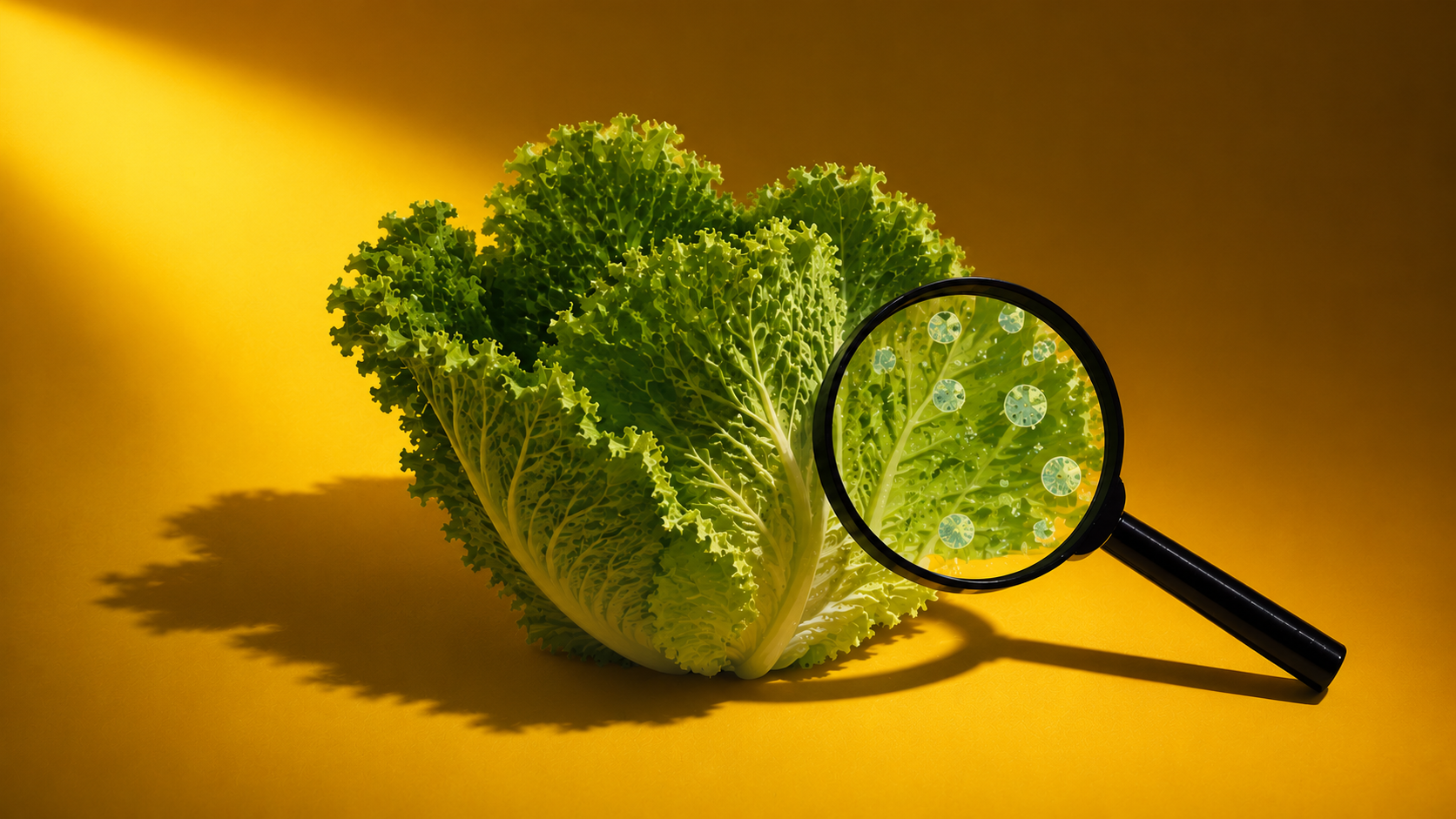
A parasitic outbreak tied to iceberg lettuce has become the biggest cyclosporiasis event in US history, and it's hitting restaurant chains and grocery produce aisles at the same time.
The outbreak that won't stop growing
The US currently has 6.7K laboratory-confirmed cases of cyclosporiasis, with more than 11.5K additional suspected cases. Despite this, there's still no single confirmed source
The outbreak is unusual for several reasons. Federal investigators linked shredded iceberg lettuce from Taylor Farms, grown in central Mexico, to cases at Taco Bell restaurants across several Midwest states. Taylor Farms recalled that lettuce on July 18.
However, cases kept rising after the recall, and North Carolina health officials identified parsley and cilantro as commonly reported ingredients among people who fell ill there.
Researchers believe there may be more than one simultaneous outbreak underway. Recent cuts to federal funding for outbreak surveillance have slowed the investigation, according to Boston University professor David Hamer.
The parasite itself is harder to track than more familiar pathogens like E. coli or salmonella.
Foot traffic collapsed fastest at Taco Bell
The business fallout has been swift and measurable. Taco Bell, owned by Yum Brands, saw foot traffic drop 20.8% on July 23 compared to its Thursday average for the first six months of the year, according to analytics firm Placer.ai. Salad chain Chopt and Panera Bread also fell on the same day.
Yum Brands told investors that Taco Bell same-store sales are down 2% so far in the July-September quarter. That's a sharp reversal from 7% same-store sales growth in the prior quarter. Sales hit their lowest point the weekend of July 18-19 and have been recovering since.
Taco Bell removed the Taylor Farms lettuce from all its US restaurants on July 17, within 72 hours of being notified by public health officials. The chain also shifted its messaging on social media to address customer concerns directly.
Discount deals are driving the comeback
To win customers back, Taco Bell launched deep discounts targeted at loyalty app members. Mexican Pizzas, normally priced at roughly $5 to $7, were offered for $1. Enchiritos, typically around $4, were also sold for $1. Both promotions are lettuce-free items.
Yum Brands CEO Chris Turner told investors those Tuesday deals outperformed previous promotional benchmarks. He said Taco Bell's online perception has improved since investigators publicly shifted focus to Taylor Farms as the source.
"The best proof point is that consumers are coming back to the restaurants on a steady basis."
Chris Turner, Yum Brands
The discounts are compressing profit margins, Yum Brands acknowledged. The outbreak's concentration in Michigan, where Taco Bell has a high density of locations, has added to that pressure.
Chipotle and lettuce growers land on opposite ends
Not every chain is absorbing the same damage. Chipotle Mexican Grill stock rose 11% on July 30 after reporting second-quarter same-store sales growth of 2.2%, above Wall Street's 1.33% forecast.
Chipotle's CEO stated clearly that the chain doesn't use iceberg lettuce and sources its lettuces from California, not Mexico.
Foot traffic at Chipotle was down only 1.4% on July 23, a much smaller dip than Taco Bell or Chopt. Chipotle raised its full-year same-store sales outlook to low-single-digit growth, up from its previous expectation of flat growth.
On the retail side, US unit sales for fresh lettuce in the week ending July 18 were down 9% from the prior week and 19% from two weeks before, according to NielsenIQ data.
Paul Sellew, CEO of domestic greenhouse grower Little Leaf Farms, said sales are down by double digits. His company has responded by publicizing its indoor growing process, which uses UV-treated water and avoids human contact with the lettuce during harvesting.
A YouGov and CBS News survey found that 40% of roughly 2.2K respondents said they're buying less produce at grocery stores because of the outbreak.
Experts say healthy adults outside heavily affected states like Michigan can still safely eat leafy greens, though uncertainty about the outbreak's full scope continues to drive consumer caution.

