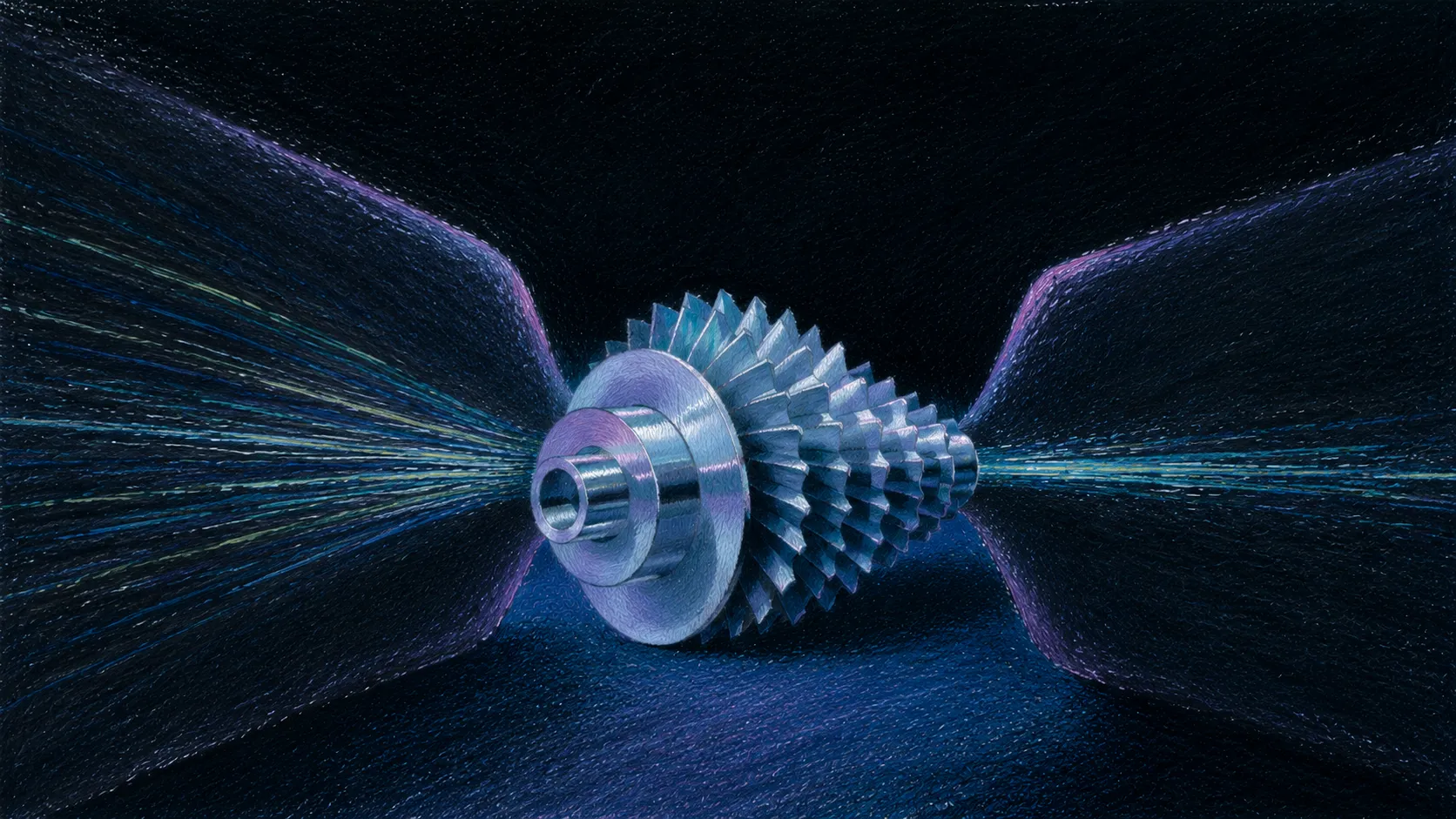
AI needs electricity before it can sell more intelligence. The newest bottleneck is not only chips or data centers. It is the specialized turbine parts that help turn natural gas into power.
SpaceX triggered the sector's latest rotation this week after Elon Musk said the company would make gas turbine blades and vanes in-house. That hit the stocks of incumbent parts makers, but it also confirmed a bigger point. AI power demand is turning a sleepy industrial niche into a scarce asset.
SpaceX exposed the shortage
Musk said SpaceX can speed natural gas turbines by making key parts itself. "By doing in-house casting at SpaceX, we can accelerate nat gas turbines coming online by up to 18 months," Musk wrote on X, according to The Wall Street Journal.
Those parts matter because blades and vanes sit inside the hottest section of a turbine. They must survive extreme heat, violent rotation, and constant stress.
That manufacturing complexity has protected a small group of suppliers. Howmet Aerospace and Berkshire Hathaway's Precision Castparts are described as the two biggest players in the market.
DPC looks more exposed to disruption because roughly 40% of its revenue comes from natural-gas-fired turbines. Howmet is more diversified, with only 11% of revenue tied to gas turbines.
The market reaction showed how crowded the trade had become. Howmet fell more than 7% on Monday before partially rebounding Tuesday.
Casting keeps the moat
Single-crystal casting is the core barrier. It means a blade is grown as one continuous crystal, which helps it survive heat and stress.
Jefferies sees the technology taking four years or more to ramp meaningfully, according to Barron's. That timeline limits the near-term threat from SpaceX.
The process also needs specialized vacuum furnaces, ceramic cores, and long qualification cycles with power-equipment makers. A new production line can scrap more than half its output for an extended period.
That explains why Wall Street did not treat the selloff as a simple warning sign. Citi put an upside catalyst watch on Howmet after the decline. Deutsche Bank called Howmet its top aerospace supplier pick. It also saw 35% upside after the pullback.
The more immediate read is that SpaceX sees a shortage worth attacking. Shortages usually mean pricing power for incumbents until new capacity actually arrives.
AI’s growing natural gas problem
Musk framed natural gas as a bridge fuel for AI infrastructure. He said SpaceX and Tesla are racing to build solar capacity, but gas may still be needed for several years.
SpaceX has posted roles for a blades and vanes foundry in Bastrop, Texas, where it makes Starlink terminals. One job description said power generation could slow worldwide AI adoption, according to Business Insider.
The demand shock reaches beyond SpaceX. OpenAI, Amazon, and Microsoft have struck natural-gas power partnerships for data centers.
Meta's Hyperion data center in northern Louisiana will require 10 new gas power plants. SpaceX has also used mobile gas turbines to power Colossus data centers in Mississippi and Tennessee.
GE Vernova, Siemens Energy, Caterpillar, and Cummins are tied to the same power buildout in different ways. GE Vernova and Siemens Energy sell utility-scale turbines.
Caterpillar and Cummins have power-generation divisions. Their stocks also slipped this week as investors weighed SpaceX's entry.
Prices confirm demand
Gas turbine prices have risen 195% since 2019, according to Wood Mackenzie data cited by The Motley Fool. That price move is the clearest signal that demand has outrun supply.
GE Vernova's remaining performance obligations stand at $176B. CEO Scott Strazik expects them to reach $200B in 2027. GE Vernova's power-equipment backlog rose from 44 gigawatts to 53 gigawatts in the second quarter. Its slot-reservation agreements rose from 56 gigawatts to 63 gigawatts.
Those slot agreements matter because customers pay upfront to reserve future manufacturing capacity. They are a signal of near-term cash demand and future service revenue.
A broader, lower-volatility way to track the theme is natural-gas infrastructure. Global X MLP & Energy Infrastructure ETF owns 29 energy infrastructure stocks and yields more than 4%.
The risk is environmental and legal pressure. In Memphis, the NAACP has accused SpaceX of running turbines without required permits or pollution controls, according to TechCrunch.
A Virginia data-center study estimated eight full-time gas turbines could create $53M to $99M in annual health-related damages. That keeps permitting, community opposition, and emissions rules central to the trade.
For retail investors, the setup is a power-equipment rotation driven by AI demand. SpaceX may not break the turbine-parts oligopoly soon, but it just showed why the oligopoly matters.

