Refinery Stocks Are Soaring on a Diesel Shortage. Washington Could Cut the Rally Short
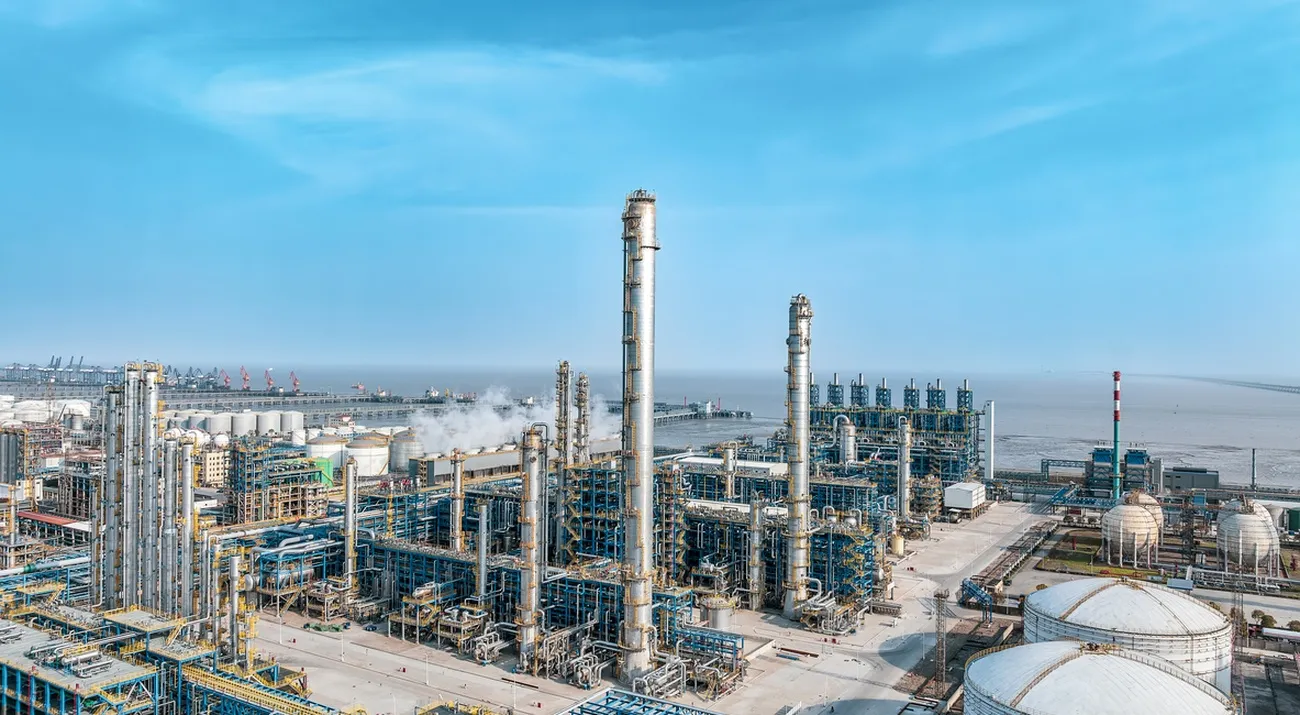
Refineries make their money on the difference between what they pay for crude oil and what they charge for gasoline, diesel, and jet fuel. That gap, known as the crack spread, has widened dramatically in 2026 as wars disrupt fuel production. Now, just as refiners enjoy record margins, Washington is weighing a diesel export ban.
The world has a refining problem
Wars in Iran and Ukraine have turned refineries into the chokepoint for global fuel supplies. Russia banned diesel exports in July after Ukrainian drone strikes knocked out refining capacity.
Middle East diesel exports halved from March through August compared with a year earlier, averaging 800K barrels a day, according to Kpler. The region supplied nearly 41% of Europe’s diesel imports in 2025, making the shortfall particularly painful there.
Bank of America estimates that 7% to 8% of global refining capacity was offline earlier this month. Outside the pandemic, analysts said that’s the most in 40 years.
“We are seeing the emergence of a tighter diesel market than we've probably seen in any previous period.”
David Martin, International Energy Agency
Refiners are reaping the rewards
Oil and gas refining and marketing has gained 145.4% through Sept. 18, leading all 126 S&P 500 sub-industry groups this year, according to FactSet. The next-best group, semiconductor materials and equipment, is up 65%.
The gains reflect a historic squeeze in fuel supplies. US retail diesel reached a record $6.51 a gallon on Monday, AAA said, while European diesel futures hit a record last week after more than doubling this year.
That pricing power has reached the bottom line. Valero Energy, Marathon Petroleum, and Phillips 66 each reported quarterly earnings per share that nearly quadrupled.
Washington threatens the windfall
Rep. Tim Burchett introduced a bill last week to ban diesel exports, and Senate Majority Leader John Thune said he was open to the idea ahead of November’s midterms.
The proposal has already rattled Wall Street. Jefferies downgraded Valero and Marathon from buy to hold this week, with both stocks falling about 2% on Tuesday.
Citigroup analyst Vikram Bagri warned that a full ban could bring the historic run in refining margins and share prices to an end. Lower margins could prompt refiners to cut production, putting further pressure on gasoline and jet fuel supplies.
TD Cowen expects US Gulf Coast operators to bear the brunt, particularly PBF Energy and Delek US Holdings. An export ban could also raise fuel prices abroad, potentially prompting China and India to restrict their own shipments.
Which refiners have the most at stake
Marathon Petroleum has a $119.3B market cap and generates roughly $144.6B in refining and marketing revenue. Its pipelines and storage add scale, while refinery closures by competitors are tightening supply on the West Coast.
Valero carries a $119B market cap and about $132.2B in refining revenue. Its St. Charles optimization project, expected to start up in 2026, should increase production of higher-value fuels.
PBF Energy offers more concentrated exposure, with a $9.2B market cap and $34.4B in refining revenue. That leaves it particularly sensitive to changes in margins and export policy.
Wall Street remains divided on how long the windfall can last. Goldman Sachs expects positive earnings revisions to support further gains, while UBS sees margins returning to normal more slowly than many anticipate.
BTIG chief market technician Jonathan Krinsky is less comfortable with the rally. The refining index trades more than 50% above its 200-week moving average, a level that has historically preceded declines within eight weeks.
“It's very much like the AI stocks, the bulls don't really see a bear case.”
Jonathan Krinsky, BTIG
Krinsky sees a 30% to 40% pullback as possible. Bank of America also questions how long the supply squeeze will last, arguing that much of the damaged refining capacity in Russia and the Middle East could return quickly if drone strikes stop.
Venezuelan crude adds another variable. More heavy, sour oil could lower input costs for US refiners, helping protect margins even if prices at the pump ease.

