
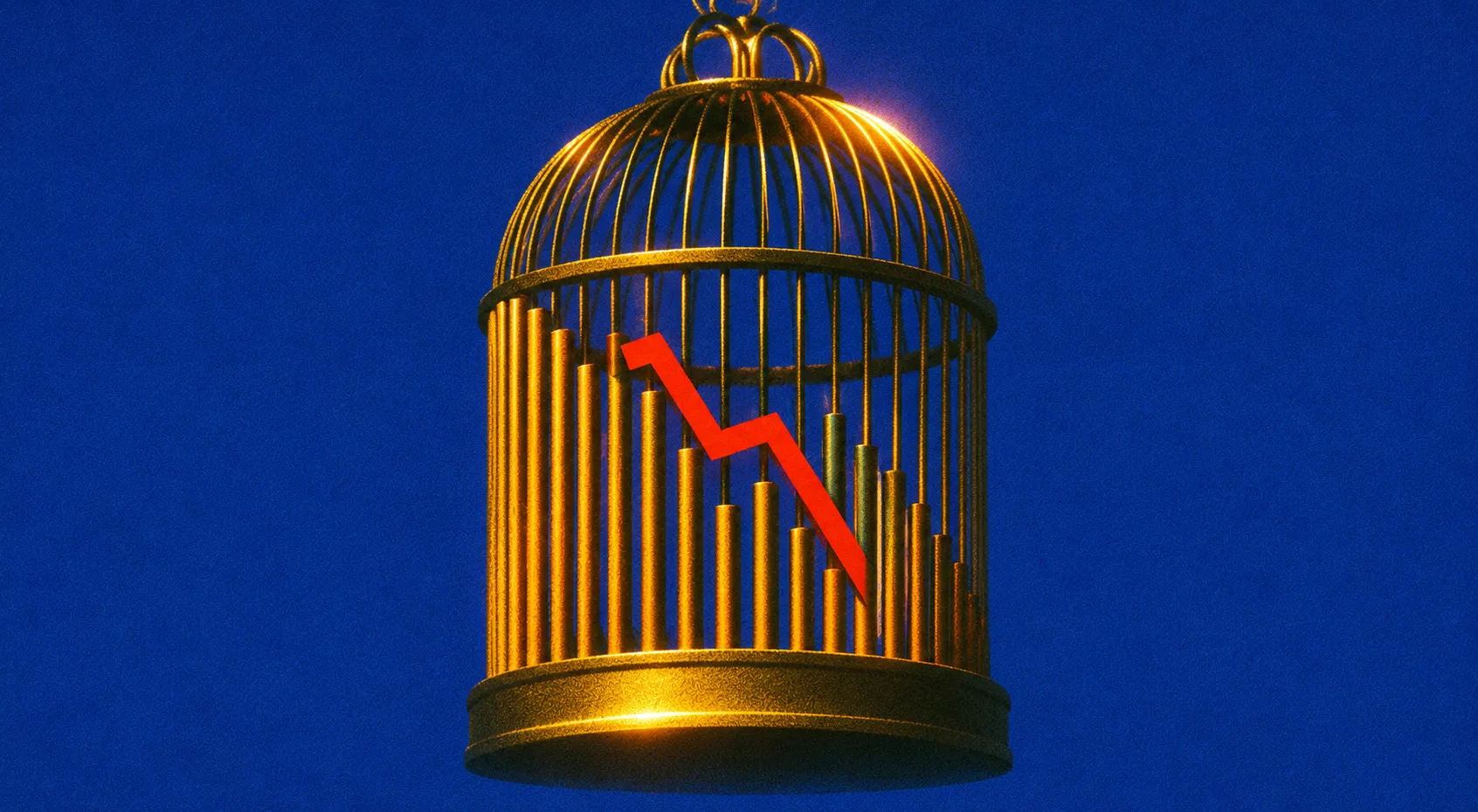
A fat dividend loses some appeal when the investment paying it has lost nearly half its value. Income investors have long relied on preferred shares for steady payouts, but rising Treasury yields are exposing the downside of that trade. With the 10-year Treasury yield hitting 5.10% on Thursday, the extra income is looking increasingly expensive.
Preferred shares sit between bonds and common stock, combining fixed dividends with some of the risks of equity ownership. The trouble is that investors can end up with the worst features of both.
First in line, but not first to get paid
Preferred shareholders have an advantage over common stockholders. They receive dividends first and rank ahead of them if the company liquidates, according to investor education materials citing the US Securities and Exchange Commission.
That protection only goes so far. Banks and other lenders still have priority, meaning preferred holders can recover far less than they invested if an issuer runs into financial trouble.
They also surrender most voting rights and much of the upside that comes with ordinary shares. In return, they collect a stated dividend that may continue indefinitely because many preferreds have no maturity date.
That becomes a problem when interest rates rise. Newer securities offer better payouts, making older fixed-rate preferreds less attractive. Their prices fall, and unlike a bond approaching maturity, there's no guaranteed repayment date to pull the price back toward face value.
The pandemic trade has turned expensive
Banks took advantage of rock-bottom borrowing costs during the pandemic, selling roughly $10B of fixed-for-life preferreds in 2020 and another $16B in 2021. Investors accepted coupons below 5% when competing yields were scarce.
Five years later, that bargain looks considerably better for the banks than for their investors.
The remaining $22B of securities trades at an average of 61 cents on the dollar, leaving holders with roughly 40% in paper losses. Total returns have fallen another 8.5% this year.
Coupons On Perpetual Income Securities Range Widely
Stated coupon or yield at issuance, %
Bar chart. Coupon (%). U.S. Bancorp Preferred: Coupon (%) 3.75%. Hyflux Perpetual Bond (2011): Coupon (%) 6%. US Bank Fixed-for-life (2026 Avg): Coupon (%) 6.69%. Ezion Holdings Perpetual Bond: Coupon (%) 7.80%.
Source: AInvest analysis of the $22B bank preferred group, The Edge Malaysia: perpetual bond issuers and yields
US Bancorp's 3.75% preferred series, carrying the lowest coupon in the group, trades around 55 cents on the dollar. New fixed-for-life issues, meanwhile, have offered an average coupon of 6.69% in 2026.
The old shares aren't necessarily failing to pay their dividends. They're simply paying rates that no longer compete with the market.
UBS strategist Frank Sileo compared these perpetual securities to owning a 100-year bond with a coupon that never adjusts. Investors get decades of rate exposure without the certainty of a repayment date.
The escape hatch belongs to the bank
Most preferred shares come with a call option that lets the issuer redeem them at face value after a specified date. It's easy to mistake that date for a promise of repayment.
It isn't.
When refinancing becomes cheaper, the bank can redeem its preferreds and issue new ones at lower rates. When borrowing costs climb, it can keep the old securities outstanding and continue enjoying the cheaper financing.
JPMorgan and Wells Fargo have already passed on their call dates, leaving investors holding securities worth substantially less than their original issue prices.
Morgan Stanley faces a similar decision in January on a roughly $1.3B issue trading at 61.4 cents on the dollar. With comparable new preferreds offering coupons around 6.69%, redeeming the older issue would mean giving up inexpensive financing.
Still, banks have increasingly favored fixed-to-reset preferreds, whose coupons adjust after an initial period. Those structures reduce the risk of locking investors into yesterday's rates indefinitely.
Even familiar dividends face the same test
The pressure isn't confined to preferred shares. AT&T, a longtime favorite among income investors, offers an annual dividend of $1.11 per share, equivalent to a yield of roughly 5%.
That's hardly a premium over the 10-year Treasury, especially when shareholders also shoulder the risks of a heavily indebted telecom business.
AT&T has pledged to maintain its dividend while planning roughly $10B in stock buybacks this year. Third-quarter revenue rose 5.3%, and management maintained its forecast for at least $18B in free cash flow in 2026.
AT&T's Yield No Longer Beats the 10-Year Treasury
AT&T dividend yield vs 10-year Treasury yield, %, as of Nov. 12
Bar chart. Security. AT&T dividend yield: Yield (%) 5%. 10-year Treasury yield: Yield (%) 5.10%.
Source: Trefis: How much could you lose in AT&T stock after CPI
The dividend remains comfortably covered for now. Free cash flow exceeded dividend payments by roughly 2.2 times over the year through September.
But the balance sheet complicates the picture. Net debt reached $149.8B after the EchoStar spectrum deal, and management doesn't expect leverage to return to its 2.5-times target until 2029.
Preferred investors face additional risks that a quoted yield doesn't capture. Credit Suisse analyst Neel Gopalakrishnan identifies four worth watching: credit risk, interest-rate exposure, deferred payments, and liquidity.
The last becomes particularly troublesome when markets turn. Preferred shares can trade thinly, forcing investors who need cash to sell at steep discounts. Some structures also allow issuers to postpone dividends, even when unpaid amounts accumulate.
For investors weighing preferreds against Treasuries, the question is no longer whether the additional income justifies giving up control over when their principal comes back.