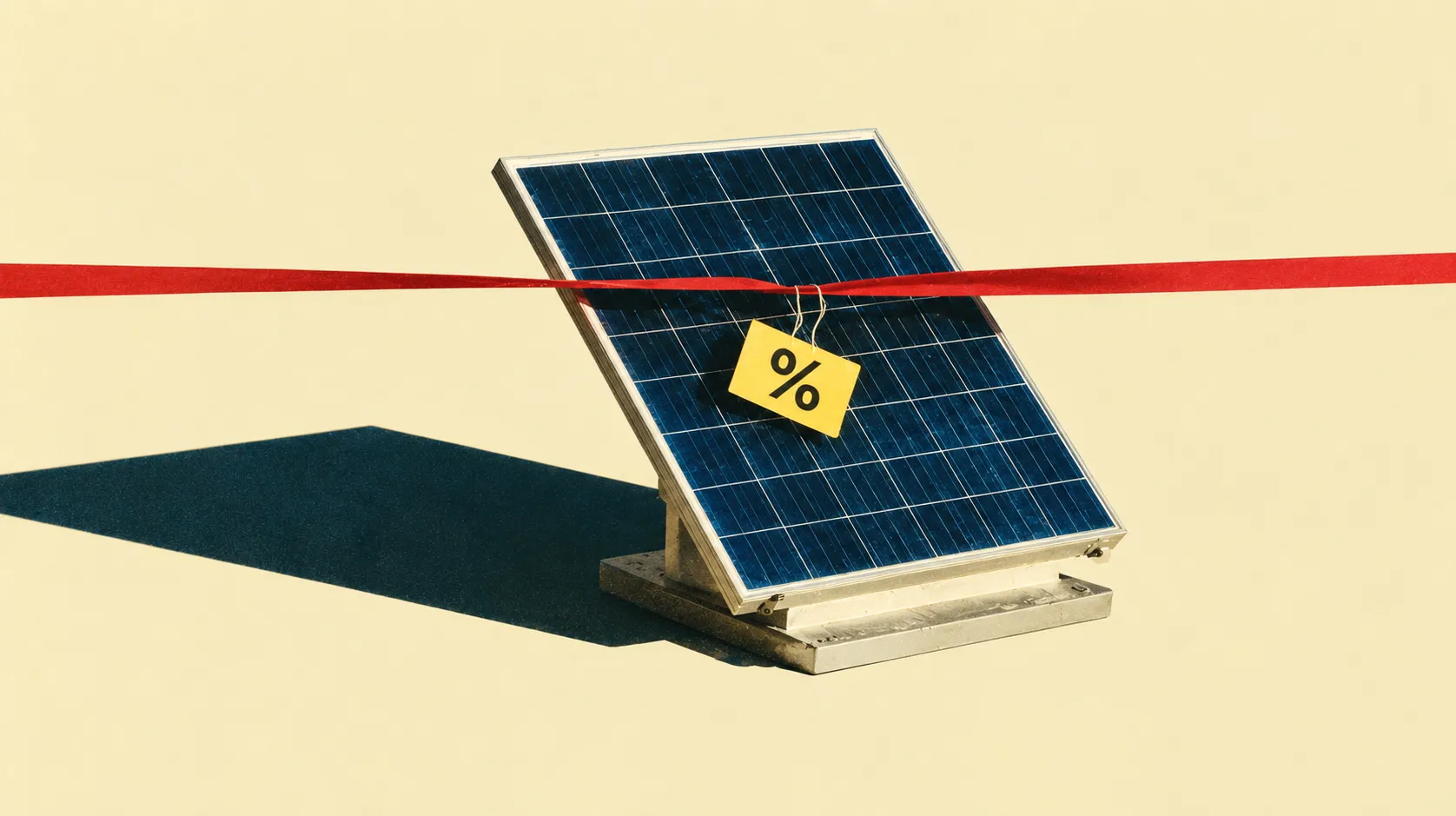
Solar panels depend on a refined form of silicon called polysilicon. Washington has now put a price on imported supply. A 15% import duty lands Dec. 4, and analysts are cutting forecasts for some of the sector's biggest equipment names at the same time.
What the new import rules do
President Trump signed a proclamation on Aug. 6 imposing a 15% tariff and mandatory price floors on imported polysilicon, cells, and modules. The minimum price requirements set $21/kg for polysilicon before goods can clear customs.
The action followed a year-long Section 232 investigation into national security risks tied to polysilicon dependence.
Developers warned the measures could raise project costs by as much as 15%.
Commerce shut the stockpiling window
Importers spent the summer buying ahead of the deadline. Commerce and Customs and Border Protection responded with a temporary final rule published in the Federal Register on Sept. 24.
The rule holds established importers to their historical purchasing volumes. Commerce can block further entries by any importer it decides is stockpiling.
Importers that registered on or after Aug. 6 face weekly ceilings of 12 kilograms of polysilicon, 7 kilograms of wafers, 2K solar cells, and 55 modules. For a utility-scale project, 55 modules amounts to a weekly volume of 27.5-41.3 kW, leaving most of the build exposed to tariffs.
Prices have already moved. Module prices, imported and domestic, have risen by 0.09-0.11 USD/W since August to reach 0.38-0.42 USD/W.
Deutsche Bank cuts the equipment names
The hardware side is getting marked down separately. Deutsche Bank turned tactically negative on Enphase Energy, setting a 2027 adjusted earnings estimate of $1.73 per share.
That sits 21% below Wall Street consensus. The bank models 2027 revenue of $1.1B against a Street figure of $1.2B, a 7% gap.
Analyst Corinne Blanchard's argument centers on safe-harbor revenue, meaning sales pulled forward by developers locking in US policy incentives before they expire. Deutsche Bank estimates Enphase booked roughly $255M of those sales in 2026.
Strip that out and the Street's 2027 target requires core organic revenue to grow ~33% year over year.
SolarEdge Technologies drew a similar short-term negative call. Deutsche Bank's fourth-quarter 2026 revenue estimate sits 2% below current consensus, and its full-year 2027 figure sits 5% below.
High US interest rates are weighing on solar demand and project economics, the bank said. European storage strength offsets only part of that drag.
How to think about exposure
The tariff is a cost shock for developers and importers, not for everyone in the chain. The administration's stated goal is a domestic silicon supply chain serving both energy and semiconductor needs.
Firms that already produce polysilicon, cells, or modules inside the US face no duty and benefit from the price floor that lifts imported competition. Buyers of imported equipment absorb the 15% and the $21/kg minimum.
The inverter makers sit in a different position again. Their pressure comes from rates and from demand pulled into 2026 rather than from the import rules themselves.
Timing matters for anyone watching the sector into year-end. Dec. 4 is a hard date, and the weekly caps mean developers cannot buy their way around it. The next signal is whether module prices keep climbing past the 0.42 USD/W upper band once the duty applies.

