
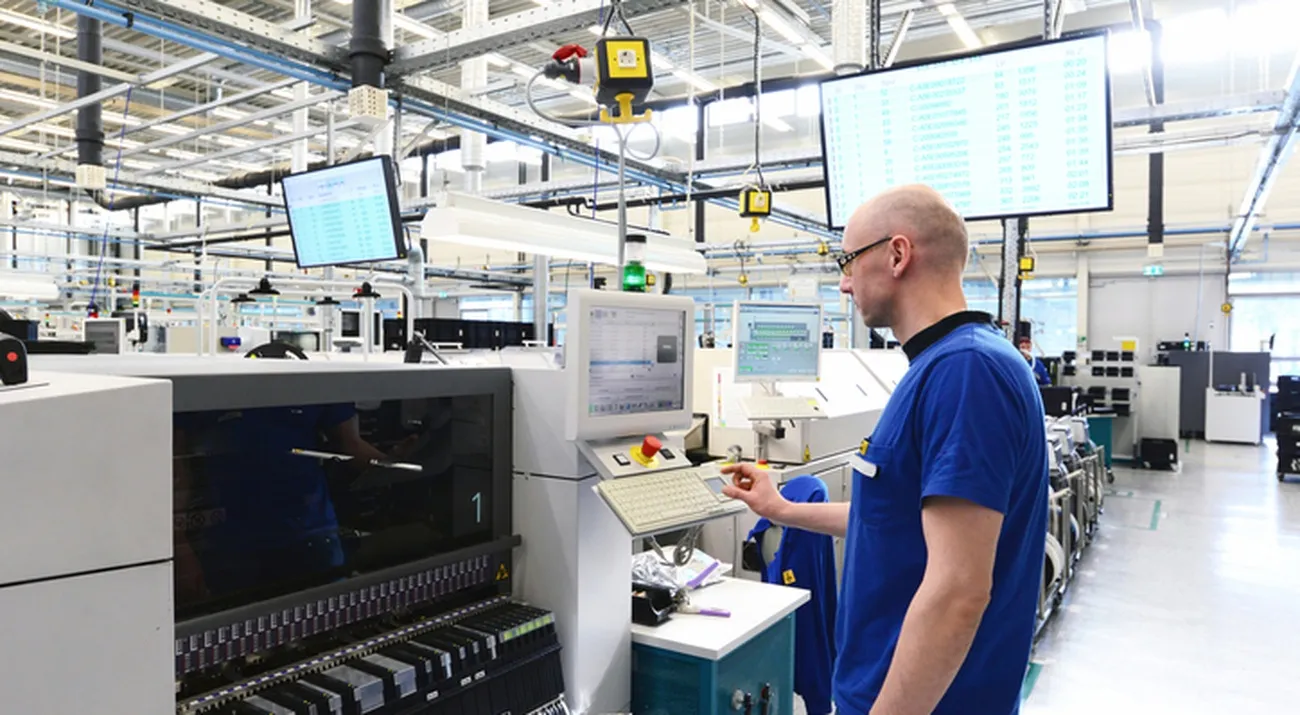
Demand at New York State factories faded in November even as payrolls expanded at the fastest pace in more than four years.
The Federal Reserve Bank of New York said the headline general business conditions index in the November 2026 Empire State Manufacturing Survey fell eighteen points to 7.8.
November's 7.8 still cleared zero, so New York factories kept growing, only far more slowly than October's 25.5, a multi-year high. Anything above zero means expansion, so the state's factory sector grew again, just at a stroll after October's sprint.
New orders did most of the damage, sliding 20.2 points to 3.0, and shipments eased to 8.8 from 13.1.
Unfilled orders came in at 10.3 and delivery times at 13.8, while the supply availability index rose six points to -9.2 but stayed negative, so availability kept worsening, only less sharply than in recent months.
The report was released at 8:30 a.m. Eastern and drew on responses collected between November 2 and November 9.
Hiring Rose as Orders and Price Pressure Cooled
Empire State Manufacturing Survey diffusion indexes, October and November 2026
- October
- November
Bar chart. Diffusion index. General business conditions: October 25.50, November 7.80. Number of employees: October 10.30, November 18.10. Average employee workweek: October 9.10, November 13.50. Prices paid: October 59.50, November 45.90.
Source: Federal Reserve Bank of New York, Empire State Manufacturing Survey, November 2026
Hiring went the other way
The index for number of employees jumped to 18.1 from 10.3, its highest level since June 2022.
The average employee workweek index rose four points to 13.5, so factories added hours as well as heads.
US factory hiring has its own recent history.
Prices cooled and spending plans firmed
The prices paid index dropped fourteen points to 45.9, and prices received slipped three points to 27.2.
Both indexes stayed positive, so input and selling costs are still climbing at an elevated pace, just more slowly than in October.
"Employment rose sharply, while the pace of price increases slowed but remained elevated."
Richard Deitz, Federal Reserve Bank of New York
Firms turned more optimistic about the months ahead: the future business conditions index rose eight points to 28.9, and close to half of respondents expect improvement. The bank said orders and shipments are expected to increase and employment is expected to grow.
Capital spending plans strengthened too: the capital expenditures index climbed nine points to 23.0, its highest level since December 2022.
Expectations were not uniformly brighter. Future unfilled orders fell to 2.3 from 14.0, and the future employment index eased to 16.8.
Firms also expect costs to keep rising, with the future prices paid index at 66.7.
Each month it lands before the other regional factory surveys, which makes it an early signal on national manufacturing. It goes to about 200 manufacturing executives across New York State, typically the president or CEO, and about 100 responses come back, so one state's sample can swing hard from month to month.
The September factory orders report has its own read on demand. Hiring at a four-year high while input costs cool points to a sector slowing from hot to warm rather than stalling.

