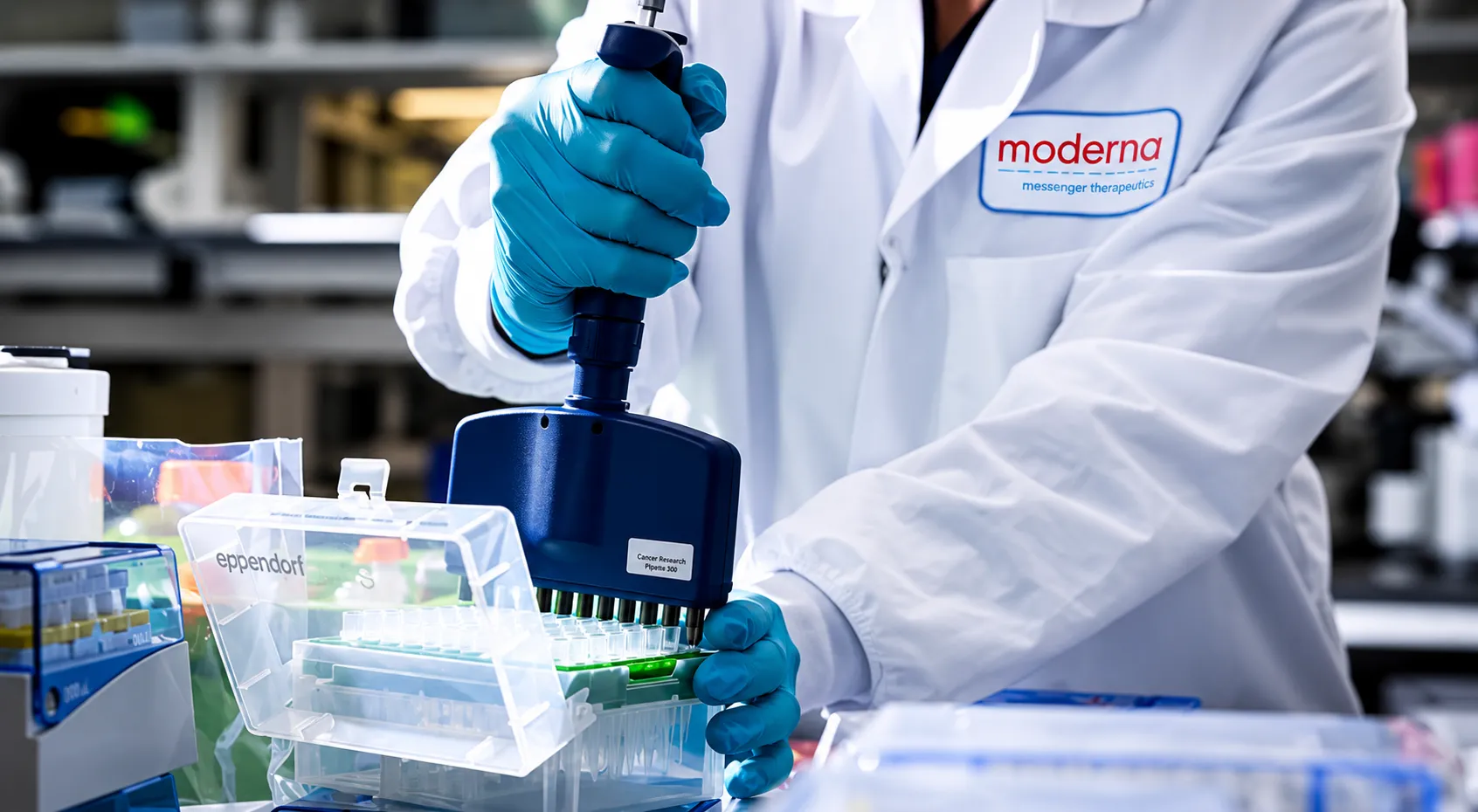
Moderna and Merck reported positive late-stage melanoma data on Aug. 19, putting tumor-sequencing companies closer to personalized cancer treatment.
The therapy, called intismeran autogene, combines Moderna’s mRNA cancer vaccine with Merck’s Keytruda after melanoma has been surgically removed.
The companies said the regimen delivered statistically significant and clinically meaningful improvements in stopping cancer from returning or spreading versus Keytruda alone.
Each vaccine is custom-made from a patient’s tumor mutations, making sequencing a required step rather than a side service.
"Today’s results represent a landmark moment."
Georgina Long, Melanoma Institute Australia
Moderna chief executive Stéphane Bancel said the data show the potential for a new class of medicine using information inside each patient’s cancer.
Sequencing becomes the tollbooth
Tempus AI agreed on July 20 to acquire Personalis in a deal valued at $1.5B net of Tempus’s existing stake. Personalis has been involved in tumor sequencing for Moderna’s clinical program, giving the target strategic value beyond ordinary diagnostics.
Tempus said it has been chosen as the sequencing partner if the Moderna-Merck vaccine wins approval, though future pharma sourcing remains uncertain.
Piper Sandler estimates at least $50M in annual sequencing revenue if the vaccine is approved for melanoma. BTIG analyst Mark Massaro projects revenue could eclipse $600M if the approach expands to lung, bladder, and kidney cancers.
The bigger prize may be minimal residual disease testing, which looks for tiny traces of circulating tumor DNA after treatment. That could turn one-time sequencing into years of monitoring if patients need repeat tests for recurrence after personalized therapy.
The deal still carries execution risk
Personalis had entertained multiple suitors before accepting Tempus’s offer, including a verbal proposal with higher terms. Tempus already owns 12% of Personalis, while Merck agreed to vote its 13% holding in favor of the transaction.
A Tempus spokesperson said other parties performed due diligence and either declined or submitted less compelling bids. Analysts have also warned that enthusiasm for Moderna’s program assumes broader tumor use that has not yet been proven.
Rothschild Redburn analyst Simon Baker said the market response implied near-ubiquitous usage across tumor types with little or no data. If personalized vaccines move from trials to routine care, sequencing firms could become the infrastructure behind each dose.

