IPO trend: Investor lockup periods get shorter — here’s how it will impact investors
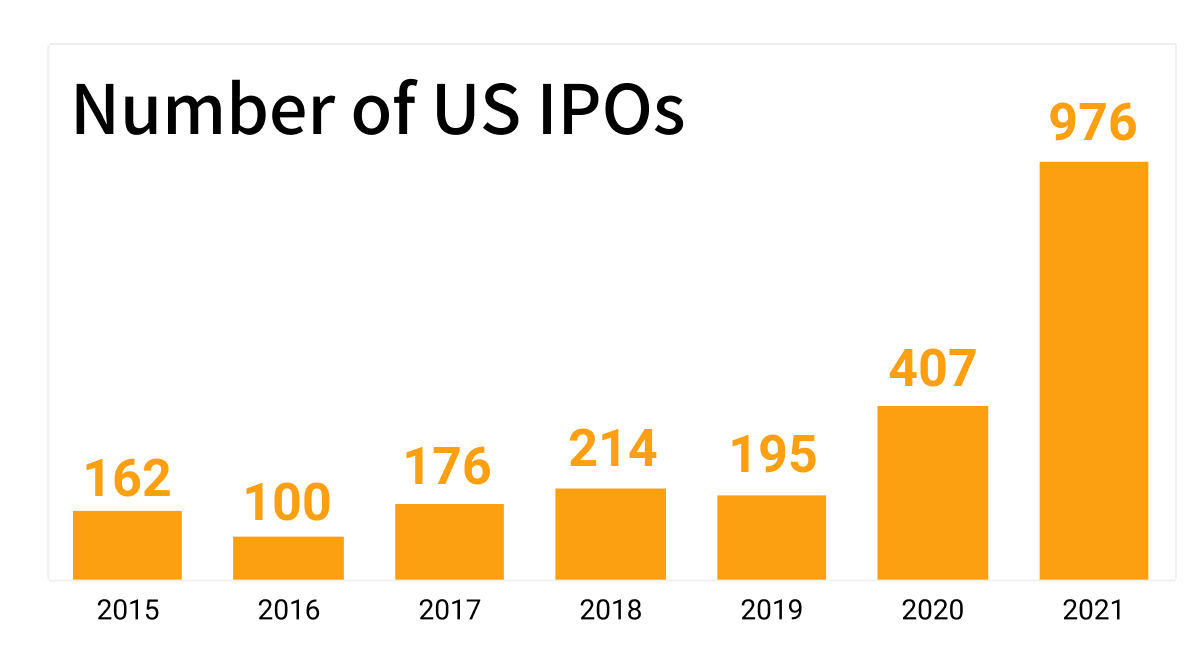
Investors beware, IPO lockup periods are getting shorter (data via Renaissance Capital research) — which could lead to greater volatility investing in companies that recently went public.
What’s the big deal? Early investors and insiders (i.e. employees) often have lockup periods of 90-180 days before they can sell their shares after an IPO.
- Upon these lockup periods ending — insiders often dump their shares on unsuspecting investors.
- According to TC, Uber’s share price dropped 43% in 2019 after their lockup period.
Too much power: In a hot market with large IPO demand, companies have greater flexibility to set favorable terms — and it’s been a raging IPO market for the past two years.
In 2021, 25% of IPOs allowed for early lockup releases — 5x more than the previous year — with some based on stock prices reaching a specific level.
- Robinhood (NASDAQ:HOOD) investors were allowed to sell 15% of holdings upon IPO — with another 15% three months later.
- Airbnb, DoorDash, Snowflake, Allbirds and The Honest Company were among those with early lockup expiry.
Investors: This makes investing in IPO companies even more volatile. In some cases, simply Googling “X company lockup period” will do — while others are more complicated — requiring investors to dig through complex legal papers.
And crypto investors have it even harder. Upon the token generation event (TGE) — the crypto equivalent of an IPO — the process differs slightly:
- Different types of insiders (i.e. investors, employees, advisors) have different lock-up periods.
- Most are based on a linear vesting schedule — i.e. equal amounts of tokens are unlocked over a period of time.

