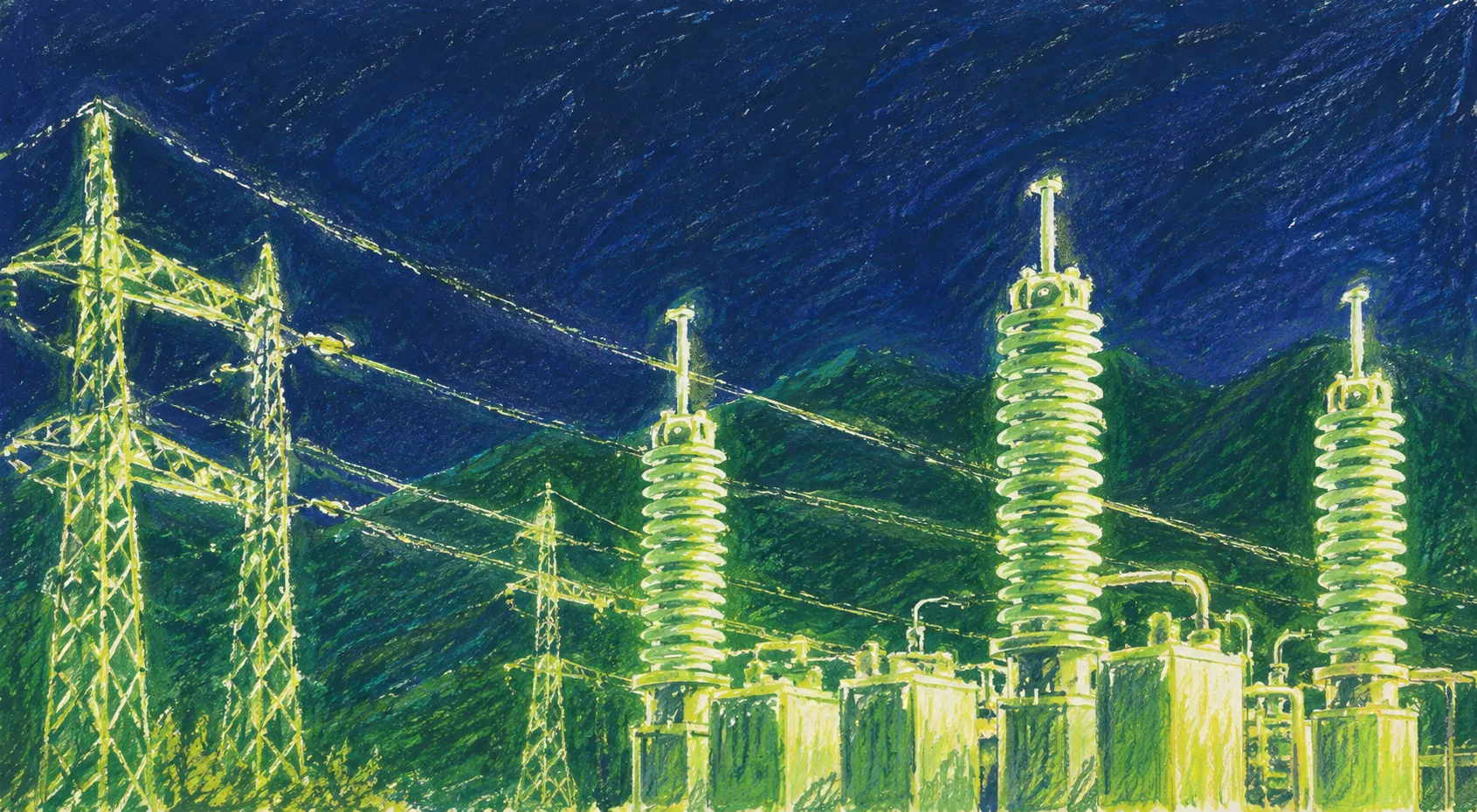
Industrials are no longer moving as one simple recovery trade. The sector now has one foot in old-cycle transport and another in AI-driven power infrastructure.
The trigger is a split tape, with broad selling in the main ETF while data center demand keeps lifting select industrial names.
Transport is dragging first
The State Street Industrial Select Sector SPDR ETF has fallen more than 5% over two weeks after rising 17% from January through July, according to Barron’s technical analysis.
That matters because XLI is the cleanest broad industrial proxy for many retail investors. It owns machinery, transport, aerospace, logistics, and electrical equipment companies in one basket.
The selling has been concentrated in economically sensitive transport names. Delta Air Lines and United Airlines are both down more than 10% over the past month.
Trucking looks weaker than airlines. C.H. Robinson Worldwide lost one-third of its value in the final two weeks of July after a poor earnings reaction.
Fuel costs are part of the pressure. Diesel prices have doubled over the past year, which hits trucking margins directly.
Rail looks more resilient inside the same transport complex. Norfolk Southern stood out in Barron’s work as a possible buy if it stays above key technical levels.
Manufacturing still has support
The economic backdrop is not uniformly bad for industrials. US manufacturing activity has expanded for seven straight months through July, according to the ISM Manufacturing PMI cited by Business Insider.
Piper Sandler’s Michael Kantrowitz expects that hot streak to continue through 2026. He also called long exposure to ISM-sensitive stocks one of his “highest conviction” calls.
That creates a cleaner way to think about the sector. You do not have to own every industrial stock to bet on a manufacturing recovery.
Jacobs Solutions has price movements that correlate with the US Manufacturing PMI. United Parcel Service also appears on Piper Sandler’s list of ISM-sensitive industrials.
CNH Industrial gives you machinery exposure tied to the manufacturing cycle. Generac Holdings adds electrical equipment exposure, which overlaps with power resilience demand.
WESCO International had one of the higher correlations on the list. Avis Budget Group had the highest listed correlation among those industrial names.
AI needs physical infrastructure
The stronger industrial story is not software. It is the physical equipment needed to power AI computing.
Citi said industrial-sector organic growth reached 6.9% in the second quarter of 2026, beating its 4.0% forecast, according to InvestorsHub’s report.
Data center investment remains a major driver. These facilities need electrical equipment, cooling systems, power management tools, and grid connections.
Operating margins also stayed healthy. Citi said average industrial operating margins reached 21.4% in the second quarter.
That combination supports companies exposed to electrification and power infrastructure. Parker Hannifin, Vertiv, Eaton, Emerson Electric, and Trane Technologies were Citi’s preferred industrial names.
Quanta Services sits closer to the grid buildout. Citi sees it benefiting from multi-year US power infrastructure spending.
MasTec offers a more uneven version of that same theme. Citi viewed post-earnings weakness as a possible entry point because of backlog and demand trends.
Nuclear enters the trade
The AI power bottleneck is also pushing investors toward nuclear-linked industrials. Data centers account for roughly 5% of US electricity use, and that could rise to 20% by 2035, according to The Motley Fool.
Cameco is one way to play uranium fuel demand. The company is a major Western uranium miner with assets in Canada and Kazakhstan.
GE Vernova is a more direct industrial equipment angle. It is working with Hitachi to develop and commercialize the BWRX-300 small modular reactor.
Small modular reactors are factory-built nuclear units designed for on-site assembly. Their appeal is flexibility for customers that need reliable power near demand centers.
Oklo and NuScale Power are earlier-stage developers. They remain higher risk because commercial deployment is still expected in the 2030s.
Centrus Energy supplies a key fuel angle. It is approved by the Nuclear Regulatory Commission to manufacture high-assay low-enriched uranium used in many next-generation reactors.
How to own the split
Industrials now require selectivity. The ETF offers broad exposure, but recent price action shows that transport weakness can overpower stronger pockets.
The cleaner exposure is tied to electricity demand, grid spending, automation, and cooling. Those trends are supported by AI infrastructure and broader industrial capital spending.
JPMorgan’s broader September list also shows investors are not abandoning cyclicals entirely. The Dow Industrials gained more than 1% in August for its fifth straight monthly advance, according to CNBC.
The risk is that industrial valuations already reflect some optimism. Citi said the sector trades at 1.11 times the S&P 500 on relative next-12-month earnings.
That is close to the 10-year average of 1.10 times. You are not getting a deep discount for taking cyclical risk. The takeaway is to avoid treating industrials as one trade, and separate transport stress from AI power demand.

