
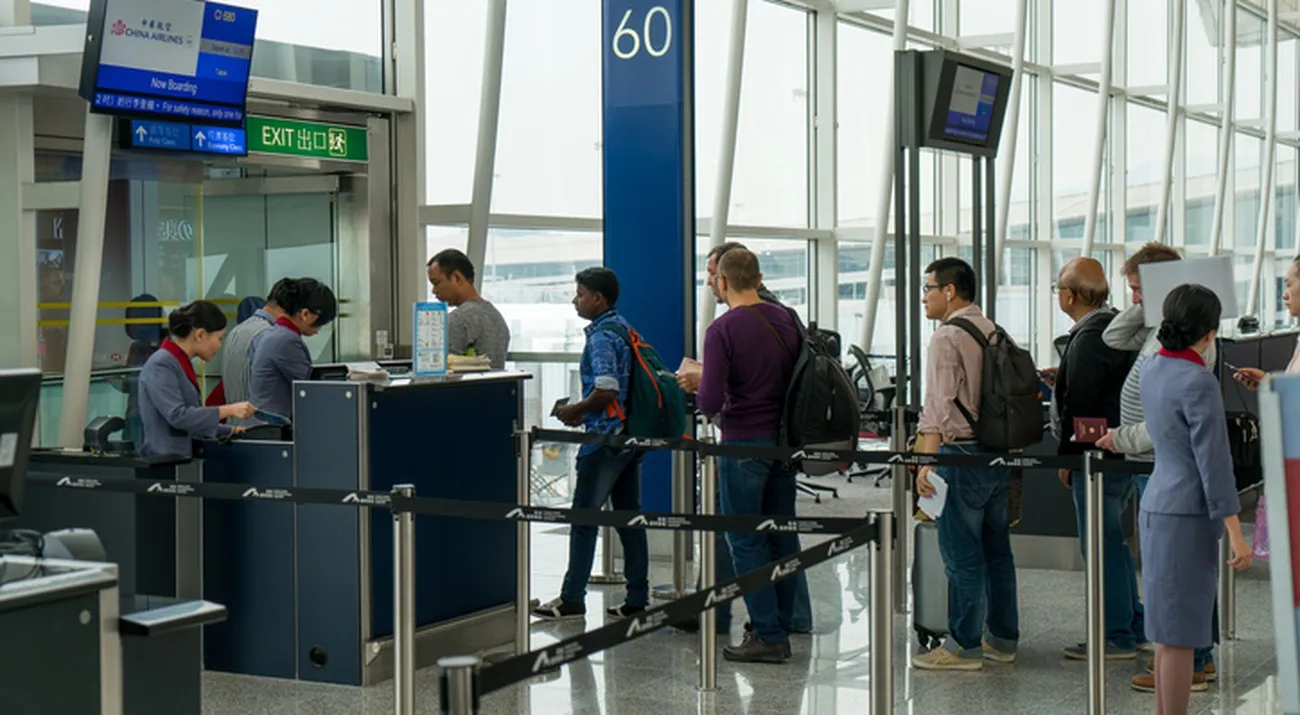
International travelers have another requirement to check off before boarding a flight to the US. Starting Nov. 3, every passenger flying into the country will need to sign a health declaration, regardless of citizenship or where they're traveling from. Those who fail to complete it could be denied boarding, including Americans returning home.
Why the rule is changing
The CDC's new requirement takes effect for flights departing at or after 11:59 p.m. on Nov. 3, following a growing Ebola outbreak in the Democratic Republic of the Congo (DRC).
The country has reported 10.1K confirmed cases and roughly 4.9K deaths, although Africa CDC figures put the death toll closer to 4.7K. The World Health Organization says another 50 to 80 cases are being recorded daily across eight provinces.
The declaration requires passengers to confirm they haven't been in the DRC within the past 21 days, the maximum incubation period for Ebola.
The virus spreads through direct contact with infected bodily fluids, and the CDC considers the risk to Americans low. So far, no cases linked to the outbreak have been reported in the US.
Deaths Equal Nearly Half of Confirmed Ebola Cases in Congo
DRC Bundibugyo outbreak, cumulative confirmed totals, late October 2026
Bar chart. Number of People. Confirmed Cases: People 10K. Confirmed Deaths: People 4,928.
Source: CIDRAP
Who needs to complete it
The requirement applies to all international air arrivals, including US citizens returning from overseas and passengers connecting through American airports. It doesn't apply to domestic flights or travelers entering by land or sea.
Anyone who has been in the DRC during the previous 21 days will be barred from boarding a US-bound flight. Even a layover at a DRC airport counts, regardless of whether the traveler left the aircraft. Parents or guardians can sign for children under 18, while an authorized adult can complete the declaration for passengers unable to sign themselves.
What the New US Entry Attestation Requires
Key terms of the CDC order for US-bound air passengers
| Requirement | Detail |
|---|---|
| Order signed | Oct. 22, 2026 |
| Takes effect | Nov. 3, 2026 at 11:59 p.m. EST |
| Scheduled end | Dec. 18, 2026 |
| Lookback period | 21 days outside the DRC |
| Airline record retention | At least 42 days after departure |
| Minors | Parent or authorized adult signs |
Source: Federal Register, CIDRAP
What travelers should know
Airlines can collect the declaration digitally or on paper, meaning the process won't necessarily look the same across carriers. Travelers should check their airline's app or website before departure and allow extra time at the airport as the new procedures take effect.
The rule is currently scheduled to expire on Dec. 18, although the CDC could extend it depending on how the outbreak develops. That leaves some uncertainty for anyone planning to travel over Christmas or New Year's.
Travel insurance is another consideration. A missed declaration and a flight canceled because of government restrictions aren't necessarily treated the same way under insurance policies. Travelers booking nonrefundable trips should check what their coverage actually includes.
Why airlines aren't happy
Airlines argue the government is asking them to make significant operational changes with little time to prepare. Airlines for America, which represents United Airlines, American Airlines, Southwest Airlines, and Delta Air Lines, says updating check-in systems, introducing digital signatures, and training employees can't realistically be completed before the deadline.
The industry also questions whether the rule needs to apply to every international passenger. US Customs and Border Protection screened approximately 130M air travelers in 2025, but fewer than 25K had any connection to the DRC.
The International Air Transport Association, representing more than 370 airlines, has raised similar concerns about the requirement's scope, particularly its exclusion of land and sea arrivals. Carriers are also seeking exemptions for airline crews, military personnel, and other aviation workers.
For now, the CDC hasn't announced any changes to its Oct. 22 order. Airlines may still be pushing for more time, but travelers should prepare for the requirement to take effect as scheduled.

